
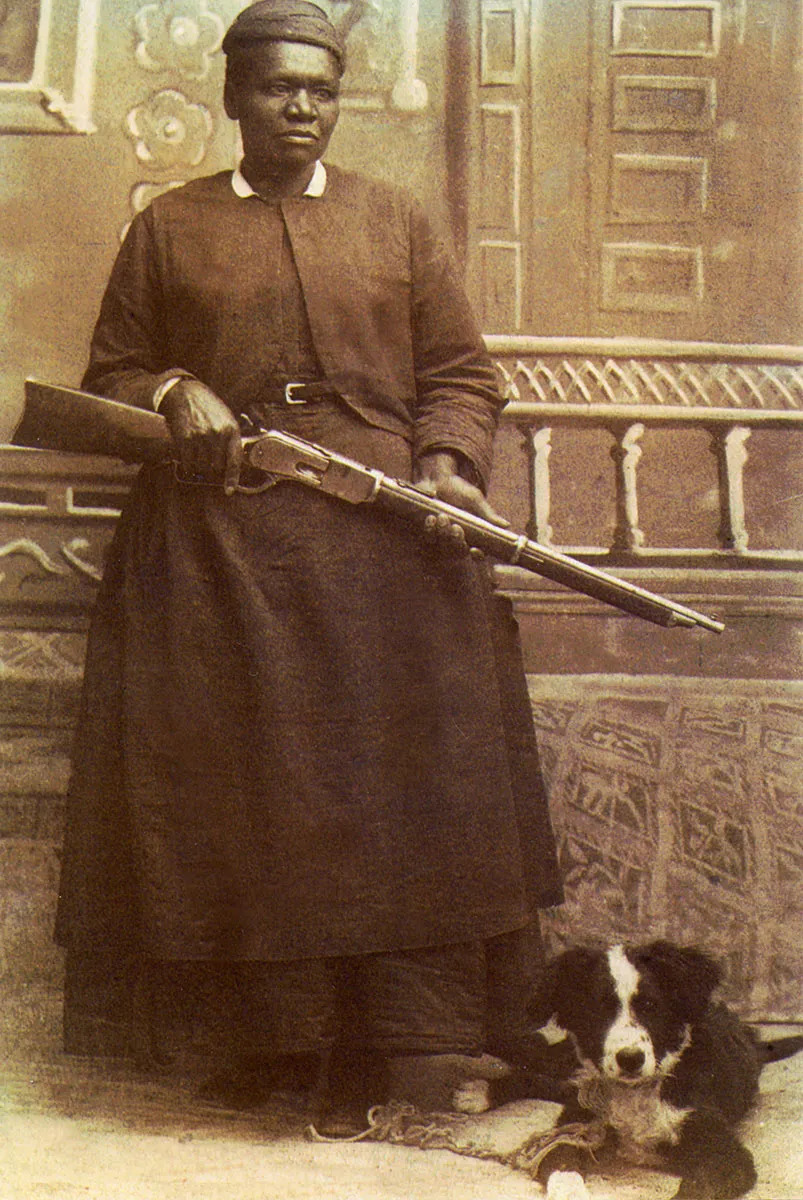
A Legend Born in the Era of the Wild West
Long before Hollywood glamourized gunslingers and rugged outlaws, the American West was shaped by real people who defied expectations. Among them was Mary Fields, better known as Stagecoach Mary, a towering, cigar-smoking, quick-witted force of nature who delivered mail across Montana’s unforgiving terrain at the turn of the 20th century.
Standing a formidable six feet tall, weighing nearly 200 pounds, and rarely seen without a rifle, revolver, or cigar, Stagecoach Mary was the embodiment of grit. Locals described her as having “the temperament of a grizzly bear,” but also a disarming kindness that made her one of the most beloved figures in the territory.
Her journey began in the most unlikely of circumstances, born enslaved in Tennessee, yet she forged a life that made her a legend across the American frontier.
From Slavery to Freedom: Mary Fields’ Early Years
Mary Fields was born into slavery in 1832 in Hickman County, Tennessee. Because enslaved people were denied basic documentation, much of her early life remains hazy. Biographers believe her mother was a domestic servant and her father a field laborer, but the details remain largely unknown.
What is clear is that when the Civil War ended and the 13th Amendment abolished slavery, Mary Fields stepped into freedom in her early thirties, and never stopped moving forward.
She spent her first years of freedom working various jobs, eventually entering service on the steamboat Robert E. Lee, where she likely learned much of the toughness and adaptability that later made her a force in the West.
Her next chapter began in Ohio, where she worked for Judge Edmund Dunne and met his sister, Mother Mary Amadeus, the Mother Superior of the Ursuline Convent in Toledo. Fields soon became a groundskeeper at the convent, a role that introduced her explosive personality to a community unused to such blunt honesty.
When a nun asked how her journey had been, Mary famously replied she wanted “a good cigar and a drink.” Another nun complained, “God help anyone who walked on the lawn after Mary had cut it.”
She could be difficult, unapologetic, and bold, traits that defined her life and her legend.
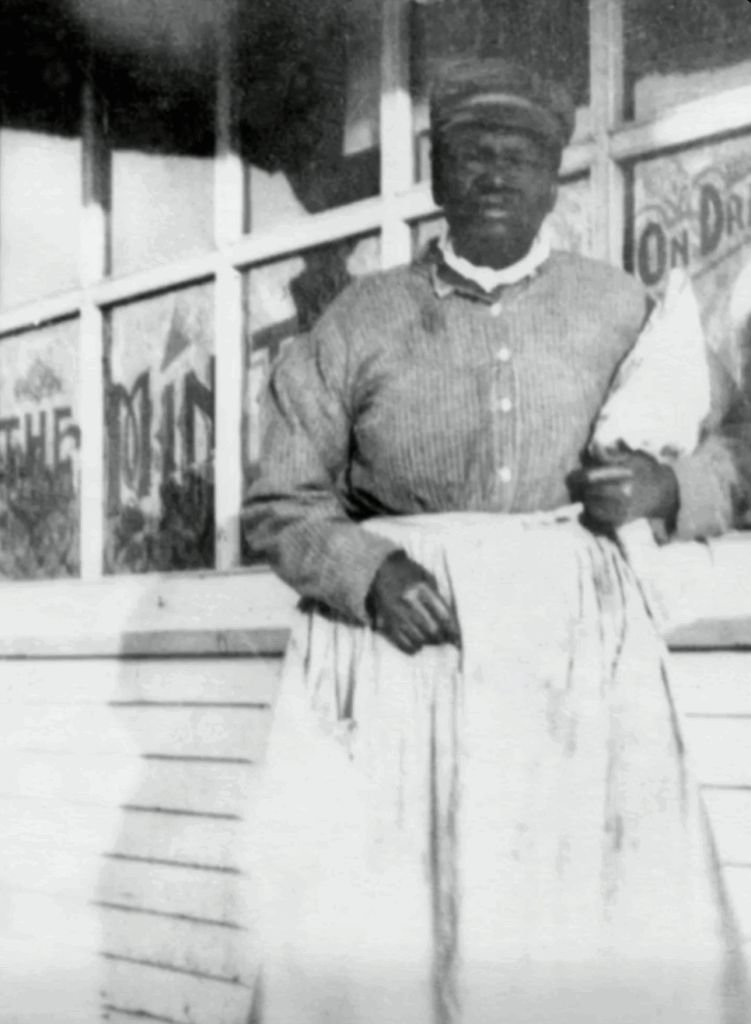
To Montana: Nursing, Hauling Supplies, and Fighting Wolves
In 1885, Mother Amadeus fell ill with pneumonia while establishing a children’s boarding school at St. Peter’s Mission in Montana. She specifically requested that Mary come west to care for her. Fields obliged, and once Mother Amadeus recovered, Mary stayed.
At St. Peter’s, Fields became indispensable:
- She drove the convent’s wagon team
- Hauled supplies along dangerous, isolated roads
- Transported visitors to and from the train station
- Managed the convent’s chickens, vegetables, and grounds
Her fearlessness soon became local lore. One night, after a pack of wolves spooked her horses and overturned the wagon, Mary stayed with the supplies all night, fending off wolves alone in the dark wilderness.
But Mary’s fiery temperament also caused tension.
After she pulled a gun during a dispute with a janitor, the confrontation reached Montana’s Bishop Brondell. The scandal forced the convent to dismiss her, even though everyone knew that in any showdown, Mary Fields was usually justified.
With grit and a sense of independence, she moved to the nearby town of Cascade, Montana, the only Black resident in a rough frontier community.
The Road to Becoming “Stagecoach Mary”
Mother Amadeus ensured Mary wasn’t left without support. Together, they tried opening a restaurant in Cascade, a business that failed largely because Mary would feed the hungry whether they could pay or not.
But Mary’s next job would cement her place in history.
In 1895, at the age of 60, Mary Fields applied to become a mail carrier for the U.S. Postal Service, a physically demanding and risky job typically reserved for robust young men.
To earn the role, applicants had to demonstrate their ability to hitch a six-horse team. Mary did it faster than every other candidate, securing the position.
She became:
- The first Black woman to carry U.S. mail
- The second woman in U.S. history to ride a Star Route mail contract
Carrying a rifle and a revolver, she drove her stagecoach through rugged Montana terrain, often in brutal weather. Each week, she logged over 300 miles, delivering mail no matter the conditions.
When snow blocked the roads, she slung the mailbag over her shoulder, strapped on snowshoes, and walked more than 30 miles on foot.
Montanans admired her toughness, and her heart.

A Gunslinging Icon of the Old West
By her 60s and 70s, Stagecoach Mary had become a living legend. At local saloons, where the mayor declared she could drink freely, making her the only woman allowed inside who wasn’t a sex worker, she boasted that she could knock out any man with a single punch.
She never lost that bet.
She was also renowned for her skill with a whip and firearm. On her 81st birthday, the Anaconda Standard wrote:
“Mary’s friends claimed if a fly landed on the ear of one of her horses, she could use her choice of either shooting it off or picking it off with her whip end. And if she was in a mind to, she could break the fly’s hind leg with her whip and then shoot its eye out with a revolver.”
After eight years of delivering mail, she retired and opened a laundry business. Even then, her famous toughness endured. When a customer refused to pay his $2 laundry bill, Mary followed him out of a bar, punched him, and returned to say:
“His laundry bill is paid.”
Beloved by a Frontier Town
Despite her fierce demeanor, Mary Fields became one of the most beloved residents of Cascade. She was known for:
- Helping raise children in the community
- Delivering homemade gifts
- Supporting local baseball teams
- Providing food and aid to the needy
- Settling disputes with fairness and humor
The owner of the Cascade Hotel declared Mary could eat there for free for the rest of her life. When her home burned down, neighbors rebuilt it entirely, a testament to the affection she inspired.
At a time when the West was filled with prejudice, violence, and hardship, Mary forged connections everywhere she went. Her loyalty ran deep, and the town returned that loyalty in kind.
A Final Goodbye to a Frontier Legend
Mary Fields died on December 5, 1914, at approximately 82 years old. Her funeral was one of the largest Cascade had ever seen. People from all walks of life, ranchers, nuns, former postal workers, business owners, and children she had once cared for, lined the streets.
The boy who would one day become Hollywood star Gary Cooper knew her as a child. Later, he honored her legacy in Ebony magazine:
“Born a slave somewhere in Tennessee, some say in 1832, Mary lived to become one of the freest souls to ever draw a breath or a .38.”
Today, Stagecoach Mary remains a symbol of courage, independence, and defiance against impossible odds, an unsung American hero whose life was stranger, wilder, and more inspiring than any Western film.
Featured Image by: Public domain, via Wikimedia Commons