

Missile tests from a new destroyer signal ambition, but questions remain about capability
North Korea has once again put its military ambitions on display, this time at sea.
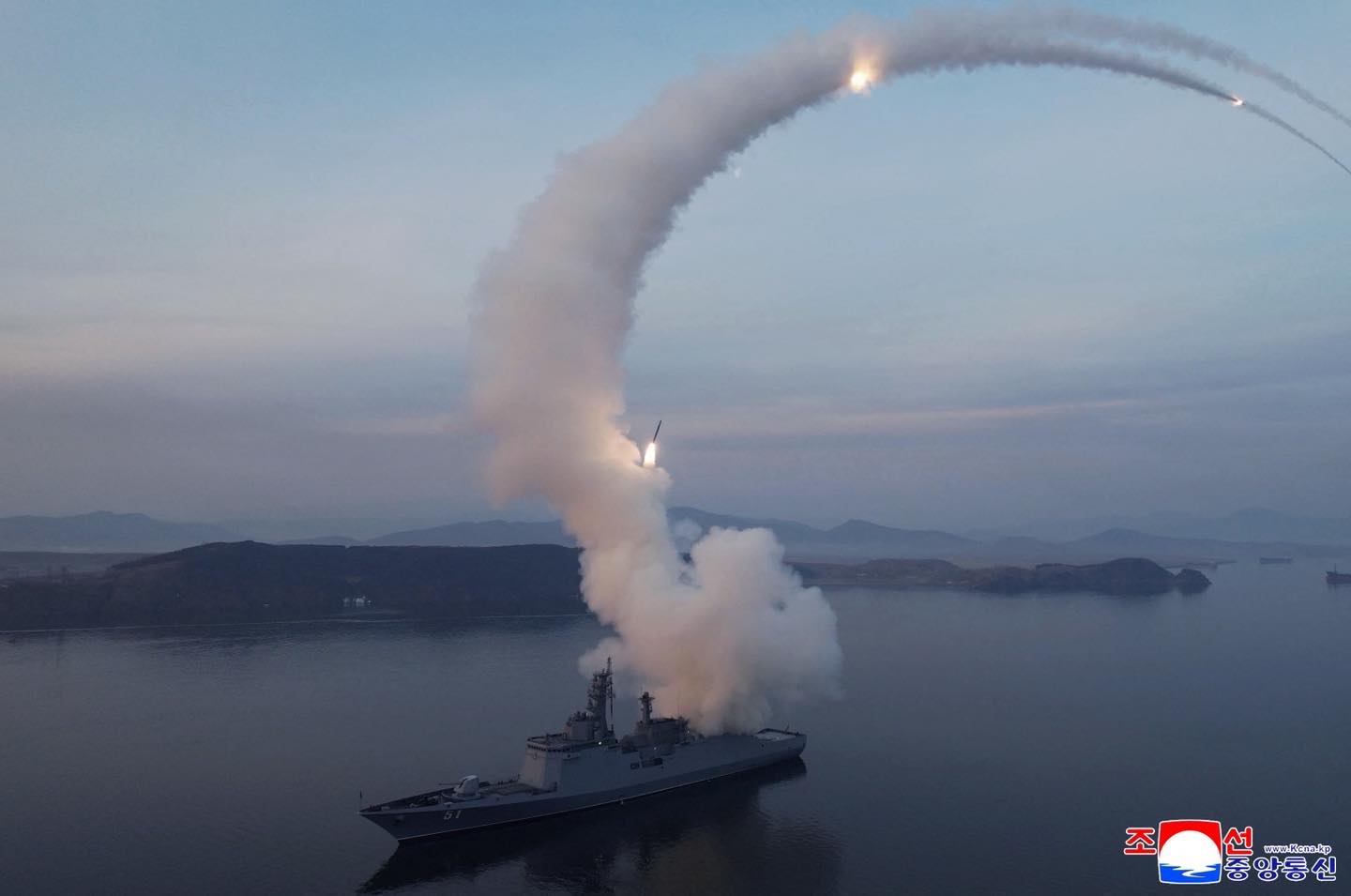
Leader Kim Jong Un personally oversaw a series of missile launches from the country’s newest and most high-profile naval asset, a 5,000-ton-class destroyer known as the Choe Hyon. According to state media, the warship fired cruise missiles and anti-ship missiles during drills that Pyongyang says demonstrate a major leap in its military capabilities.
But beyond the spectacle, analysts say the tests raise a more complicated question:
Is North Korea’s navy actually becoming a serious strategic force, or is this more about signaling power than proving it?
What Happened During the Missile Tests
According to North Korea’s official outlets, the drills took place in the country’s western waters and involved multiple types of weapons.
Two cruise missiles reportedly flew for more than two hours before hitting their targets, while three anti-ship missiles traveled for over 30 minutes along pre-set trajectories.
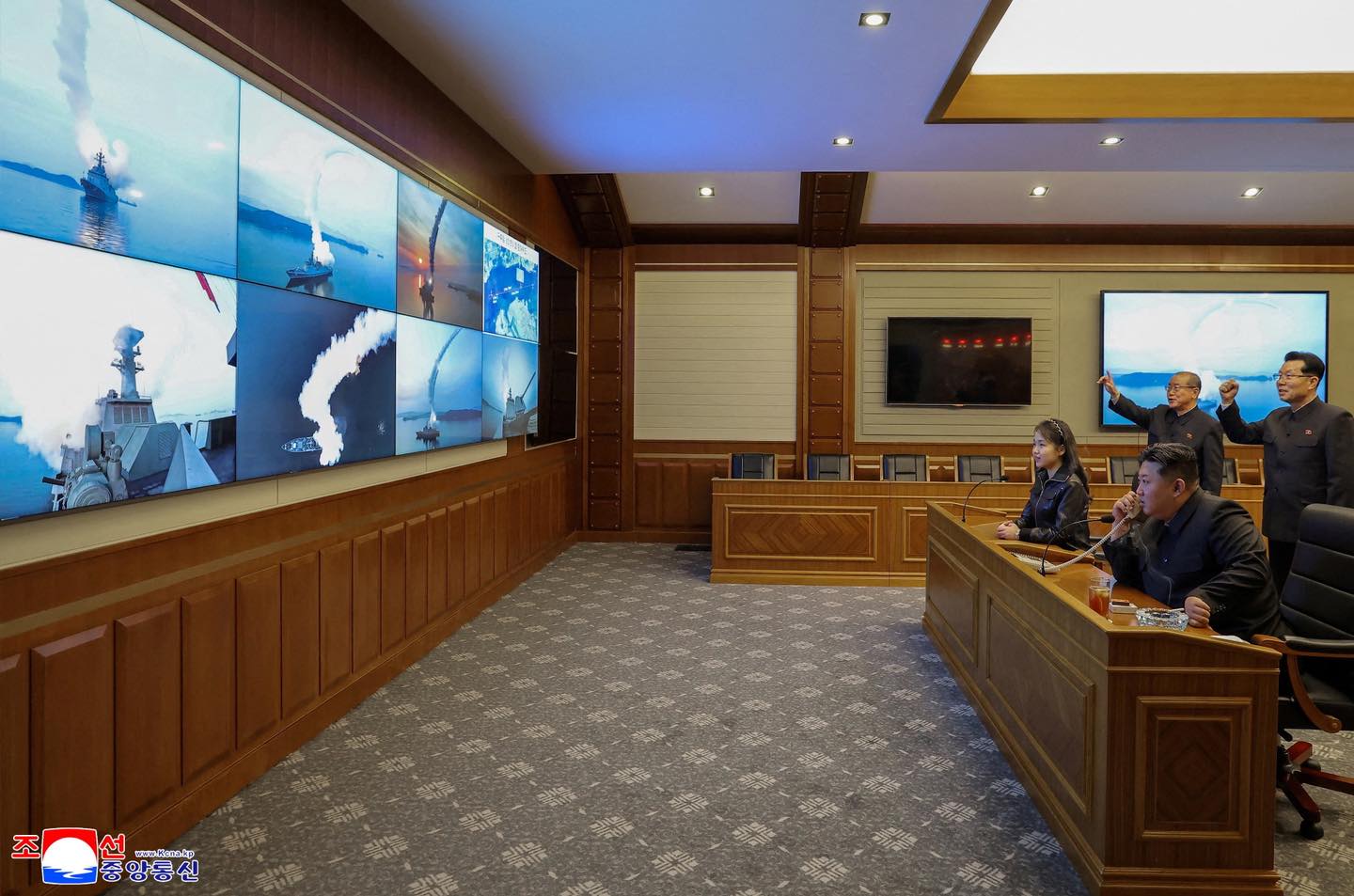
Images released by state media show Kim Jong Un observing the launches from the deck area, surrounded by senior officials, part of a carefully staged presentation meant to highlight both control and capability.
The message was clear:
North Korea wants to be seen not just as a land-based missile power, but as a country expanding into naval strike operations.

The Warship at the Center of It All
The Choe Hyon destroyer is one of North Korea’s most ambitious military projects in years.
Unveiled in 2025, the vessel is described by state media as capable of carrying a wide range of advanced weapons, including:
Anti-air missile systems
Anti-ship missiles
Potentially nuclear-capable ballistic and cruise missiles
If those claims are accurate, it would mark a significant evolution in North Korea’s ability to project force beyond its borders.
A mobile sea-based platform would make its missile systems harder to detect and intercept compared to land-based launchers.
But that’s where skepticism begins.
How Real Is the Threat?
South Korean officials and independent defense analysts have raised doubts about whether the warship is fully operational or capable of delivering on its advertised capabilities.
Some experts believe the destroyer may have been built with technical assistance from Russia, reflecting growing military cooperation between the two countries.
Even so, questions remain about:
The reliability of onboard missile systems
The integration of advanced radar and targeting technology
Whether the ship can sustain real combat operations
North Korea has a history of showcasing weapons systems before they are fully ready for deployment.
In fact, a second destroyer of the same class was damaged during a failed launch in 2024 before being repaired and relaunched months later.
A Broader Military Strategy
The naval tests are not happening in isolation.
They are part of a broader push by Kim Jong Un to expand what he calls the “limitless” growth of North Korea’s nuclear and military capabilities.
In recent weeks, North Korea has conducted multiple weapons tests, including:
Ballistic missiles reportedly equipped with cluster warheads
Short- and medium-range missile systems
New experimental weapons platforms
At the same time, officials in Pyongyang have dismissed any possibility of improved relations with South Korea, signaling a continued hardline stance in the region.
This suggests the naval buildup is part of a larger strategic shift:
From a defensive posture to one focused on deterrence through expanded offensive reach.
Why the Naval Angle Matters
For decades, North Korea’s military strength has been defined primarily by its land-based missile arsenal.
But expanding into naval capabilities changes the equation.
A functioning fleet of missile-capable warships could allow North Korea to:
Launch attacks from unpredictable locations
Extend its operational range beyond the Korean Peninsula
Complicate regional defense strategies
It also adds pressure on neighboring countries, particularly South Korea and Japan, which rely heavily on maritime trade routes.
Even limited naval capability can create disproportionate strategic uncertainty.
Signaling vs. Reality
There is also a political dimension to these tests.
Military displays like this serve multiple purposes for Kim Jong Un:
Demonstrating strength to domestic audiences
Reinforcing leadership authority
Sending a message to the United States and regional allies
The timing is notable as well.
With global attention focused on other conflicts, including tensions in the Middle East, North Korea may be seizing an opportunity to advance its agenda with less immediate scrutiny.
What Comes Next
State media reports that additional destroyers are already under construction, with at least one expected to be completed soon.
If North Korea successfully builds out a fleet of similar vessels, even at a limited scale, it could gradually reshape its military posture.
But for now, the gap between claimed capability and verified performance remains significant.
That gap is where much of the uncertainty, and risk, lies.
The Bottom Line
Kim Jong Un’s latest missile tests are not just about weapons.
They are about perception, deterrence, and positioning.
North Korea is signaling that it wants to operate as a more versatile military power, capable of projecting force on land and at sea.
Whether it can fully deliver on that ambition is still unclear.
But the direction is becoming harder to ignore.
Featured Image from: Kremlin.ru, CC BY 4.0, via Wikimedia Commons