

From Golden Girl To Marine Corps Trailblazer
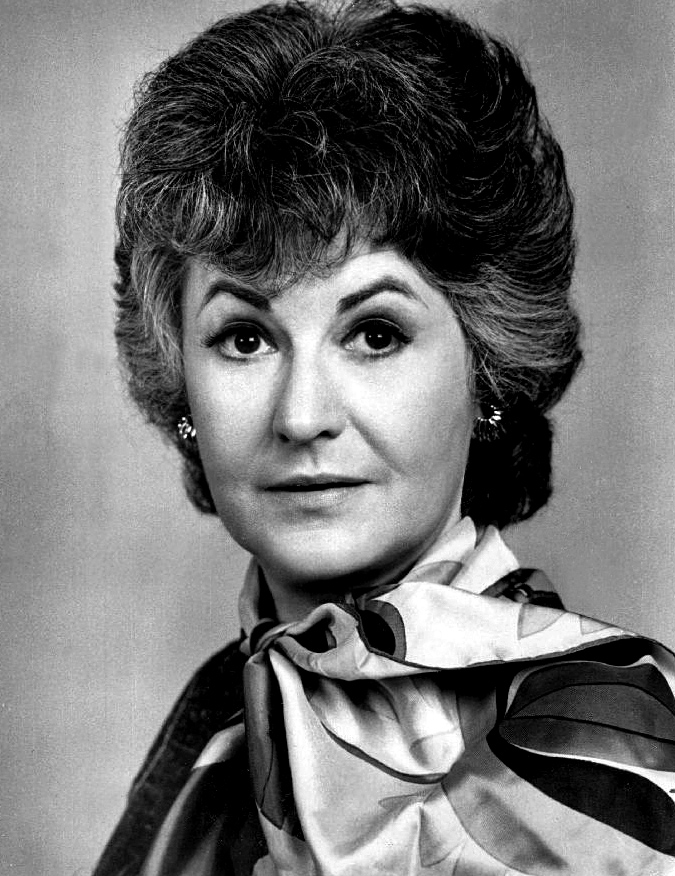
Audiences remember Bea Arthur as the sharp-tongued Dorothy Zbornak on The Golden Girls, the unapologetic Maude Findlay in Maude, and the unforgettable feminist foil on All in the Family. But decades before she became one of television’s most recognizable performers, she wore a different uniform, the uniform of the United States Marine Corps.
It may seem unimaginable to fans, but at age 20, Bernice Frankel, the woman the world would later know as Bea Arthur, enlisted in the Marines and served more than two years during World War II. She worked as a driver and dispatcher, climbed the ranks, and even displayed flashes of the personality that made her a star: blunt, confident, and completely unafraid to speak her mind.
Yet strangely, Arthur would deny this chapter of her life for the rest of her career.
“Be A Marine… Free A Marine To Fight”
On February 13, 1943, the U.S. Marine Corps put out a nationwide call for women to enlist in the newly created Marine Corps Women’s Reserve (MCWR). With World War II raging overseas, the Corps needed women to fill non-combat roles and free men for frontline duty.
The slogan was simple and effective:
“Be a Marine… Free a Marine to Fight.”
One of the first to answer the call was a young woman from Maryland named Bernice Frankel.
The daughter of Jewish immigrants from Poland and Austria, Frankel had attended Blackstone College for Girls in Virginia and worked an assortment of odd jobs afterward. But when she saw the Marines were accepting women, she acted immediately.
In her enlistment paperwork, she wrote:
“I was supposed to start work yesterday, but I heard last week that enlistment for women in the Marines was open, so decided the only thing to do was to join.”
She expressed a preference for “ground aviation,” but added that she was willing to serve in whatever capacity the Marines needed “until such time as ground schools are organized.”
On February 18, 1943, just five days after the MCWR was announced, she officially enlisted.
Joining the Marine Corps Women’s Reserve
In 1943, women who enlisted in the MCWR had to meet strict requirements:
- Be unmarried
- Have no children under 18
- Be at least 5 feet tall and weigh at least 95 pounds
- Under age 21? You needed parental consent
Frankel submitted letters of recommendation, passed her medical screenings, and completed a series of personality assessments, which, in retrospect, read like early glimpses of Bea Arthur’s iconic on-screen persona.
One test from February 18 described her as:
- “trim”
- “alert”
- possessing a “fluent, excellent vocabulary”
But it also labeled her as:
- “argumentative”
- “over aggressive”
- “frank and open”
Ensign V.K. Outwin, who conducted the exam, noted:
“Officious, but probably a good worker if she has her own way!”
Another assessment praised her poise, good taste, and social graces.
On March 18, 1943, she was called to active duty.
Bea Arthur, U.S. Marine: A Career in Uniform
After completing basic training at the U.S. Naval Training School at Hunter College in New York, Frankel was assigned to Marine headquarters in Washington, D.C. Her first job was as a typist, a role she quickly found unsuited to her skills.
She requested a transfer to Motor Transport School at Camp Lejeune, North Carolina, arguing that her previous experience made her more valuable as a driver. The Marine Corps agreed, and she reported to Camp Lejeune in July 1943.
Six weeks later, she transferred again, this time to the Marine Corps Air Station at Cherry Point, North Carolina, where she thrived as both a driver and dispatcher. Frakel earned rapid promotions:
- Corporal in August 1943
- Sergeant in December 1943
- Staff Sergeant by June 1945
Her service record indicates only one infraction. In 1944, she contracted a venereal disease that left her “incapacitated for duty” for about five weeks, resulting in temporary loss of pay. This detail may explain why Arthur later refused to discuss her service publicly.
She also met her future husband, fellow Marine Robert Aurthur, whose surname she adopted, and later modified professionally to “Arthur.”
Bea Arthur was honorably discharged on September 26, 1945, after 30 months of service.
Decades later, her son recalled that Mary rarely mentioned her time in uniform except to boast that “she could drive any vehicle.”

From Staff Sergeant to Broadway Star
Following her military service, Frankel returned to New York and enrolled in drama school. Her commanding presence and booming voice, once noted by Marine evaluators, became her trademarks on stage and screen.
Her rise was steady:
- 1964: cast as Yente the Matchmaker in the original Broadway production of Fiddler on the Roof
- 1971: appeared on All in the Family, becoming so popular that her character earned a spin-off
- 1972–1978: starred in Maude, winning an Emmy
- 1985–1992: starred in The Golden Girls, earning another Emmy and cementing her place in television history
To millions, Bea Arthur was unforgettable, fiery, formidable, intelligent, and effortlessly funny.
Yet she never spoke about the uniformed chapter of her life.
Why Did Bea Arthur Deny Her Military Service?
In a 2001 interview with the Television Academy Foundation, Arthur was asked whether World War II had affected her. She replied simply:
“Like everybody else… [it was] traumatic.”
When the interviewer followed up, noting she had heard Arthur served in the Marines, Arthur said quickly:
“Oh, no… no.”
Her reasoning remains a mystery, but historians have offered several theories:
- She may have felt embarrassed about her disciplinary record
- She may not have viewed herself as a “true” veteran due to non-combat duties
- Her support for liberal causes later in life may have made her distance herself from the military
- She may have simply preferred privacy
Her son said she seldom spoke of her service at all, aside from saying that she learned to drive almost anything with wheels.
Her official Marine Corps personnel file only surfaced in 2010, a year after her death, revealing a part of her story she kept hidden for decades.
Bea Arthur’s Legacy: More Than TV Fame
Bea Arthur remains one of the most celebrated actresses of her generation, a performer whose wit, timing, and commanding presence left an indelible mark on American television. But her legacy is now enriched by another layer, her service during one of the most pivotal conflicts in world history.
Long before she played feminist icons and comedic powerhouses, she served her country as one of the earliest members of the Marine Corps Women’s Reserve. She was:
- a pioneer
- a trailblazer
- a woman who stepped into a role that society had barely begun to imagine
And though she never sought credit for her military service, the truth stands:
Before Bea Arthur was a Golden Girl, she was a Marine.
Featured image from: United States Marine Corps photographer, Public domain, via Wikimedia Commons