

Netanyahu’s pick for Mossad reflects a bigger shift inside Israel’s security leadership
As Israel prepares for a leadership change at the top of its intelligence apparatus, a critical question is emerging:
What happens when the strategy behind a war doesn’t deliver, and the people who backed it are now in charge?
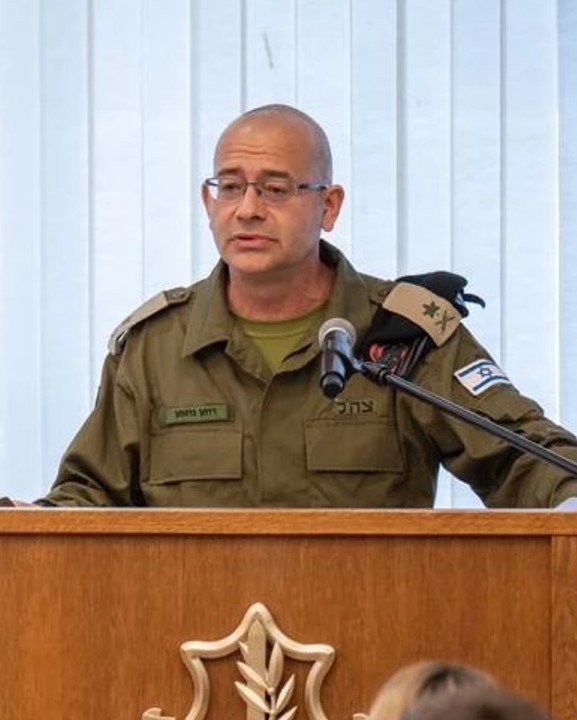
Roman Gofman, Prime Minister Benjamin Netanyahu’s close military aide, is set to become the next director of Israel’s Mossad spy agency. But his appointment comes with scrutiny, not just because of his background, but because of what he believed would happen in Iran.
According to Israeli sources, Gofman supported a key assumption in the early stages of the war:
That a sustained military campaign could trigger the rapid collapse of Iran’s regime.
More than 40 days into the conflict, that outcome has not materialized.
A Strategy That Hasn’t Played Out
In the lead-up to the U.S.-Israel strikes on Iran, intelligence discussions reportedly included a bold expectation, that targeted attacks, leadership decapitation, and internal pressure could spark mass unrest inside Iran.
That unrest, in turn, was expected to destabilize, and potentially topple, the government.
That theory wasn’t limited to one individual.
Outgoing Mossad chief David Barnea is also said to have supported the idea, reportedly presenting it as a viable pathway during high-level discussions with Israeli and U.S. leadership.
But on the ground, the results have been very different.
Despite major strikes, including the killing of Iran’s Supreme Leader and significant damage to military infrastructure, the regime has not collapsed.
Instead, power has consolidated under a new leadership that is widely seen as more hardline.
Who Is Roman Gofman?
Gofman is not a traditional intelligence figure.
Born in Belarus and raised in Israel, he built his career inside the military, serving for decades in the Israel Defense Forces’ armored corps.
He later became Netanyahu’s military secretary, placing him at the center of Israel’s most critical security decisions over the past two years, including operations in Iran, Gaza, Lebanon, and Syria.
He was also seriously wounded during the October 7, 2023 attacks, an event that reshaped Israel’s entire security landscape.
Netanyahu has praised Gofman as a bold and creative thinker.
But critics point to what he lacks.
Unlike most Mossad directors, Gofman does not come from within the intelligence community.
Why His Appointment Is Controversial
Appointing a Mossad chief from outside the agency is unusual, and in this case, politically charged.
Some defense analysts argue that Gofman’s selection reflects loyalty more than experience.
They note that leading an intelligence agency requires specialized skills developed over decades, including:
Intelligence gathering
Covert operations
Coordination with foreign spy agencies
These are areas where Gofman has limited direct experience.
Critics also point to a past controversy involving an alleged influence operation in which a teenager was used to distribute sensitive information online, a case that raised legal and ethical concerns and delayed his appointment.
A Broader Reshaping of Power
Gofman’s rise is not happening in isolation.
It is part of a larger transformation inside Israel’s security leadership following the October 7 attacks, widely seen as one of the country’s most serious intelligence failures.
Since then, much of Israel’s top security leadership has changed:
Senior military officials have stepped down or been replaced
Intelligence leadership has shifted
Political control over security decisions has tightened
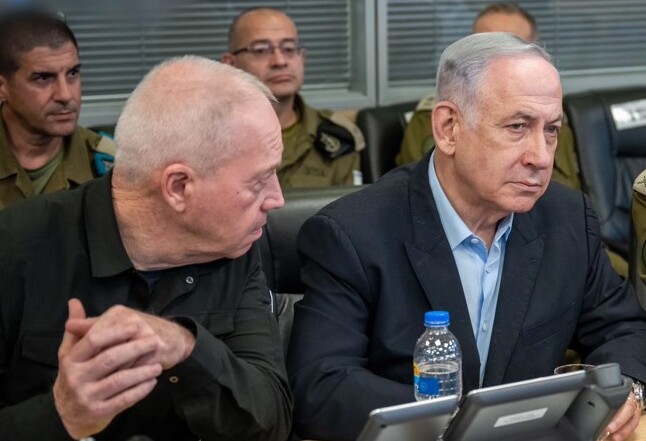
With Gofman’s appointment, Netanyahu will effectively be the last major figure from that period still in place.
That concentration of continuity at the top is drawing attention.
The Iran Factor
At the center of this leadership shift is the ongoing war with Iran.
The original expectation, that military pressure could lead to regime collapse, has not been realized.
Instead:
Iran’s leadership remains intact
A new supreme leader has taken power
Regional tensions continue to escalate
Some Israeli defense officials had warned early on that regime change was an uncertain outcome.
They advocated a more limited goal: weakening Iran’s capabilities rather than expecting political collapse.
That divide, between ambition and realism, is now part of the broader debate surrounding Gofman’s appointment.
What This Means Going Forward
As Gofman prepares to take over Mossad for a five-year term, the stakes are high.
He will inherit:
An ongoing regional conflict
A shifting intelligence landscape
A strategy that has yet to achieve its most ambitious goal
His leadership will help shape how Israel approaches not just Iran, but broader security challenges in the region.
Will he double down on aggressive strategies?
Or adjust course based on what the war has revealed?
The Bigger Question
This moment raises a deeper issue about intelligence and decision-making.
When strategic assumptions don’t play out, how do governments respond?
Do they reassess?
Or reinforce the same approach under new leadership?
In this case, the appointment of someone who supported the original assessment suggests continuity, but also risk.
The Bottom Line
Roman Gofman is stepping into one of the most powerful intelligence roles in the world at a time of uncertainty.
He backed a strategy that predicted rapid change in Iran.
That change hasn’t come.
Now, he will be responsible for what happens next.
And whether the next phase looks different, or more of the same, could shape the region for years to come.
Featured image from: Alexander Khanin, CC BY-SA 4.0, via Wikimedia Commons