
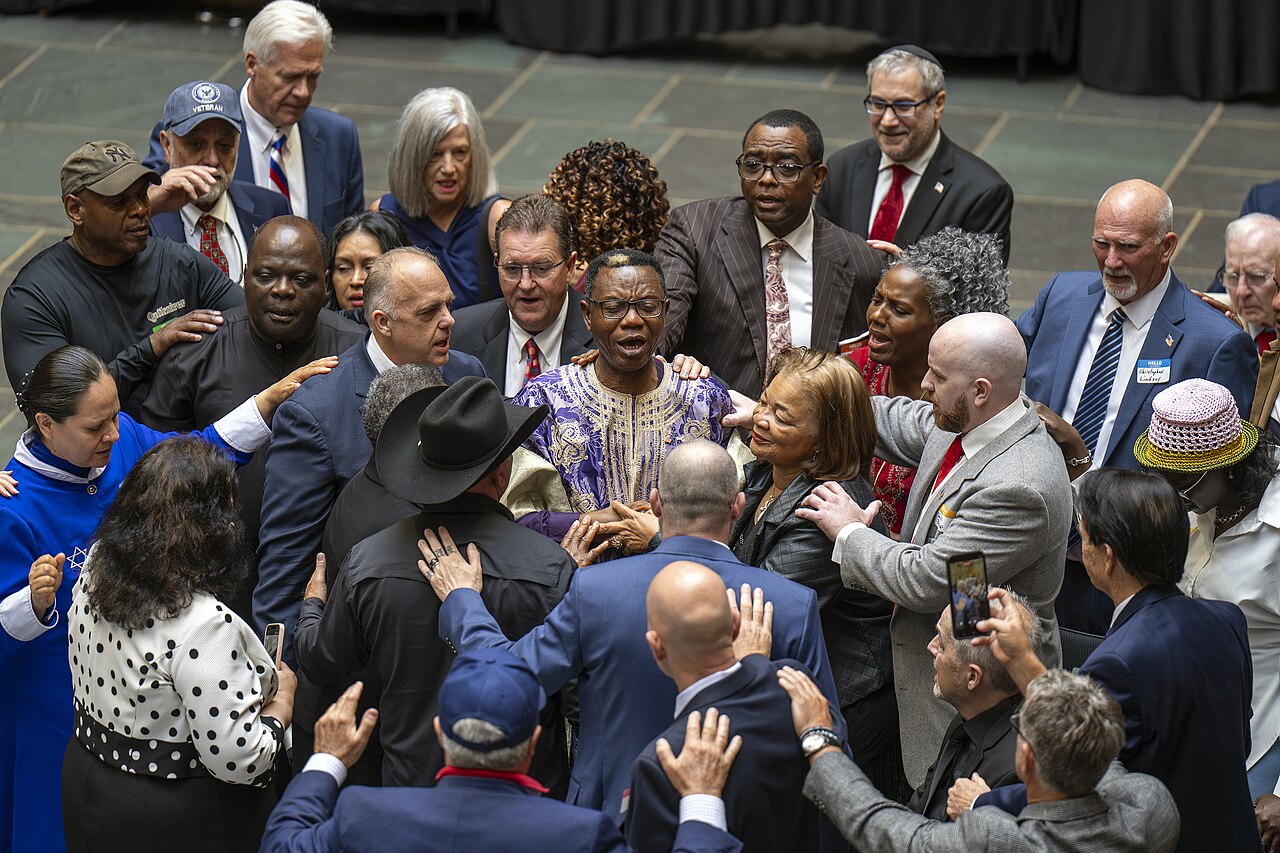
A major faith event backed by the Trump administration drew thousands of conservative Christians this week, while critics accused organizers of blurring the line between religion and government in a way they say excludes much of America’s diverse faith landscape.
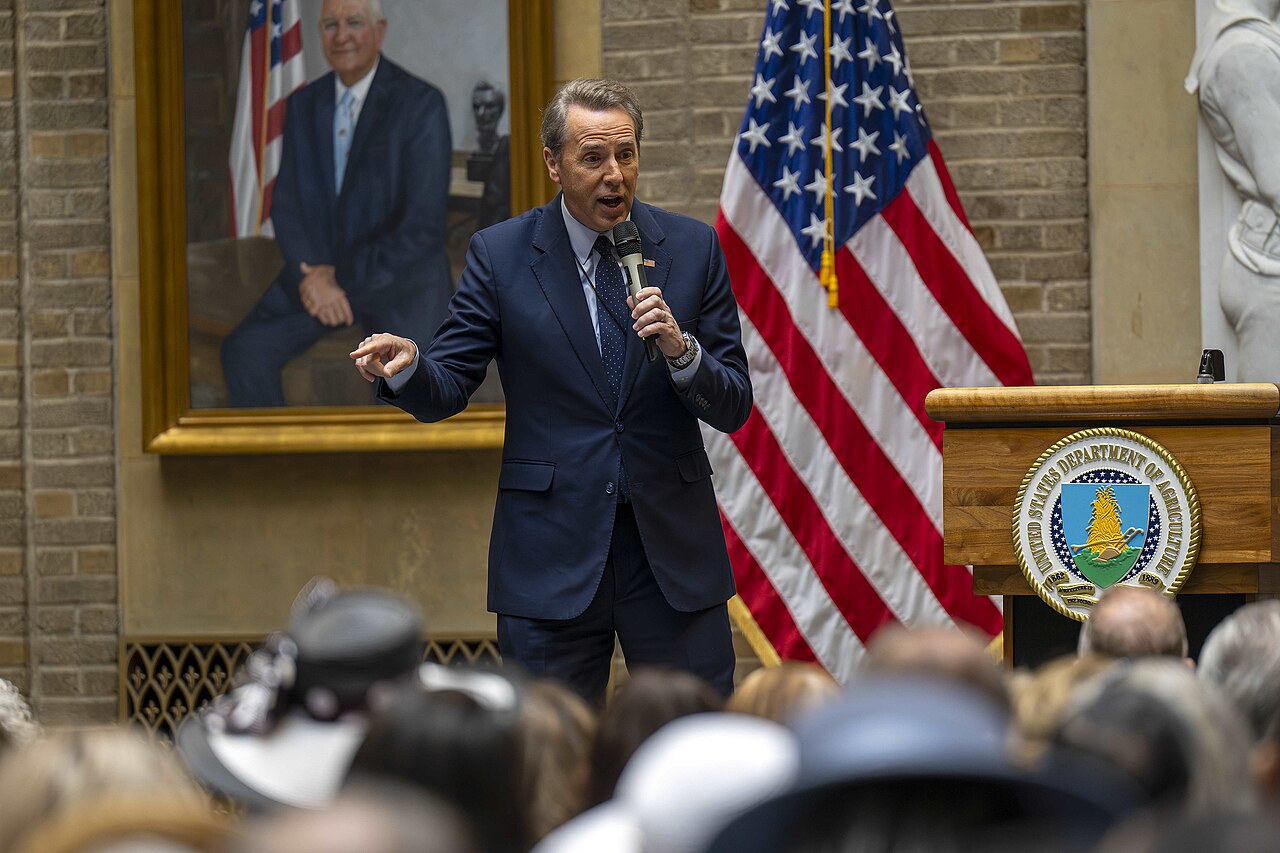
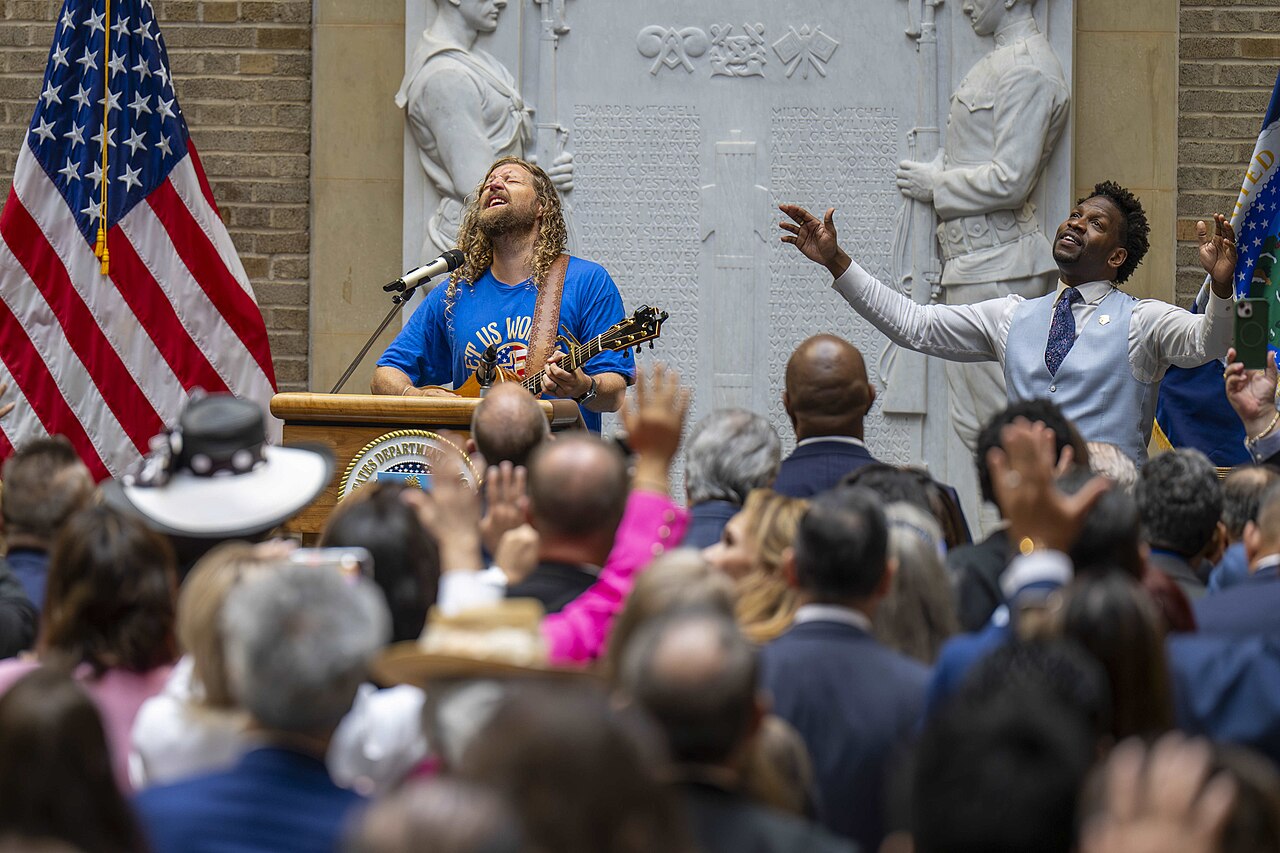
The nine-hour gathering, called “Rededicate 250: National Jubilee of Prayer, Praise & Thanksgiving,” combined worship music, patriotic speeches, prayers, and political messaging as part of preparations for the United States’ upcoming 250th anniversary celebrations.
Held under the broader “Freedom 250” initiative, a public-private partnership connected to the White House, the event featured prominent evangelical Christian leaders, conservative Catholic figures, Republican politicians, and recorded video messages from top Trump administration officials.
Trump Officials Deliver Religious and Patriotic Messages
Video messages played during the event included remarks from:
- Vice President JD Vance
- Secretary of State Marco Rubio
- Defense Secretary Pete Hegseth
- Director of National Intelligence Tulsi Gabbard
Speakers repeatedly emphasized America’s “Judeo-Christian roots” and referenced biblical themes connected to the nation’s founding documents, including the Declaration of Independence.
The atmosphere often resembled both a political rally and a worship service.
Crowds chanted “U-S-A” throughout the day while contemporary Christian artists, including worship musician Chris Tomlin, led large-scale praise performances.
Although President Donald Trump did not attend in person, organizers played a prerecorded video of him reading passages from 2 Chronicles 7:11-22.
The video had originally been released during a separate Bible-reading campaign earlier this year.
Critics Say Event Excluded Many Faiths
Civil liberties organizations and church-state separation advocates strongly criticized the event.
The Freedom From Religion Foundation called the gathering unconstitutional and accused the government of favoring one religious ideology.
“This government-sponsored prayer fest is the epitome of exactly what our secular Constitution forbids our government from doing,” said Annie Laurie Gaylor, co-president of the organization.
Critics also pointed to the lack of representation from many religious groups and denominations.
Notably absent from the speaker lineup were:
- Mainline Protestant churches such as Lutherans, Methodists, and Episcopalians
- Muslim leaders
- Buddhist representatives
- Orthodox Christian groups
- The Church of Jesus Christ of Latter-day Saints
No major Democratic political figures appeared during the event either.
According to Pew Research Center data, more than one-quarter of U.S. adults now identify as religiously unaffiliated.
Organizers Defend Event’s Christian Focus
Freedom 250 organizers defended the program, arguing it reflected America’s historical roots.
Freedom 250 CEO Keith Krach said organizers attempted to make the celebration broadly inclusive but acknowledged not everyone would agree with the approach.
“We try to have something for everybody,” Krach told Reuters. “I guess you can’t please all the people all the time.”
Several faith leaders argued the event intentionally focused on the religious traditions most associated with early American history.
National Hispanic Christian Leadership Conference president Samuel Rodriguez described the speaker lineup as a reflection of the country’s colonial-era religious identity following the Great Awakening movement of the 18th century.
“It’s pretty much a depiction, a screenshot of our foundation,” Rodriguez said.
Political and Religious Messaging Intertwined
The event also included direct political themes.
House Speaker Mike Johnson used his remarks to criticize what he described as “sinister ideologies” that focus too heavily on America’s historical failures instead of its blessings.
“We remember that your mighty hand has been upon our nation since the very beginning,” Johnson said during a prayer.
Supporters attending the event described it as both spiritual and patriotic.
Michelle Fenske, who traveled from Oklahoma after hearing Trump announce the celebration, said the gathering gave her hope after difficult years politically and socially.
“This is what I needed,” she said. “It’s been a hard few years for our country.”
The event marks the first of 16 major celebrations planned ahead of America’s 250th anniversary in 2026.
Organizers say the broader initiative aims to “rededicate” the country as “One Nation under God.”
Featured image from: USDAgov, Public domain, via Wikimedia Commons