
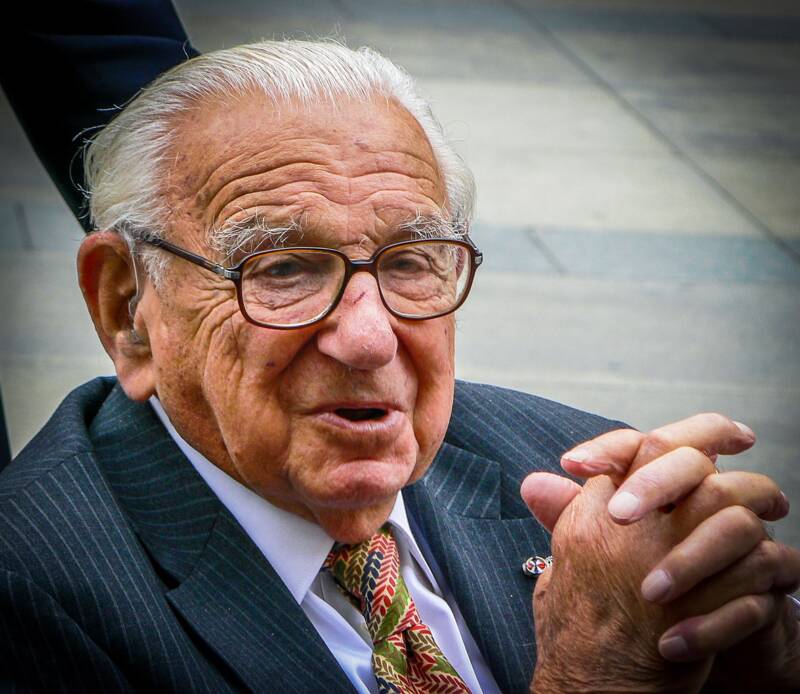
The Hidden Hero Beneath an Ordinary Life
In the spring of 1954, Nicholas Winton was running for a council seat in Maidenhead, a peaceful English town outside London. His campaign leaflet listed his experience in local politics, a bit about his fencing skills, and his service in the Royal Air Force. Nearly buried in the “Personal Details” section was a single unassuming sentence:
“After Munich evacuated 600 refugee children from Czechoslovakia.”
Few voters gave it much thought. But those eight words were, in truth, a doorway into one of the most extraordinary rescue missions of the 20th century. The modest stockbroker had saved hundreds of children from the Holocaust, and told almost no one.
This is the remarkable story of Nicholas Winton, the man later called “the British Schindler”, a title he never sought, and one he consistently tried to downplay.
A Ski Trip That Became a Rescue Operation
In December 1938, Winton was a 29-year-old London stockbroker whose German Jewish parents had immigrated to England decades earlier. He planned to spend the winter skiing in Switzerland. But days before he was set to depart, he received a call from his friend Martin Blake, who had been working with refugees in Czechoslovakia after the Munich Agreement ceded its western region to Nazi Germany.
Blake urged him to come to Prague, not Switzerland.
“Don’t bother to bring your skis,” Blake said.
Winton agreed “on an impulse,” as The New York Times later described it.
When he arrived in Prague, he was confronted with the grim reality of refugee camps filled largely with Jewish families who had fled the Sudetenland. Immigration quotas across Europe prevented many of them from escaping. Unlike Germany and Austria, Czechoslovakia had no official evacuation program for children.
Winton, Blake, and colleagues such as Trevor Chadwick and Bill Barazetti decided to create one from scratch.
Setting Up a Lifeline for Families Running Out of Time
Working out of a makeshift office in Prague, Winton and his team met with desperate parents, thousands of them, who saw no future for their children under encroaching Nazi rule. Many knew that if their children left, they might never see them again.
Parents lined up for hours seeking Winton’s help. The Nazis began monitoring him, harassing him, and tracking his movements. Still, Winton persisted. When bribes were required to keep officials at bay, he paid them.
Back in London, Winton coordinated the most complicated part of the mission: securing British entry visas and finding volunteer foster homes. To foster a child, British families needed to provide a £50 guarantee (equivalent to about $1,700 today) to ensure the child’s return after the crisis. Thousands of families stepped forward.
But the British Home Office was slow to issue visas.
Winton did not wait.
When bureaucratic delays threatened children’s lives, he and his team resorted to forging the necessary documents, an act that, while illegal, saved many children who otherwise would have been trapped when war broke out.
By March 14, 1939, their first train of child refugees departed from Prague.
The Dangerous Escape Out of Nazi-Controlled Territory
Each transport traveled a perilous route:
- From Prague, trains moved through central Germany,
- Then into the Netherlands,
- Where boats ferried the children across the North Sea into England.
The first train carried 20 children. Seven additional trains soon followed, with the largest, carrying 241 children, arriving safely on July 1, 1939.
These scenes were both hopeful and devastating. Train platforms were filled with weeping parents, many of whom tried to reassure their children with promises they knew they would not be able to keep.
A survivor later recalled:
“They misled me into believing I was going on an adventure… I had no idea it was the last time I would see my father alive.”
Zuzana Marešová, one of the few Winton children reunited with her parents after the war, remembered:
“I can still see them today… the parents’ hands up and our noses pressed to the glass.”
The emotional toll on both sides of the window was immense.
Winton had at least two more trains planned. The final and largest, scheduled to depart on September 1, 1939, held 250 children.
That morning, Germany invaded Poland.
War erupted.
“Within hours of the announcement, the train disappeared,” Winton said decades later. “None of the 250 children aboard was ever seen again.”
Those families waited in vain at London’s Liverpool Street station.
Had the train left a day earlier, it might have reached safety.
The Man Who Refused the Title “Hero”
By the time war ended, Nicholas Winton had saved 669 children, nearly all of them Jewish, from the horrors of the Holocaust.
But almost no one knew.
He didn’t tell friends. He didn’t mention it in speeches. He didn’t even tell the children he saved.
He married Grete Gjelstrup after the war, but even she knew little, until she discovered a dusty scrapbook in their attic in 1988. Inside were detailed lists, photographs, letters, and documentation for every child Winton had rescued.
When she asked her husband what it was, he shrugged it off and suggested she throw it away.
“You can’t throw those papers away,” she insisted. “They are children’s lives.”
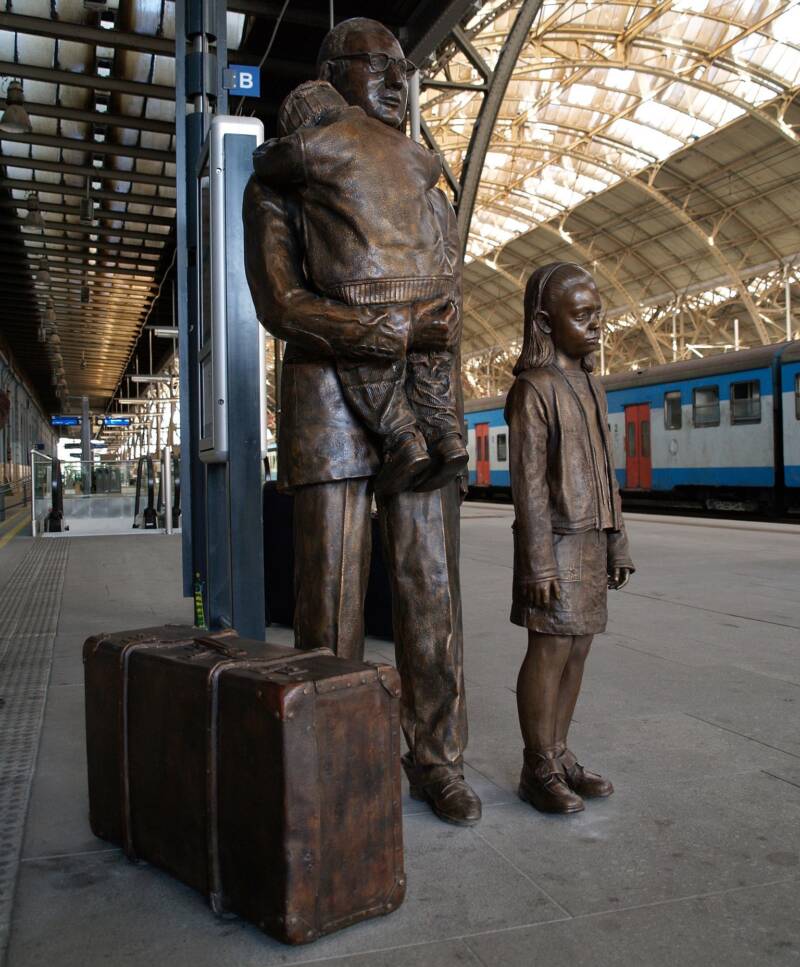
Grete took the scrapbook to a Holocaust historian. Soon, journalists and filmmakers wanted to speak with the quiet man who’d saved hundreds. International honors poured in. Statues were erected. A minor planet was named after him.
Winton resisted the praise.
He insisted that he wasn’t heroic, that the real heroes were the colleagues who stayed in Prague under Nazi supervision, such as Doreen Warriner and Trevor Chadwick.
“I wasn’t heroic because I was never in danger,” he told The Guardian in 2014.
And yet, one televised moment revealed the emotional weight he carried.
The “That’s Life” Reunion That Revealed His Legacy
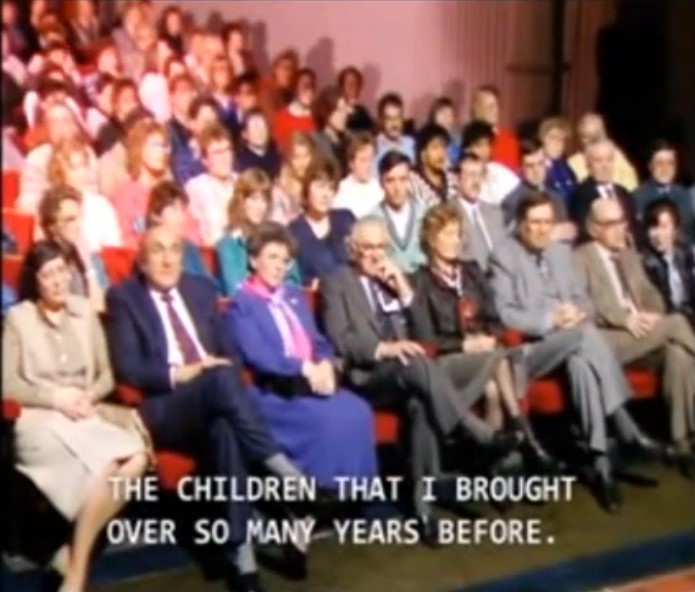
Shortly after the scrapbook surfaced, producers of the BBC program That’s Life invited Winton to sit in the studio audience. They did not explain why.
Halfway through the segment, the host revealed that the woman sitting next to him, someone Winton had never met as an adult, was one of the children he’d rescued.
Winton looked stunned.
Then the host asked everyone in the audience who owed their lives to Winton’s rescue efforts, either as saved children or as their descendants, to stand.
Dozens rose to their feet.
Winton instinctively reached under his glasses and wiped away tears.
That moment, still viewed online by millions, transformed him into a symbol of moral courage, even as he continued to insist he deserved none of it.
A Legacy That Continues to Save Lives
Nicholas Winton lived to be 106, passing away on July 1, 2015, exactly 76 years to the day after the largest of his trains arrived in Britain.
His legacy includes:
- statues in the Czech Republic, Britain, and elsewhere
- numerous international honors, including knighthood
- thousands of descendants of the 669 children he rescued
- and a global movement encouraging ordinary people to act when help is needed
His story is often invoked in humanitarian campaigns, refugee advocacy, and films. But Winton himself had a simpler view of his actions.
“It didn’t seem remarkable when I did it,” he said. “It just needed to be done.”
Every child he saved, every family line that continues today, and every life changed because of one man’s “impulsive” decision proves otherwise.
Nicholas Winton may never have embraced the title of hero, but history has given it to him all the same.
Featured image: cs:User:Li-sung, CC BY-SA 3.0, via Wikimedia Commons