
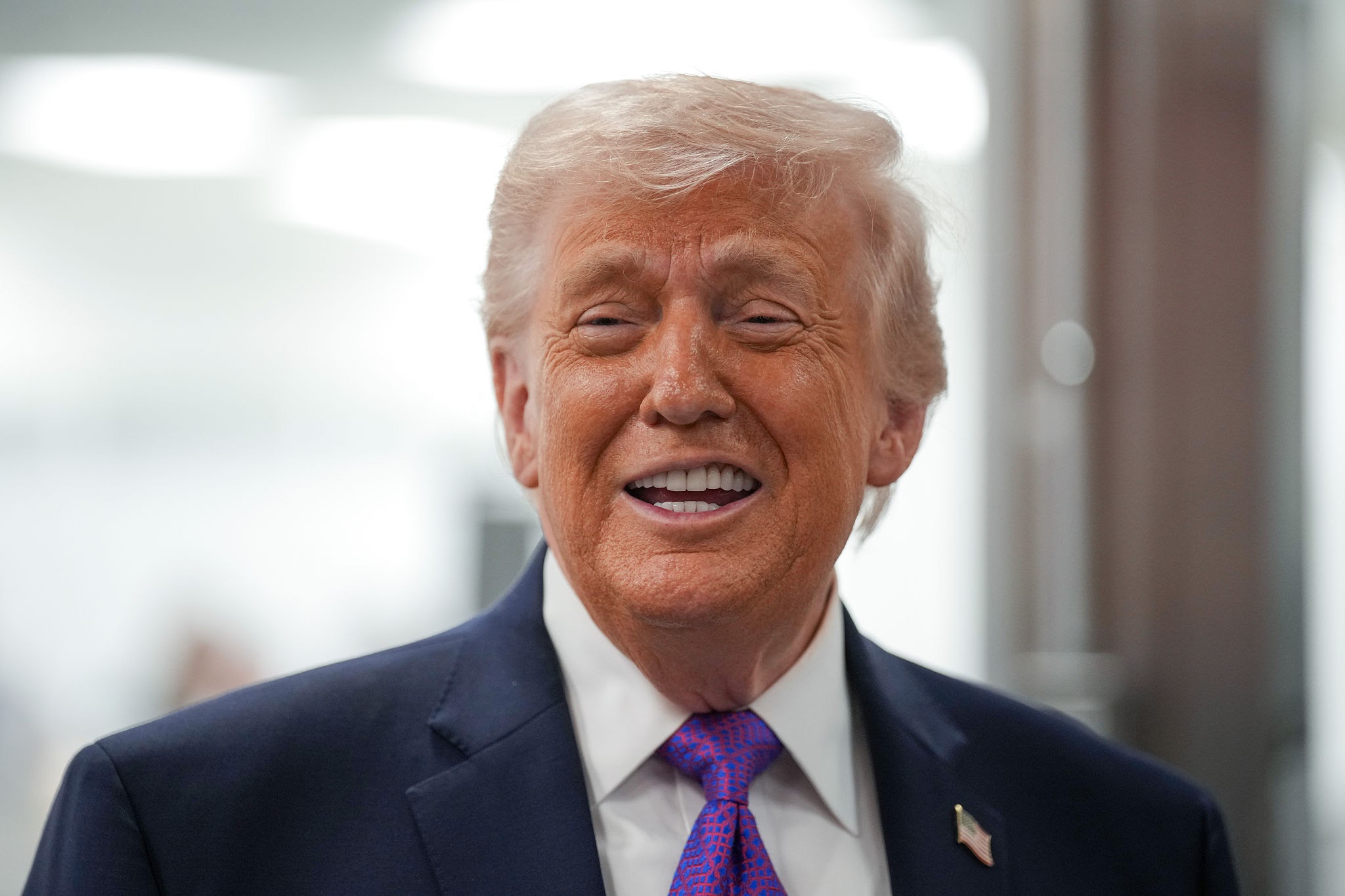
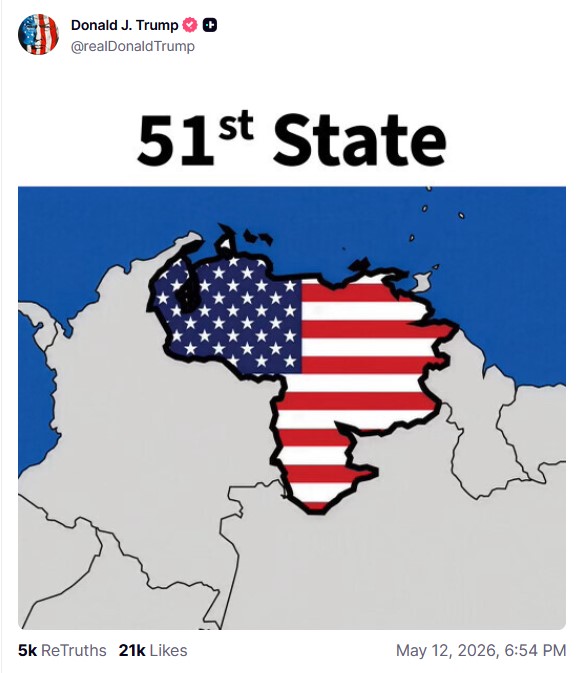
President Donald Trump has reignited an international controversy after posting a map of Venezuela labeled as the “51st State,” doubling down on his claim that he is “seriously considering” bringing the oil-rich South American country into the United States.
The post appeared on Truth Social while Trump was traveling to China for a high-stakes summit with Chinese President Xi Jinping. The White House later amplified the message, turning what might have been dismissed as political provocation into a diplomatic flashpoint.
Venezuela’s acting President Delcy Rodríguez quickly rejected the idea, saying her country has no intention of being annexed by the United States.
She said Venezuela would continue defending its sovereignty, independence, and history, calling the country “not a colony, but a free country.”
The dispute comes after months of extraordinary U.S. involvement in Venezuela following the arrest of former President Nicolás Maduro and his wife, Cilia Flores, during an American military operation. Since then, Trump has suggested the United States may temporarily oversee parts of Venezuela’s transition while prioritizing stability and oil production.
But turning Venezuela into a U.S. state would be far more complicated than a social media post.
Under the U.S. Constitution, new states can only be admitted by Congress. A president cannot unilaterally declare a foreign country part of the United States. Venezuela would also have to consent to any such arrangement, making forced annexation legally and diplomatically impossible under normal constitutional processes.
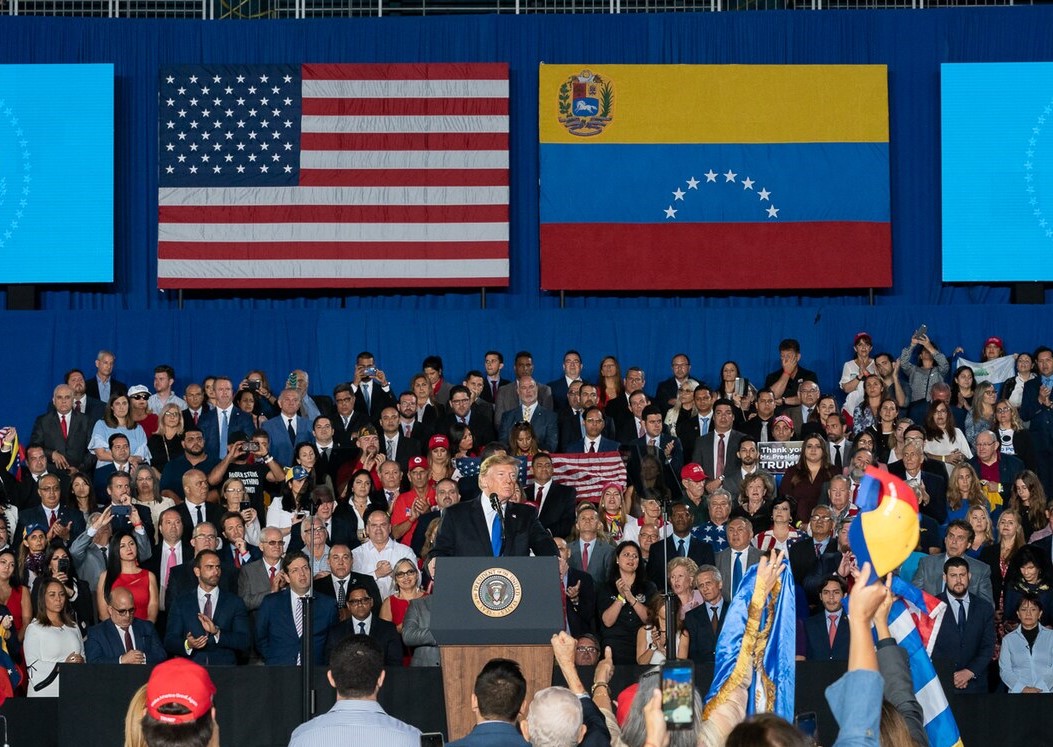
Trump’s interest in Venezuela appears closely tied to energy. The country holds some of the world’s largest proven oil reserves, making it strategically important as global fuel markets remain strained by conflict in the Middle East and instability around major shipping routes.
The White House has argued that relations with Venezuela have improved and that oil production is beginning to stabilize. But critics say Trump’s “51st State” language risks undermining that fragile progress by raising fears of American control over Venezuela’s political future and natural resources.
For Latin America, the rhetoric is especially sensitive. The region has a long history of U.S. intervention, and any suggestion of annexation is likely to trigger strong reactions from neighboring governments.
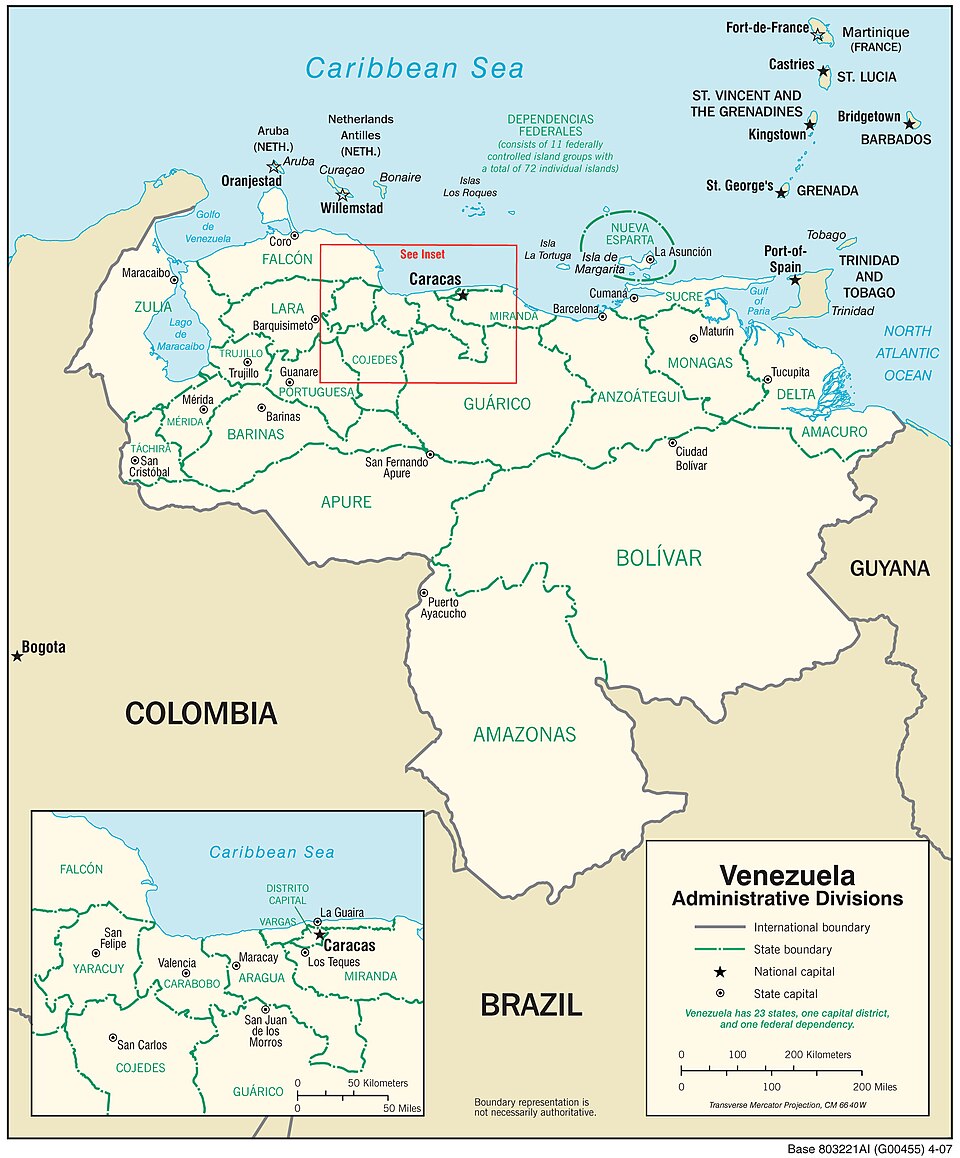
Legal experts say Venezuela’s situation is not comparable to U.S. territories or statehood debates involving Puerto Rico or Washington, D.C. Venezuela is an independent sovereign nation with its own government, borders, institutions, and international obligations.
For now, Trump’s post appears more like a political signal than a realistic policy plan.
Still, it carries consequences.
It could complicate U.S.-Venezuela relations, unsettle allies in Latin America, and raise questions about whether Washington’s involvement in Venezuela is meant to be temporary stabilization or something more permanent.
The bottom line is simple: Trump can talk about Venezuela becoming the 51st state, but he cannot make it happen on his own.
Congress would have to approve it. Venezuela would have to agree to it. And the political backlash across Latin America would likely be immediate.
Featured image from X: @Massivechanges