

Defense Secretary Pete Hegseth is attempting to draw a sharp line between the United States’ ongoing naval operations near Iran and the broader war that erupted earlier this year, describing the latest mission in the Strait of Hormuz as limited, defensive, and temporary.
But despite those assurances, clashes between US and Iranian forces continue to raise concerns about whether the fragile ceasefire between Washington and Tehran can truly hold.
The Pentagon’s latest operation, known as “Project Freedom,” is focused on reopening commercial shipping routes through the Strait of Hormuz after repeated attacks on vessels and mounting disruptions to global energy traffic.
Speaking during a Pentagon briefing, Hegseth insisted the mission is not a return to full-scale war.
“To be clear, this operation is separate and distinct from Operation Epic Fury,” Hegseth said, referring to the US-led military campaign against Iran earlier this year. “Project Freedom is defensive in nature, focused in scope and temporary in duration.”
What Is Project Freedom?
Project Freedom was launched after weeks of escalating maritime attacks in the Strait of Hormuz, one of the world’s most strategically important shipping lanes.
The narrow waterway handles roughly 20% of globally traded oil, making any disruption there a major concern for global markets and energy supplies.
According to US officials, the operation is designed to protect commercial vessels and ensure freedom of navigation without directly entering Iranian territory.
Hegseth said American forces will avoid Iranian waters and airspace entirely.
“We’re not looking for a fight,” he said.
The Pentagon says the operation involves Navy destroyers, fighter jets, helicopters, drones, and surveillance aircraft forming what Hegseth described as a “red, white and blue dome” over the shipping corridor.
The military operation comes alongside the separate US blockade targeting Iranian ports and oil exports, which remains active despite the ceasefire agreement reached in April.
US Says Iranian Boats and Missiles Continue Threats
While the White House insists the ceasefire technically remains intact, military officials acknowledged that Iranian attacks and confrontations have continued in the region.
General Dan Caine, chairman of the Joint Chiefs of Staff, said Iran has fired at commercial vessels nine times since the ceasefire began and has also targeted US military ships on 10 separate occasions.
US Central Command confirmed American forces recently sank six small Iranian boats after they threatened commercial shipping lanes.
Officials also said Iranian drones, cruise missiles, and fast attack craft have continued operating aggressively near international shipping routes.
A South Korean commercial ship was reportedly fired upon in recent days, while Iranian missile strikes also damaged infrastructure at an oil port in the United Arab Emirates.
Despite the incidents, Caine argued the attacks have remained “below the threshold” that would restart major combat operations.
Iran Calls US Operations a Violation of the Ceasefire
Iranian officials strongly disagree with the Pentagon’s interpretation of events.
Mohammad Ghalibaf, the speaker of Iran’s parliament, accused the United States of violating the ceasefire through its naval activities and blockade operations.
“We know full well that the continuation of the status quo is intolerable for America,” he wrote on social media. “While we have not even begun yet.”
Iran has repeatedly condemned the American naval presence near the Strait of Hormuz, especially after the US began intercepting vessels connected to Iranian ports.
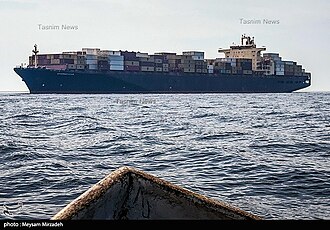
The standoff has left hundreds of commercial ships stalled in the Persian Gulf as shipping companies weigh the risks of crossing the region.
Although some vessels have begun using newly protected maritime corridors, overall traffic remains significantly reduced compared to normal conditions.
Questions Grow Over War Powers and Legality
Another growing dispute centers on whether the current military operations legally qualify as ongoing hostilities under US law.
Hegseth and President Donald Trump argue that the April ceasefire effectively paused the 60-day deadline under the War Powers Resolution, which requires congressional approval for extended military action.
“Ultimately, with the ceasefire, the clock stops,” Hegseth told reporters.
But legal scholars and constitutional experts are openly challenging that interpretation.
Several analysts argue that active naval blockades, ship seizures, and military strikes still amount to acts of war regardless of whether a formal ceasefire exists.
Tess Bridgeman, a former deputy legal adviser to the president, and Yale law professor Oona Hathaway wrote that the current US military posture clearly involves “ongoing significant risk” to American troops and continues to constitute hostilities.
David Janovsky of the Project on Government Oversight also argued that “the ceasefire does not affect the clock.”
The debate is likely to intensify if maritime clashes continue or if the US operation expands beyond escorting commercial vessels.
Trump Continues Hardline Messaging
President Trump has continued using aggressive rhetoric while defending the mission.
He recently described the operation in the Strait as a “mini war” and warned that any interference with US military operations would be met “forcefully.”
At the same time, administration officials insist they are not pursuing another long-term Middle East conflict.
Hegseth rejected comparisons between the current standoff and previous US wars in Iraq or Afghanistan, saying Project Freedom would not evolve into a “nation-building project” or a prolonged military occupation.
Still, with Iranian attacks continuing and commercial shipping under pressure, questions remain about how temporary the operation will actually be.

Featured Image from: Mass Communication Specialist Third Class Erick A. Parsons/US Navy, Public domain, via Wikimedia Commons