

A Young Woman Who Refused to Break
On the morning of September 5, 1986, Pan Am senior flight attendant Neerja Bhanot stepped aboard Flight 73 expecting a routine journey. Within hours, she would become one of the most celebrated civilian heroes in modern Indian history, a woman whose strength, training, and instinct saved hundreds of lives.
At just 22 years old, Bhanot demonstrated extraordinary composure when the flight was hijacked in Karachi, Pakistan, by four armed members of the Abu Nidal Organization. The 17-hour ordeal that followed ended with 20 dead, but the death toll would have been far higher without Neerja’s quick thinking and unbreakable courage.
When gunmen opened fire on passengers in the pitch-dark cabin, Neerja used her final moments not to flee, but to protect three children, losing her life in the process.
Her story is not simply one of tragedy. It is the story of a young woman who turned fear into bravery, who transformed her own suffering into strength, and who remains one of India’s most revered national heroes.
Early Life: A Bright Mind and a Beautiful Spirit
Born on September 7, 1963, in Chandigarh, India, Neerja Bhanot grew up in Mumbai, where she quickly became known for her warmth, poise, and striking beauty. As a teenager in St. Xavier’s College, she was discovered by a photographer and soon began modeling for major Indian brands like Paville and Vaporex.
Though she embraced modern life, she also respected tradition. When her family arranged a marriage to a man living in the United Arab Emirates, Neerja agreed. But what began as hope quickly turned into trauma. Her new husband was emotionally abusive and controlling. Within two months, Neerja gathered the courage to do something few young women of her era dared: she left the marriage.
Determined to rebuild her life independently, she applied to become a flight attendant, a profession that required confidence, discipline, and empathy. Out of 10,000 applicants, Neerja was selected by Pan American World Airways, one of the world’s premier airlines.
It was the beginning of a promising career.
It was also the path that led her to her final, and greatest, act of heroism.

Prelude to Disaster: The Hijacking of Pan Am Flight 73
The hijacking was meticulously planned. The Abu Nidal Organization, a Palestinian militant group, intended to reroute Flight 73 to Cyprus and then Israel to negotiate the release of imprisoned rebels. They chose the Karachi stopover because of lax early-morning security.
At around 6:00 a.m., the four terrorists stormed the runway in a van marked with fake airport security lights and sirens. Armed with rifles and grenades, they boarded the aircraft before takeoff.
Inside, chaos erupted.
Neerja reacted instantly. Grabbing the intercom, she shouted the secret code for “hijacking”, a warning to the cockpit, while fellow flight attendant Sherene Pavan entered the code into the system. This split-second decision allowed the pilots to escape out the cockpit windows, a move that prevented the terrorists from forcing the plane into the air.
Grounded and furious, the hijackers searched for American passengers. Pan Am’s Karachi director, Viraf Doroga, attempted to buy time by pretending a replacement pilot was coming. Hours passed. The gunmen grew impatient, and violent.
They dragged 29-year-old American Rajesh Kumar to the plane door, executed him in full view of negotiators, and dumped his body onto the tarmac. Terror rippled through the cabin.
Then the hijackers demanded passports.
Neerja immediately realized their plan: identify and kill Americans first.
Displaying calm leadership far beyond her years, she instructed the crew to hide every U.S. passport they could find, slipping documents under seat cushions, in the trash, or down the toilets. When the terrorists counted the remaining passports, they were told there were no Americans onboard.
Her quick thinking saved dozens of lives.
Seventeen Hours of Terror
Through the agonizing standoff, Neerja continued to comfort passengers, distributing food, water, and even encouraging children not to cry. She maintained a steady composure that helped keep panic from spreading.
As night fell, the situation reached a breaking point. Around 9:00 p.m., the plane’s auxiliary power failed, plunging the cabin into darkness. Disoriented, the hijackers panicked. Unable to detonate their explosives, they resorted to opening fire indiscriminately, spraying bullets across aisles filled with terrified passengers.
Neerja was still working.
Her Final Act of Bravery
In the chaos, she ran toward an emergency exit, pulling the lever and helping passengers escape down the slide. As gunmen turned their rifles toward the fleeing crowd, Neerja spotted three children frozen in terror.
Instead of running, she placed her body between them and the bullets.
She was struck and killed near the exit, less than 48 hours before her 23rd birthday.
According to one survivor’s account, Neerja was deliberately targeted when a hijacker saw her protecting passengers. Though this version is debated, what is certain is that her final moments were spent saving lives.
Of the 360 people aboard, 20 were killed, a devastating loss, but far less than the massacre that could have unfolded without the actions of Neerja and the crew.
One of the children she shielded later became a pilot, inspired by the flight attendant who saved his life.
Justice for the Hijacking, And Its Complications
A fifth terrorist who intended to join the attack was apprehended at the airport. All five hijackers were tried and convicted in Pakistan. One was eventually extradited to the United States, where he remains imprisoned.
The others were released to Palestinian authorities in 2008, sparking international outrage. They have remained missing ever since.
India Honors a National Hero
In the wake of the tragedy, Neerja Bhanot became a symbol of bravery across India and the world. Her actions were celebrated not only for their heroism, but for their humanity, she was not trained for combat, yet she remained composed throughout an ordeal that lasted nearly an entire day.
She received numerous posthumous honors, including:
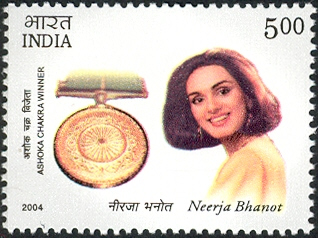
- The Ashoka Chakra, India’s highest peacetime award for bravery
- A commemorative postage stamp issued in her name in 2004
- The Justice for Crimes Award from the USA Attorney’s Office
- Public memorials in India, Pakistan, and the U.S.
Her story inspired the 2016 biographical thriller “Neerja,” which brought her life and sacrifice to a new global audience.
A Legacy That Lives On
Neerja Bhanot’s heroism continues to inspire flight crews, emergency workers, and ordinary citizens worldwide. She showed what courage looks like in its purest form, not the absence of fear, but the strength to act despite it.
She protected strangers as though they were her own family, and in doing so, saved hundreds of people who went home to their loved ones because she refused to abandon her post.
Her father once said that Neerja lived by a simple principle:
“Do your duty, come what may.”
On September 5, 1986, she did exactly that.
And the world has never forgotten her.
Featured Image from Instagram: neerja_bhanot_love