
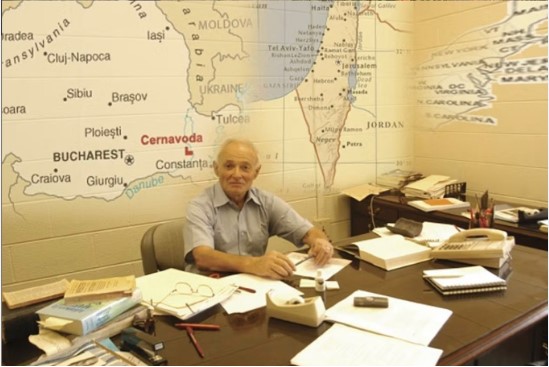
A Life Marked by Hardship, And Remarkable Resilience
On April 16, 2007, during what became the deadliest school shooting in U.S. history, Professor Liviu Librescu held shut the door of his classroom in Virginia Tech’s Norris Hall, allowing 22 students to escape through the windows. At 76 years old, he was killed shielding them. For many Americans, this would be the first time they heard his name, but his courage was not born in that moment. It was the culmination of a lifetime shaped by resilience, intellect, and an unwavering moral compass.
Born in Romania in 1930, Librescu’s childhood was consumed by the darkness of World War II. As a Jewish boy growing up in an Axis-aligned nation, he was forced into labor camps and ghettos. He survived the atrocities that claimed the lives of hundreds of thousands of Romanian and Ukrainian Jews, and carried forward the memory of those who did not.
His journey from Holocaust survivor to world-renowned scientist, and ultimately to Virginia Tech professor, is a testament to the extraordinary path he walked, and the courage that defined him.
Growing Up Jewish in Nazi-Allied Romania
Liviu Librescu was born in Ploieşti, Romania, on August 18, 1930. His early childhood coincided with the rise of fascism across Europe, and by 1940 Romania had joined the Axis powers, aligning itself with Nazi Germany.
The dictatorship of Ion Antonescu quickly imposed antisemitic policies. Under his orders, thousands of Jews were deported, murdered, or confined in ghettos and labor camps. Librescu and his family were among them, first forced into a labor camp and later into the Focşani ghetto.
His wife, Marlena, later described their experience with stark clarity:
“We were in Romania during the Second World War, and we were Jews there among the Germans, and among the antisemitic Romanians.”
Romania’s actions under Nazi influence were devastating. A 2004 international report estimated that between 280,000 and 380,000 Romanian and Ukrainian Jews were killed. The panel concluded:
“Romania committed genocide against the Jews. The survival of Jews in some parts of the country does not alter this reality.”
Livrescu survived both the war and the systemic violence of the era, but the trauma shaped his worldview and strengthened his resolve.
Life Under Communism and Resistance to Ceaușescu
After the war, Romania fell under tight Soviet control. By 1947, King Michael was forced to abdicate, and Romania transitioned into a communist state. During this time, Librescu pursued his education, earning an undergraduate degree in aeronautical engineering, a field in which he showed extraordinary promise.
But the rise of Nicolae Ceaușescu, who would become one of Europe’s most notorious dictators, complicated Librescu’s life once again.
Despite being a talented scientist working at Romania’s aerospace agency, Librescu refused to swear allegiance to the Communist Party. His refusal nearly ended his career:
- He was demoted and banned from publishing within Romania.
- He resorted to smuggling his research manuscripts to the Netherlands to be published abroad.
- He repeatedly applied to emigrate to Israel, a request that resulted in him being fired altogether.
His escape ultimately became possible through the intervention of Israeli Prime Minister Menachem Begin, who advocated on behalf of persecuted Jewish families. Librescu, his wife, and their children finally left Romania and arrived in Israel, where his career flourished.

A New Life in Israel, And a Path to America
In Israel, Librescu became a respected professor of aeronautical and mechanical engineering at Tel Aviv University. His earlier struggles did nothing to slow his academic productivity. He became known as a prolific researcher:
- Publishing hundreds of articles
- Delivering dozens of invited lectures
- Contributing groundbreaking work in aerodynamics and material science
In 1985, he left for a sabbatical in the United States. His plan was to spend only a year conducting research, but Virginia Tech quickly recognized his brilliance. He was offered a position at the Department of Engineering Science and Mechanics, and he and his family chose to stay.
According to the university, Librescu eventually published more papers than any other professor on the faculty. Generations of engineering students came to know him as a demanding but devoted educator who refused to compromise the integrity of his work.
Former department head Ishwar Puri described him perfectly:
“If you wanted an honest answer… if you wanted somebody to tell you in a straightforward way that you should do something or not do something, he was the man.”
Although he could have retired, Librescu loved teaching, and refused to leave the classroom.
“It is a question of pleasures,” he said in 2005. “I would like to be free as a bird and fly everywhere.”
His passion for discovery and education remained alive until his final moments.
April 16, 2007: The Day His Bravery Saved 22 Students
On the morning of April 16, 2007, Librescu was teaching a solid mechanics class in Room 204 of Norris Hall. When 23-year-old student Seung-Hui Cho began his shooting rampage inside the building, Librescu immediately recognized the danger.
The classroom door did not lock, leaving the students exposed. Librescu shouted for them to escape through the windows, which opened onto a drop from the second floor.
As his students began climbing out, Librescu pressed his body against the door, physically holding it shut as Cho pushed from the other side.
One student later said:
“I just remember looking back and seeing him at the door. I don’t think I would be here if it wasn’t for him.”
Cho fired multiple rounds through the door, hitting the professor. Still, Librescu continued to block the gunman long enough for nearly the entire class to escape.
Only one student, Minal Panchal, was unable to get out in time. Cho entered the room, fatally shooting both Librescu and Panchal before moving on.
Librescu died shielding the people he had spent decades teaching, mentoring, and encouraging, a heroic act witnessed by the students whose lives he saved.
His son Joe later told reporters:
“This was typical of him. He did not fear death and at all times tried to do the right thing.”
The tragedy occurred on Yom HaShoah, Holocaust Remembrance Day, a coincidence not lost on the Librescu family.
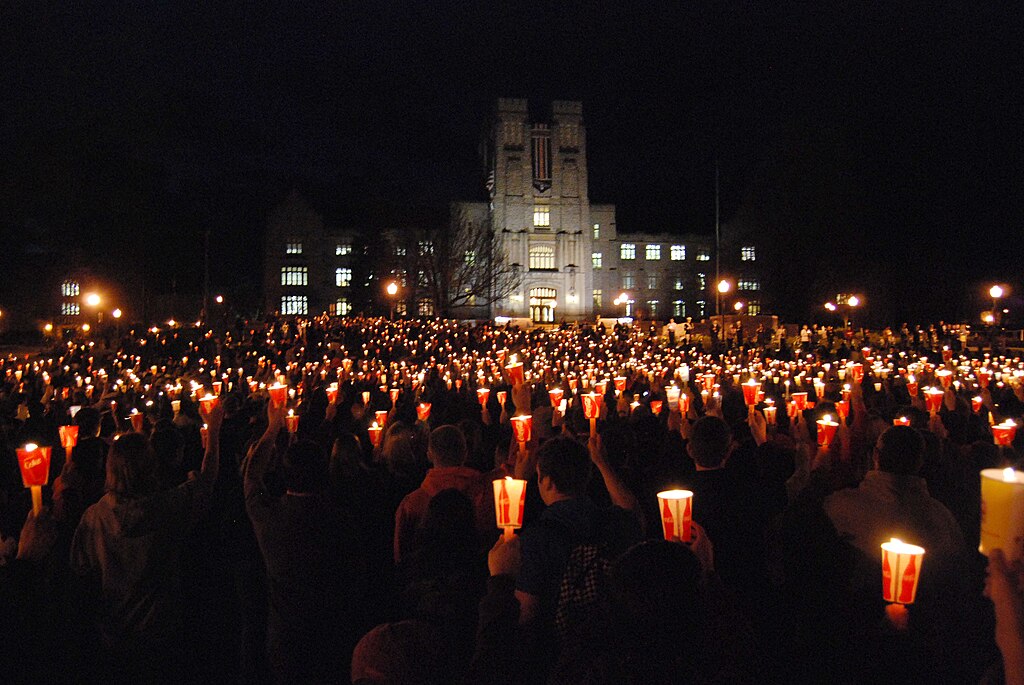
A Legacy of Heroism, Scholarship, and Humanity
News of Librescu’s final act spread quickly, prompting tributes across the world. Then-President George W. Bush honored him during a service at the United States Holocaust Memorial Museum:
“This Holocaust survivor gave his own life so that others may live.”
His story resonated globally because it reflected the best of human courage against the worst kinds of violence. He survived genocidal persecution, resisted dictatorship, rebuilt his life through intellect, and ultimately sacrificed himself to save others.
Librescu’s legacy now lives on in multiple ways:
- Scholarships established in his name
- Academic awards recognizing research excellence
- Memorials at Virginia Tech and in Israel
- Annual events honoring the victims of the Virginia Tech shooting
Most importantly, his values endure in the lives of the 22 students he saved, many of whom have spoken about how his bravery shaped their futures.
Conclusion: A Life Lived With Purpose
Liviu Librescu’s story is that of a man who refused to bow to hatred, oppression, or danger. From surviving the Holocaust to defying a communist dictatorship, from advancing global aerospace research to sacrificing himself for his students, his life embodied resilience and moral clarity.
He once said he aimed to be “free as a bird,” but freedom, for him, was never only personal, it was something he extended to others, even at the cost of his life.
On April 16, 2007, Liviu Librescu became a symbol of courage in the face of terror. But his heroism did not begin in that moment. It was the final chapter of a story defined by strength, brilliance, and compassion.
His life reminds us that even in the darkest moments, one person’s courage can change, and save, many lives.
Featured Image from Facebook: History Captain