
What started as a symbolic protest is now fueling a bigger debate about immigration, fairness, and political double standards
A viral petition calling for the deportation of former First Lady Melania Trump is spreading quickly across social media, but behind the headlines, legal experts say there’s one major problem.
It can’t actually happen.
The petition, hosted on the progressive platform MoveOn, has gathered thousands of signatures in a short time, driven by renewed political tensions and ongoing debates around immigration policy in the United States.
Supporters say it’s not meant to be taken literally.
Instead, they describe it as a symbolic protest, designed to highlight what they see as inconsistencies in how immigration laws are discussed and applied.
But as the petition gains attention, it’s raising a much bigger question.
This Isn’t Really About Deportation
At its core, the petition isn’t about removing a former First Lady from the country.
It’s about challenging a broader idea:
Should immigration policies apply equally to everyone, including those connected to political power?
That framing is what’s driving the conversation.
During his presidency, Donald Trump pushed for stricter immigration enforcement and criticized certain forms of family-based immigration, often referred to as “chain migration.”
Supporters of the petition are now pointing to those past positions and asking whether the same standards should be applied across the board.
For them, the petition is less about action, and more about exposing what they see as contradictions.
The Legal Reality
Despite its viral momentum, the proposal runs into a fundamental issue almost immediately.
Melania Trump is a naturalized U.S. citizen, having obtained citizenship in 2006 after moving to the United States in the 1990s.
Under U.S. law, citizens cannot be deported.
Deportation applies only to non-citizens who violate immigration laws, and there is no public evidence suggesting that Melania Trump has committed any deportable offense.
That makes the petition, from a legal standpoint, unenforceable.
No matter how many signatures it gathers, it has no mechanism to trigger legal action.
Why It’s Still Gaining Traction
If the petition has no legal path, why is it spreading so quickly?
Because it taps into something deeper than policy.
It connects to ongoing frustration and division around immigration in the United States, an issue that has remained one of the most politically charged topics for years.
By focusing on a high-profile figure, the petition turns a complex policy debate into something more immediate and shareable.
It simplifies the issue into a single question:
Are the rules applied equally?
That simplicity is part of what makes it viral.

The Background That Fuels the Debate
Part of the attention surrounding the petition comes from Melania Trump’s own immigration history.
After becoming a U.S. citizen, she later sponsored her parents for green cards, and they eventually became citizens as well.
That detail has been widely discussed because it intersects directly with previous political debates over family-based immigration.
Supporters of the petition argue that this highlights a contradiction.
Critics argue that it reflects a misunderstanding of how immigration law works, noting that her actions followed legal processes available to U.S. citizens.
Symbolism vs. Reality
Political analysts say campaigns like this are becoming more common, especially in highly polarized environments.
They are not designed to change law.
They are designed to send a message.
In this case, that message centers on perceived double standards, fairness, and accountability.
But there is a downside.
When symbolic campaigns spread quickly, they can blur the line between protest and misinformation, especially for people who encounter them without full context.

A Bigger Conversation About Trust
The petition’s popularity reveals something important about the current political climate.
Many Americans are not just debating policy, they are questioning consistency.
They are asking whether laws are applied evenly, whether influence plays a role, and whether the system treats people differently based on status or connection.
These are not new questions.
But moments like this bring them back into focus.
Where Things Stand Now
As of now, the petition continues to circulate online, gaining attention and fueling debate.
But beyond the conversation it’s generating, nothing has changed legally.
There is no investigation tied to it.
No government agency is reviewing it.
And no legal pathway exists for it to be enforced.
Its impact remains entirely symbolic.
The Bottom Line
What started as a viral petition has quickly become something else.
A reflection of deeper divisions around immigration, fairness, and trust in the system.
Because while the petition itself has no legal standing, the conversation behind it is very real.
And it points to a question that continues to divide Americans:
Should the same rules apply to everyone, no matter who they are?
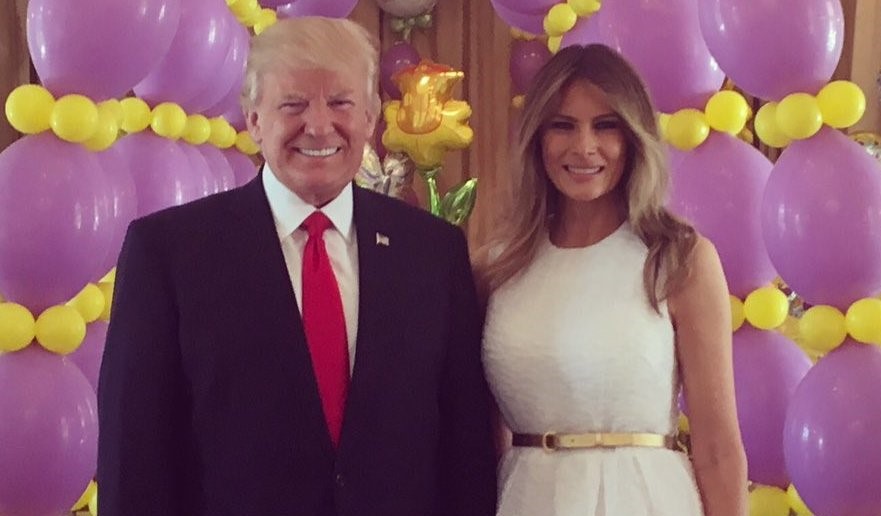
Featured Image from: White House, Public domain, via Wikimedia Commons