
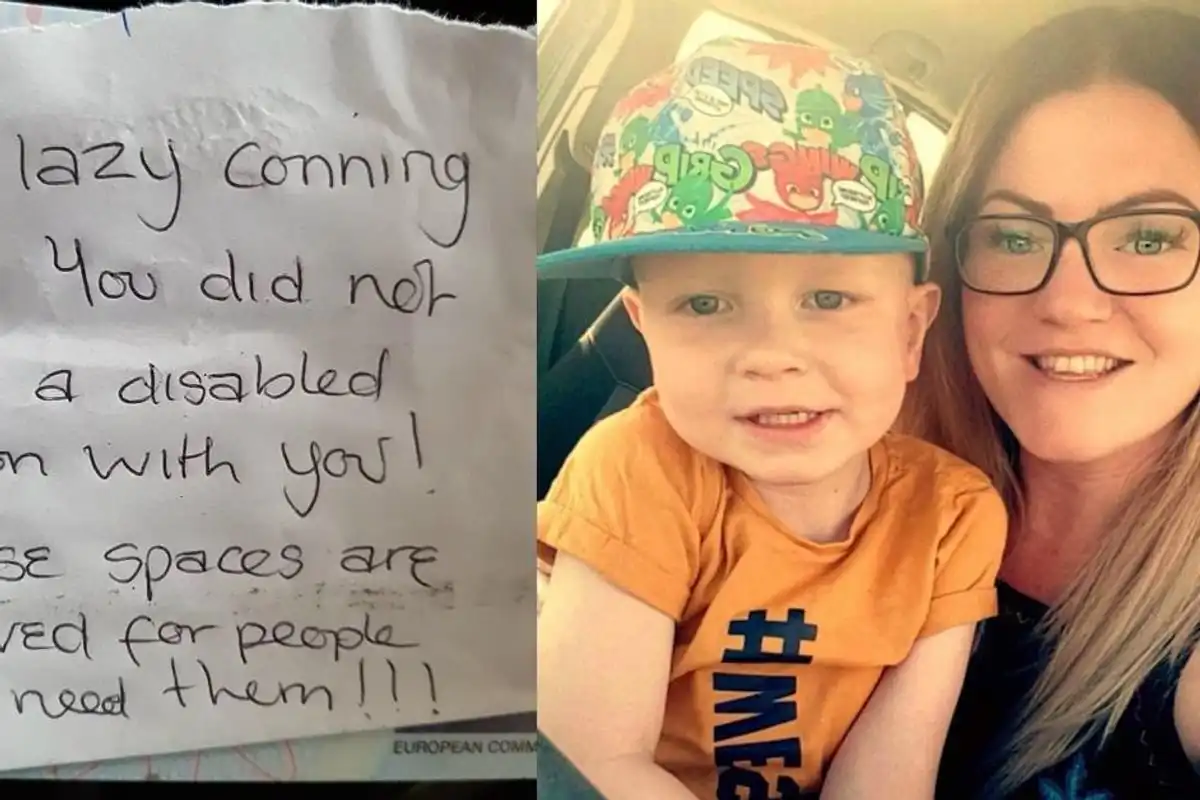
After being accused of abusing a parking spot for people with disabilities, one mother shared the heartbreaking truth about her son, and why judgment can do real harm.
A Parking Lot Confrontation Without a Confrontation
Most people have felt that moment of irritation in a crowded parking lot: someone pulls into a disabled spot, steps out of the car looking perfectly fine, and walks away. Frustration bubbles. You wouldn’t confront them directly, that would be uncomfortable, so you imagine leaving a note instead.
That’s exactly what happened to Emma Doherty, except she wasn’t the frustrated bystander. She was the mother on the receiving end of a shockingly hostile message.
When she returned to her car, Emma found a folded note dripping with anger and assumptions. It didn’t just question her integrity, it attacked her character.
The anonymous author wrote:
“You lazy conning b-tch. You did not have a disabled person with you! These spaces are reserved for people who need them!!!”
The language was harsh, accusatory, and, as Emma soon explained, entirely wrong.
A Painful Accusation, and the Real Story Behind It
Instead of lashing out at the stranger, Emma took to Facebook to explain what the note-writer never bothered to ask.
She started by outlining the severity of her son Bobby’s medical condition, one marked by multiple life-threatening issues and years of hospital visits.
“He’s had 2 strokes and was paralyzed, brain damaged and has a spine and hip condition as well as a massive heart condition.”
On the day of the note, Emma wasn’t unloading a wheelchair because she didn’t have the time. The day before, Bobby had endured an MRI, a CT scan, and dye testing for heart function. He was discharged late and had to return early the next morning.
“The reason I didn’t get his wheelchair out was because I was running late… so carried him in.”
Her message carried one central truth:
“Not everyone who holds a blue badge needs to have a wheelchair!”
“Why Did Your Note Break Me?”
Despite everything Emma had endured as a single mom navigating her child’s dangerous medical journey, it was the cruelty of this note that pushed her to tears.
“I’ve sat through things nobody should see, but why did your note break me? Because it’s your pure ignorance towards others.”
She explained that she deals with stares and whispers regularly, people questioning her right to park in disabled spaces because she’s carrying Bobby instead of wheeling him.
“Every day I get looks and stares… Everyone needs to stop and think before acting.”
To silence doubts once and for all, she even included a photo of Bobby to show that disability isn’t always visible.
A Medical Reality the Strangers in the Parking Lot Didn’t See
Bobby’s condition is severe. He lacks pulmonary artery function, meaning blood doesn’t circulate through his body normally. Even short distances can be dangerous.
Walking long stretches across a parking lot, something fully healthy people hardly think about, could put him in medical distress.
Emma drives him to the hospital several times a week for treatment. The note arrived on a day she was already emotionally drained from medical appointments and physical caretaking.
The last thing she needed was judgment.
Clearing the Hospital of Blame
Emma clarified that she didn’t blame medical staff for what happened.
“I’d like to point out this has nothing to do with the hospital itself. They were lovely with me… They’ve saved my son’s life many times.”
The note, she emphasized, came from someone else parked nearby, not from someone who understood the full picture.
Her Message Quickly Went Viral
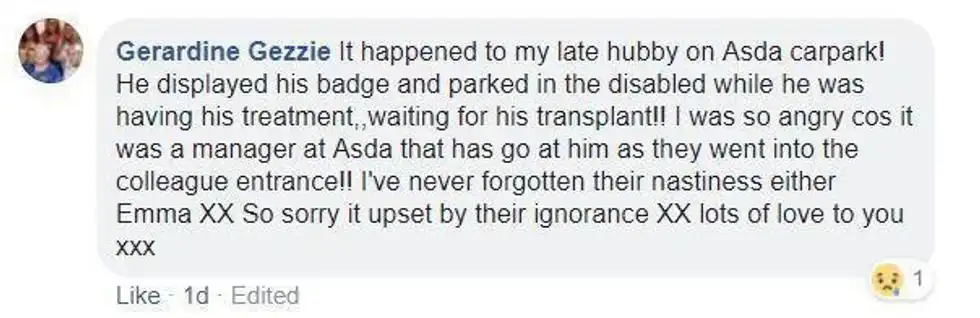
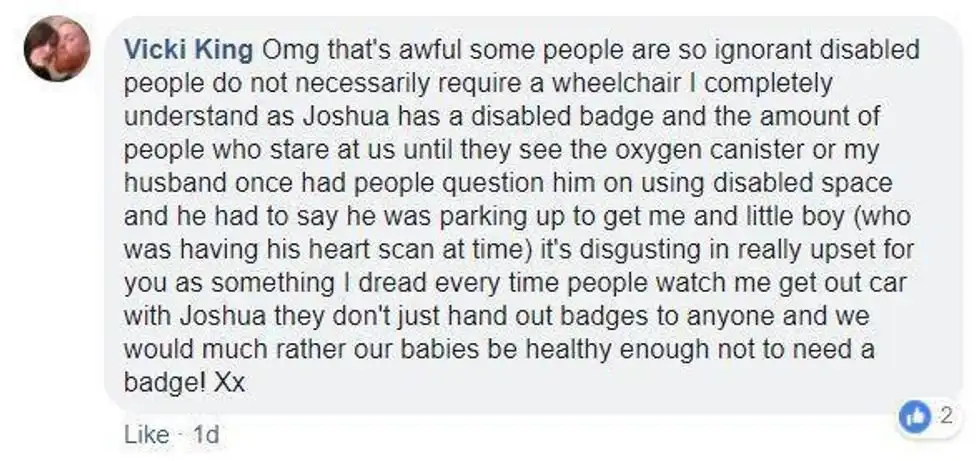
Emma’s post struck a nerve globally. Thousands of people shared similar stories of harassment, shame, or confrontation for using a disabled placard despite having an invisible disability.
Her inbox was soon flooded.
“My inbox is full of people who have told me they have been stared at or even spat at.”
The overwhelming response made it clear: ignorance about invisible disabilities is widespread, and harmful.
Emma hopes her story can change that.
“This is a serious problem and I just want it to change. I am hoping by sharing what I went through people will start to think before acting.”
Why Emma’s Response Matters
Her experience highlights crucial reminders:
- Not all disabilities are visible.
- Assumptions can cause deep emotional harm.
- Parking placards exist for many medical needs, not just mobility devices.
- A moment of empathy can prevent unnecessary pain.
Emma did more than respond to a nasty note, she offered a lesson in compassion.
Featured image from Facebook: Emma Doherty