
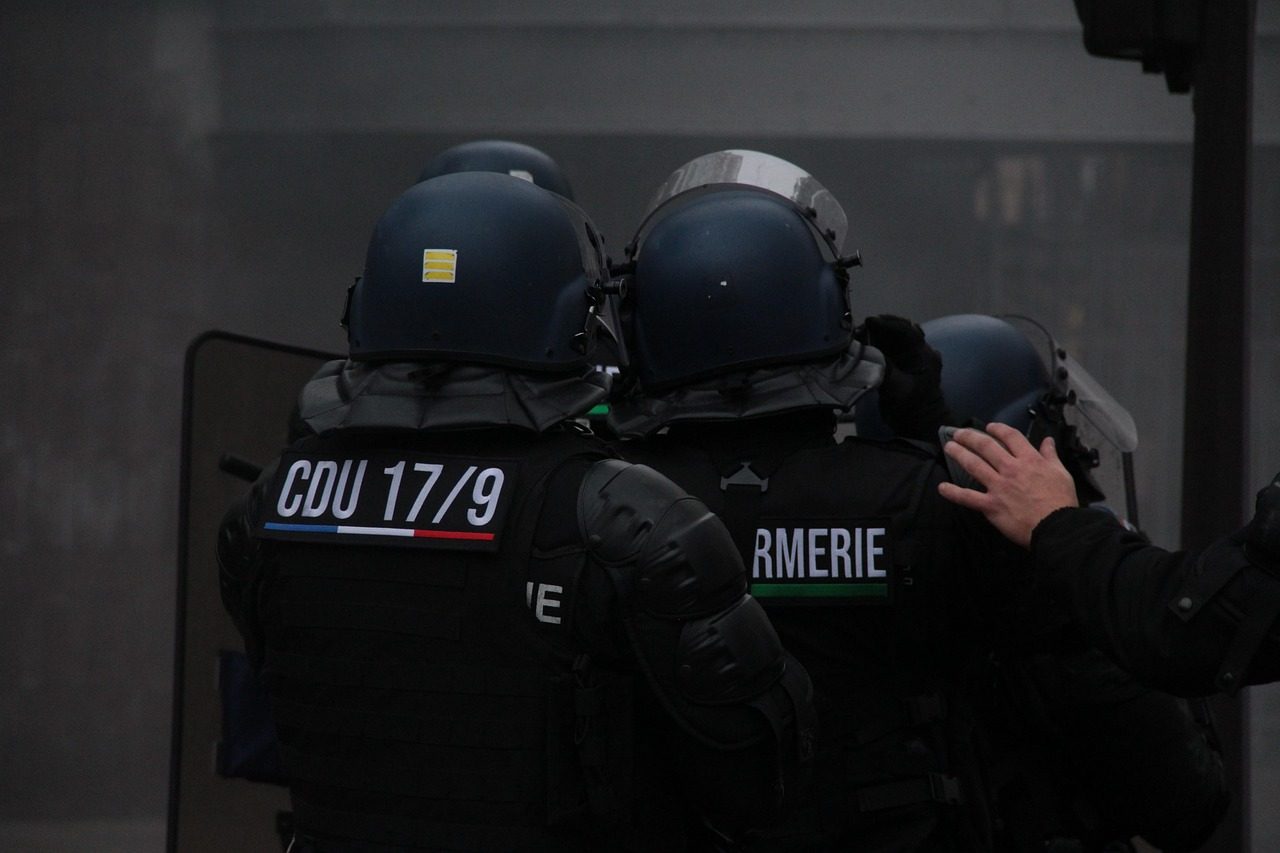
The Interior Ministry counted 575,000 marchers and 448 arrests in provisional figures, while the CGT union claimed nearly 1.6 million.
France deployed 70,000 police and gendarmes on Thursday as a nationwide strike called by the country’s main trade unions drew hundreds of thousands of people into the streets over wages, the cost of living and the draft 2027 budget, AFP reported.
The Interior Ministry counted 575,000 marchers, including 65,000 in Paris, revised down from about 600,000 earlier in the day, in figures reported by CNN. The CGT union said nearly 1.6 million people marched, 350,000 of them in the capital, according to ICI, the Radio France network.
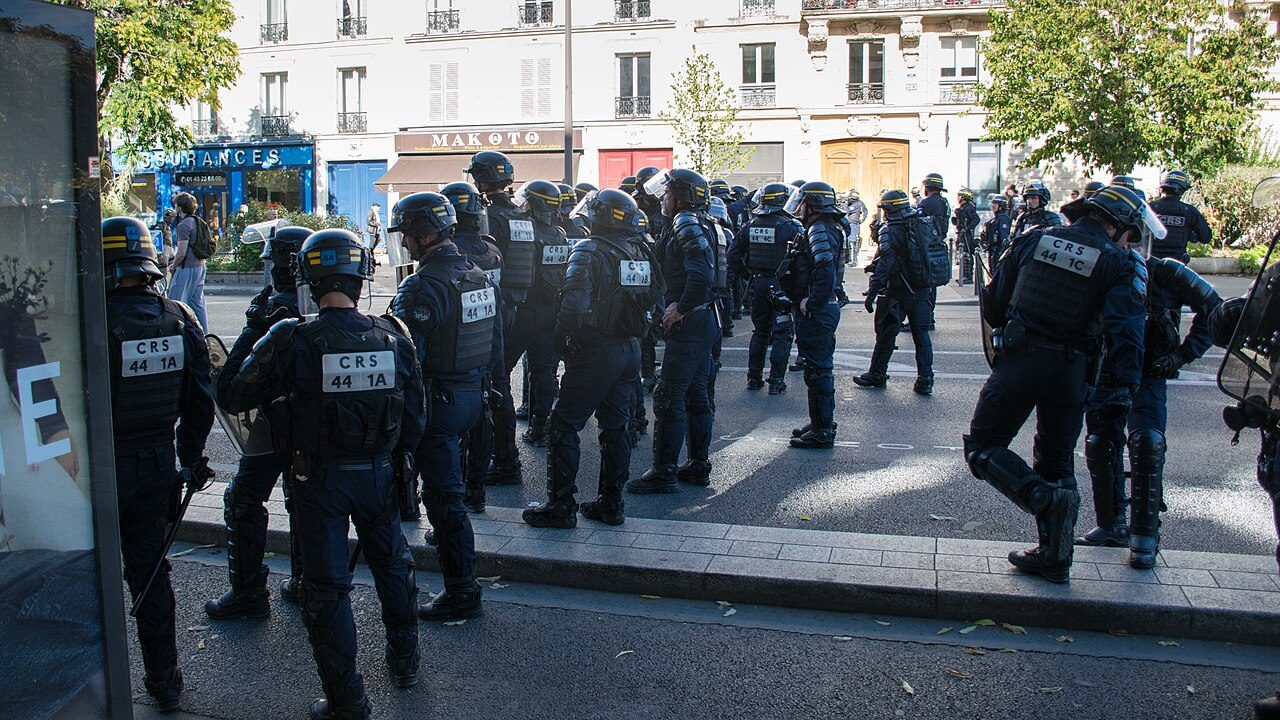
Most marches were peaceful. The ministry’s provisional evening toll listed 448 arrests, with clashes in Lyon and Rennes.
70,000 Police and Gendarmes on the Streets
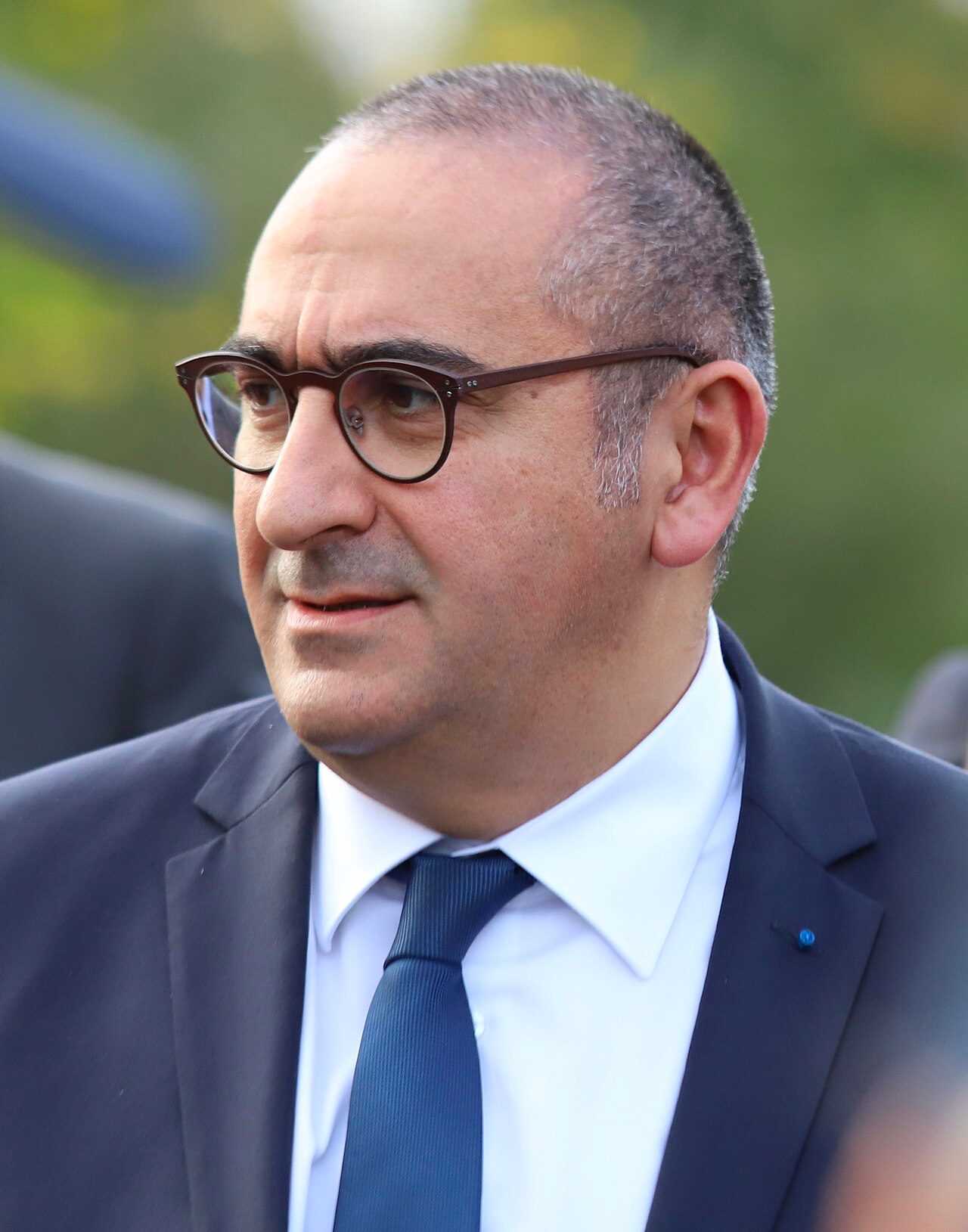
Interior Minister Laurent Nuñez announced the deployment on Wednesday, promising “an extremely firm response” to any acts of violence or disorder, AFP reported. The force was backed by armoured vehicles, drones and helicopters, according to the Associated Press.
France used a force of the same size for protests on Oct. 24, when it was 10,000 officers larger than on Oct. 17, The Nation reported.
Nuñez said violent groups had “several possible aims: taking part in them to provoke unrest; organising unauthorised marches; and carrying out looting and vandalism targeting businesses or public buildings,” Euronews reported.
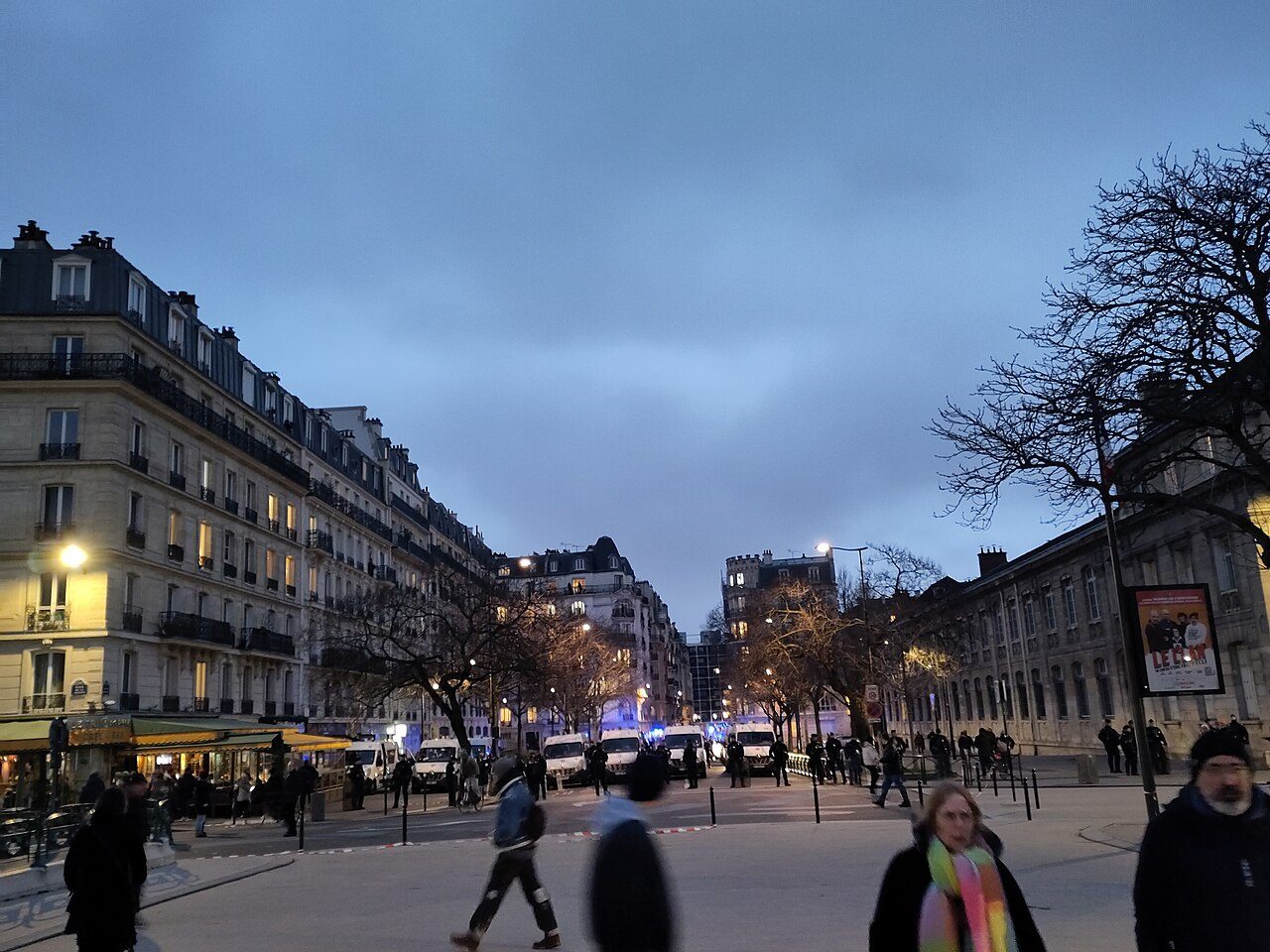
Paris police refused the unions’ planned central route from Place de la Bastille to Place de la Concorde, and a court upheld the ban. The march ran from Place de la République to Place de la Nation instead.
In the afternoon, the ministry said: “Law enforcement remains heavily mobilized for the afternoon demonstrations to contain violent groups, prevent unrest and intervene whenever necessary to protect people, secure the marches and safeguard public buildings.”
448 Arrests as Clashes Hit Lyon and Rennes
By 6 p.m., the ministry’s provisional toll listed 448 arrests, 53 members of the security forces injured and 86 call-outs for fires, the German news agency dpa reported.
“The marches are generally proceeding smoothly, and some are still ongoing. However, tensions have been reported in Lyon, where several hundred individuals have formed a black bloc,” the ministry said in an earlier update.
In Lyon, riot police fired tear gas and charged a group of masked protesters, and a car was set on fire, according to CNN. Police put the number of black bloc protesters in the city at 800.
In Rennes, authorities arrested several dozen masked individuals who vandalized a hotel and threw objects at police.
A school near Toulouse was set on fire after incendiary devices were thrown, and incidents were also reported in Nantes, Pau and Orléans, Al Jazeera reported.
Education Minister Édouard Geffray condemned the school fire. “This deliberate act of arson could have had tragic consequences for human life.”
In the Paris suburb of La Courneuve, a 16-year-old student was stabbed during a blockade of his high school, and a 20-year-old was arrested, ICI reported. His life is not in danger.
What Happens Next
Prime Minister Sébastien Lecornu will meet unions and employers on Monday, Nov. 9, for a conference on purchasing power and wages, his office said.
Lawmakers rejected the first part of the 2027 budget bill on Wednesday, and the Senate is scheduled to vote on Dec. 9, Euronews reported.
At the Paris rally, CGT leader Sophie Binet said the question was not whether workers would win but “how much we’re going to win,” Al Jazeera reported.
The unrest comes months before a presidential election in April 2027 in which President Emmanuel Macron cannot run. Far-right leader Marine Le Pen leads the polls, according to Euronews.
“There is a sense of absolute frustration at the government’s failure to operate,” said Paul Smith, an associate professor of French history and politics at the University of Nottingham, in an interview with AP.
“Whoever wins the presidential election is going to have a stack of problems to cope with,” Smith said.
Why the Unions Are Striking
The strike was called by the intersyndicale, the coalition of France’s main trade unions, including the CGT and CFDT.
Their demands include a higher minimum wage, which has had no discretionary increase since 2012, pay rises across the board, tax reform and better learning conditions for young people, AFP reported. The CGT wants an immediate 10% minimum wage increase, while the CFDT is seeking 100 euros more a month, according to CNN.
“We want two things: wage increases everywhere … and a revision of the government’s draft budget which, as it stands, is catastrophic for the country,” Binet told French television on Monday, ABC News reported.
She also argued for new taxes on the wealthiest in an interview with Euronews. “To tackle the deficit, we need to reintroduce taxes on the wealthiest individuals and the largest companies; this will enable us to fund our public services,” she said.
“Fuel, food products, rent, gas, electricity… everything’s going up except wages and pensions,” the unions said in a joint statement, AP reported.
Energy costs have climbed amid a global fuel-supply shock tied to the closure of the Strait of Hormuz. The government began releasing 10 million barrels of diesel from strategic reserves on Nov. 1, Euronews reported.
About 16% of teachers walked out, and the Eiffel Tower was closed, Al Jazeera reported.
Weeks of Unrest Since October 17
The movement began in mid-September, when high school students protested poor conditions in their schools. It has since broadened into anger over rising costs and inequality.
On Oct. 17, the protests turned into France’s worst rioting in years, with widespread looting. Authorities admitted security and intelligence failures, AFP reported.
On Oct. 24, the ministry counted 410,000 marchers, including 110,000 in Paris, The Nation reported, while the CGT claimed 800,000. A week later, on Oct. 31, authorities counted 320,000 and organizers 500,000, Paris Match Belgium reported.
“In almost every march we saw the formation of these high-risk groups. They broke away from the main body and sought to commit acts of violence,” Nuñez said after the Oct. 24 protests, according to The Nation.
Police tactics have drawn criticism as well. Internal investigations have been opened into allegations of brutality, and several teenage protesters have been seriously injured, AFP reported.
“People are questioning restrictions on liberties, especially bans on demonstrations,” Fabrice Fort of the CGT told AFP.
Reactions
“It’s going to be a strong mobilization,” CFDT leader Marylise Léon said before the marches, AFP reported.
Lea, a 31-year-old social worker in Marseille, told AFP: “My basket of 20 items has become too expensive. We’ve got nothing to eat; it scares me.”
Featured image from: HubertdeThé, via Pixabay