
Democrats will control the House and Senate in January, with plans to roll back Medicaid cuts, restore health subsidies and investigate the administration.
Democrats won control of both the House and the Senate in the Nov. 3 midterm elections, in what the Associated Press described as a major rebuke of President Donald Trump. Party leaders quickly laid out plans to cut costs, reverse health care cuts and investigate his administration.
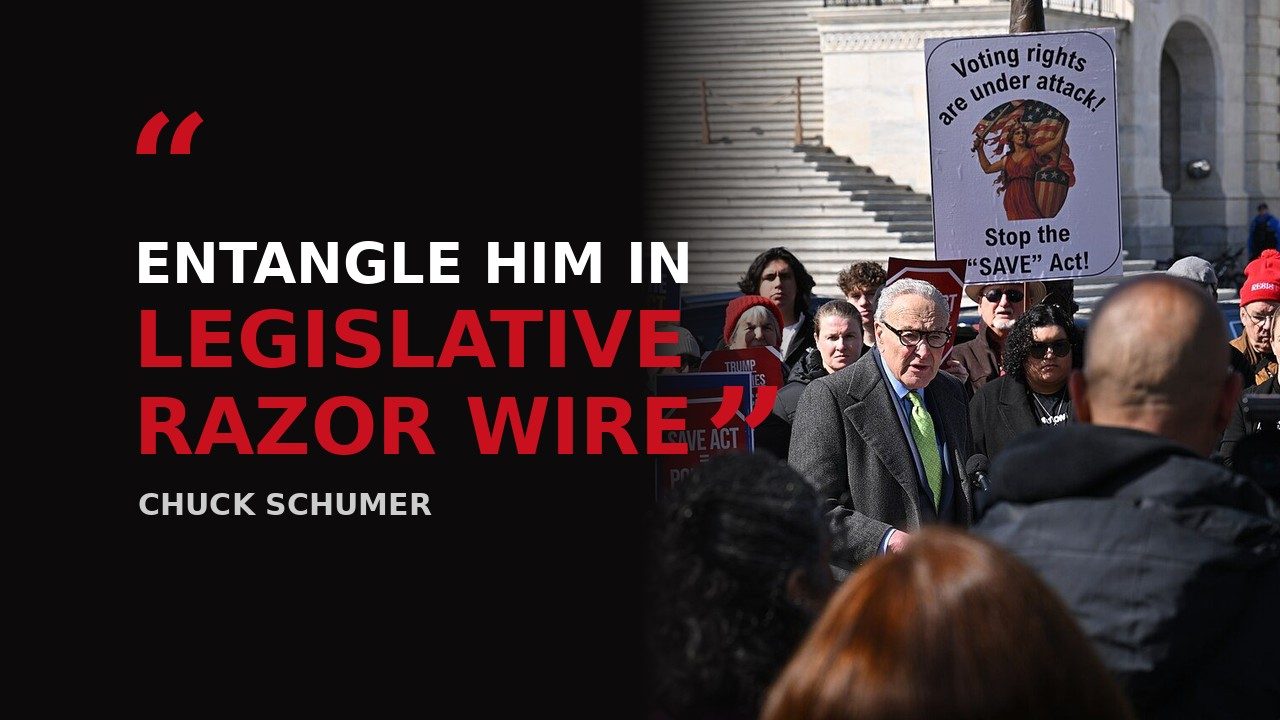
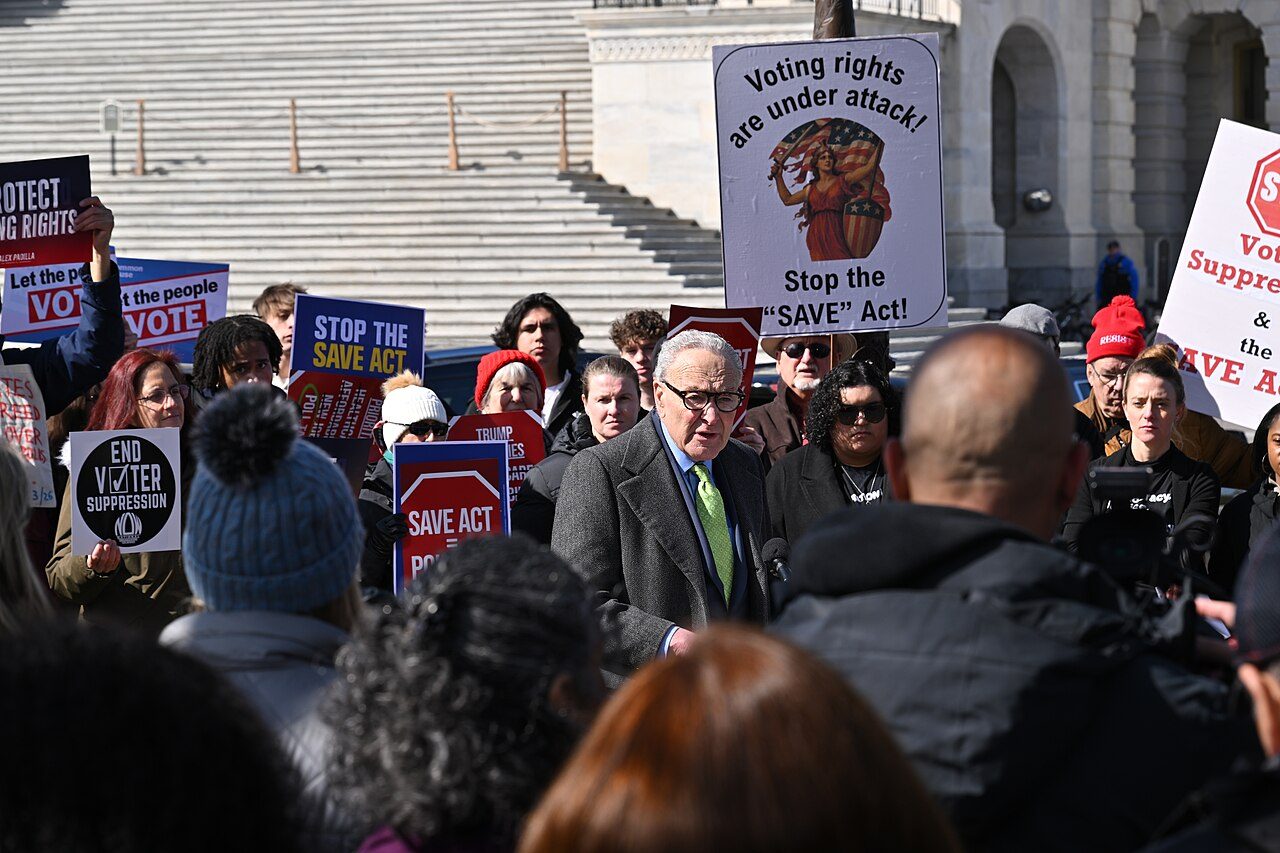
“Whenever Trump defies the will of the American people or the law, we will launch investigations, take him to court, and entangle him in legislative razor wire,” Senate Democratic Leader Chuck Schumer said at a news conference in Washington on Nov. 4, CBS News reported.
Democrats Take Both Chambers
As of Monday, Nov. 16, Democrats had won 256 House seats to 170 for Republicans, according to the AP count reported by Newsweek. Seven races were uncalled, and two Louisiana seats are headed to runoffs.
Every Senate race has now been called. Democrats will hold 56 seats to 44 for Republicans, counting two independents who caucus with them, after flipping nine, NBC News reported. The wave reached Texas and Kansas, and unseated Republican Sen. Susan Collins in Maine, upsets that drew Trump’s reaction to the red-state results.
The AP called Mississippi for Democrat Scott Colom on Nov. 11. He will be the state’s first Black senator since Reconstruction. Official results show Colom with 479,404 votes, or 49.3%, to 471,817, or 48.6%, for Republican Sen. Cindy Hyde-Smith, WLBT reported.
“While this is not the outcome we worked for or hoped for, I respect the decision of Mississippi voters,” Hyde-Smith said in a concession video, CBS News reported.
In Alaska, the AP called the race for Democrat Mary Peltola on Nov. 17. She won a majority of first-choice votes, so no ranked-choice tabulation was needed.
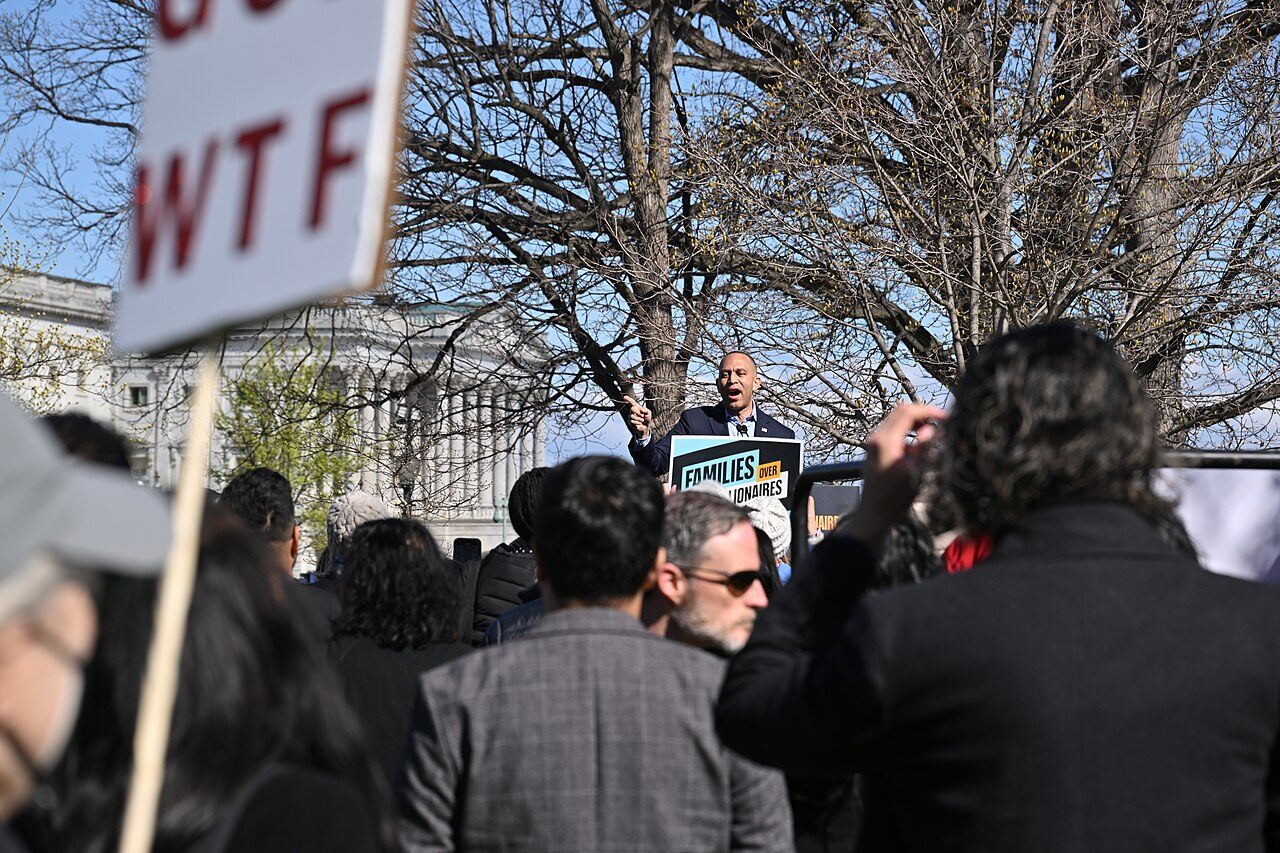
House Democratic Leader Hakeem Jeffries is in line to become the first Black speaker of the House when the new Congress convenes Jan. 3.
“Today begins the great American comeback,” he told supporters in Washington, NBC News reported. Voters, he said, have had “enough of the extremism, enough of the corruption.”
An Agenda Built on Costs and Iran
Jeffries announced his bid for speaker in a letter to House Democrats on Nov. 4. His first priorities are reversing Medicaid and SNAP cuts in Trump’s One Big Beautiful Bill Act, extending Affordable Care Act premium tax credits that expired last year, ending the Iran war and rolling back Trump’s tariffs, according to CBS News.
“House Democrats must do everything in our power to meaningfully lower the high cost of living. In doing so, we will try to find bipartisan common ground whenever and wherever possible,” he wrote.
Subpoenas, Nominees and the Courts
Rep. Robert Garcia of California, set to chair the House Oversight Committee, said his panel will focus on the Trump family’s business dealings, corporate corruption, the Department of Homeland Security and Immigration and Customs Enforcement, and the Jeffrey Epstein scandal.
“Lawyer up,” Garcia said in a statement on election night.
“I think folks that need to be concerned first are administration officials that have caused real harm. We’re going to investigate the abuses,” he said Nov. 4.
In the Senate, a Democratic majority will be able to block Trump’s nominees. Schumer told the AP that Democrats will not let Trump put a right-wing justice on the Supreme Court. Republicans hold the Senate until January, so a vacancy before then could still be filled.
On impeachment, Jeffries told NBC’s *Meet the Press* that Democrats “haven’t ruled anything in and we haven’t ruled anything out.”
“I haven’t had a single member of the House Democratic Caucus talk to me about impeachment,” he said Nov. 4. “We’ve been relentlessly focused on affordability and on accountability.”
What Voters Said Drove Them
About three-quarters of voters said they felt angry or dissatisfied with the country’s direction, according to the AP VoterPoll. Three-quarters rated the economy not so good or poor, and about 8 in 10 said inflation had caused their household hardship.
Roughly half called government corruption and the cost of living crucial to their vote, ahead of immigration enforcement, the Iran war and artificial intelligence data centers, the AP poll found.
Trump’s approval stood at 38%, a record midterm low, and 89% of voters called the cost of living a major or crucial factor, according to CBS News exit polls.
Former Republican National Committee chair Ronna McDaniel told CBS: “We lost some of our base. And a lot of it is because of the economy. People are hurting.”
Trump Promises Vetoes
“We’ll work with the Democrats,” Trump said on a Politico livestream on election night, when he also said he would accept the results. On Nov. 9 he questioned them on Truth Social, writing: “Does anybody really believe that this ‘Election’ was honest,” Yahoo News reported.
Before polls closed, he told CBS News, “I have the ultimate power,” referring to the veto. He later shared an image of a red cap with the word veto stenciled on it, the AP reported.
“And after a couple of months of vetoes, they’ll call and they’ll say, ‘How do we get this stuff done?’ And we’ll work together,” he told Fox News.
He blamed Republican candidates, writing on social media: “I wasn’t on the Ballot and if I was, we would have won IN A LANDSLIDE!”
Trump said higher gas prices from the Iran war hurt Republicans, but defended the war. “If I had to do it again, I’d have to do it again,” he said Nov. 4. He also said he is not considering replacing Defense Secretary Pete Hegseth, after CBS reported he had asked advisers whether Hegseth should stay.
On Democratic investigations, White House spokeswoman Lauren Bis said: “If Democrats choose to pursue sham investigations and radical left policies, they are choosing to work against the American people.”
Republicans Regroup
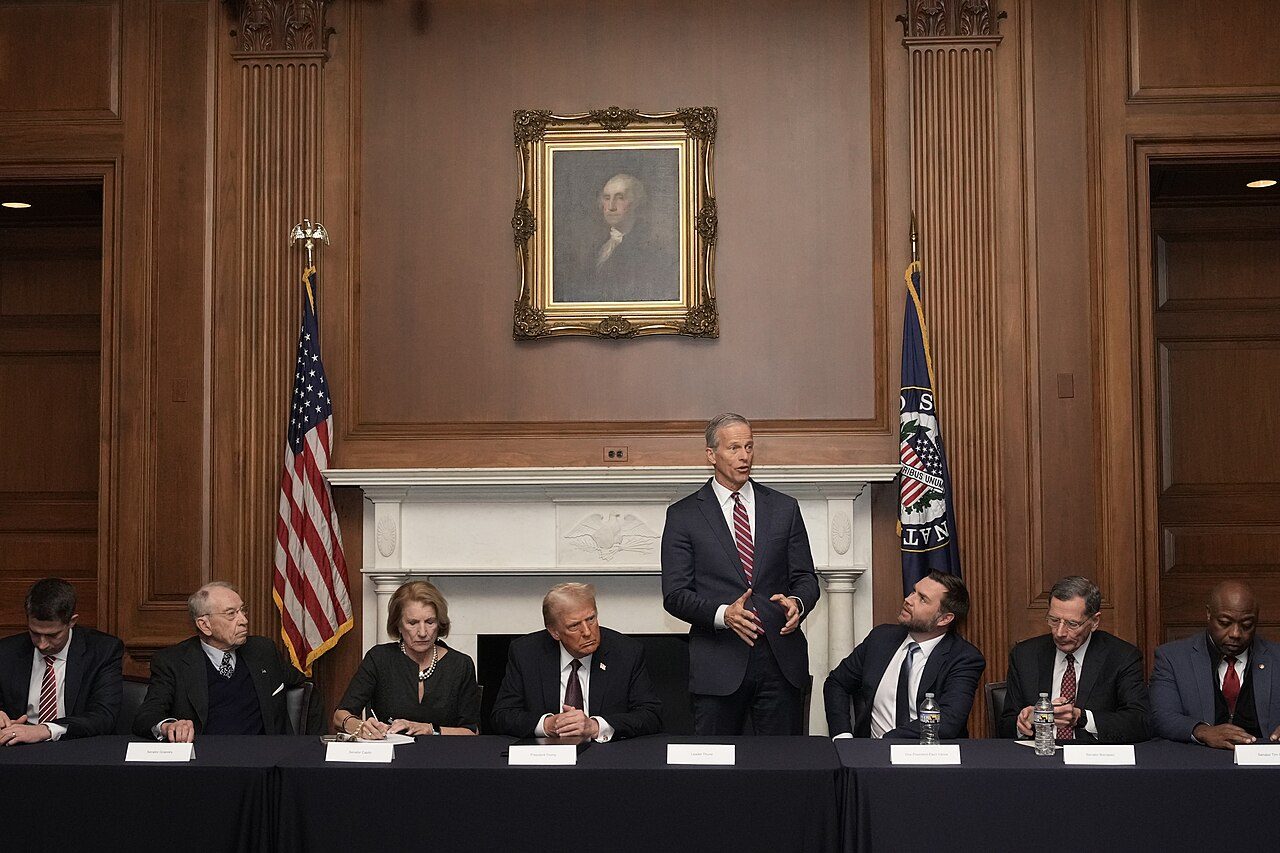
Senate Majority Leader John Thune wrote on X that “Senate Republicans will not stand idly by as the far-left, socialist wing of the Democrat Party attempts to unwind everything we’ve done.”
House Speaker Mike Johnson did not seek the minority leader post. Johnson called the outcome “not what we’d hoped and fought for” and said “come 2028, we WILL take back the House,” according to Newsweek.
On Nov. 10, House Republicans chose Rep. Jim Jordan of Ohio as their leader over Rep. Steve Scalise, 106 to 73, CBS reported. Jordan had pitched himself to colleagues as experienced in fending off Democratic investigations, NBC News reported.
Vice President JD Vance pointed to the war. “The reason we lost is the war,” he wrote on X.
Featured image: Adapted from a photo by G. Edward Johnson, CC BY 4.0, via Wikimedia Commons