

A lifer’s 2020 confession to beating two convicted child molesters to death in a California prison, after a warning he says staff ignored, is circulating again
A California inmate already serving life for murder confessed in 2020 that he beat two convicted child molesters to death with a walking cane inside a state prison in Corcoran, hours after, he said, a counselor brushed off his warning that he was about to turn violent.
Jonathan Watson laid out the January 2020 killings in a letter to the Bay Area News Group the following month. More than six years later, his account is circulating again on social media.

A Cane Attack in a Corcoran Dorm
Watson attacked two fellow inmates at the California Substance Abuse Treatment Facility and State Prison on Jan. 16, 2020, causing multiple head wounds, the California Department of Corrections and Rehabilitation (CDCR) said, as reported by Scripps. The Associated Press reported that the weapon was another inmate’s cane.
David Bobb, 48, died on the way to the hospital. Graham De Luis-Conti, 62, died three days later, corrections officials said in a statement reported by the AP. Both men were serving life sentences for aggravated sexual assault of a child under 14.
Watson, then 41, had been sent to prison from Humboldt County in 2009 to serve life with the possibility of parole for first-degree murder and intentionally discharging a firearm causing great bodily injury or death.
By his own account, he should never have been in that dorm. He wrote that his security classification had been lowered days earlier, moving him from a single-person cell into a lower-security dormitory pod. He called the switch a “careless” mistake and said he left “quite a paper trail” protesting it, the AP reported.
Six days after he arrived, Watson wrote, a child molester moved into the pod and began watching children’s television, which Watson took as a taunt aimed at the other inmates. That night, he wrote, “I could not sleep having not done what every instinct told me I should’ve done right then and there.”
A Warning He Says Was Ignored
The next day, two hours before the attacks, Watson told a prison counselor he urgently needed to go back to higher-level security “before I really (expletive) one of these dudes up,” according to his letter. The counselor, he wrote, “scoffed and dismissed” him.
Watson returned to the pod, where the man put PBS Kids on again. “And I picked up the cane and went to work on him,” he wrote.
He said he then left to find a guard and turn himself in. On the way, he saw “a known child trafficker, and I figured I’d just do everybody a favor,” Watson wrote. “In for a penny, in for a pound.”
The guard did not believe him, he wrote, “until he looked around the corner and saw the mess I’d left in the dorm area.”
Watson framed the killings as something only a man in his position could do. “Being a lifer, I’m in a unique position where I sometimes have access to these people and I have so little to lose,” he wrote, adding that “these people are every parents’ worst nightmare.”
What Happened After the Killings
CDCR spokesman Dana Simas said at the time that the agency could not comment on an active investigation. Watson was moved to segregated housing, and no new charges had been filed, CBS News reported, citing The Mercury News. In his letter, Watson said he would plead guilty.
The only reported finding on his warning came that October. The Bay Area News Group reported that an internal review at the prison “cleared a staffer who was allegedly warned of impending violence an hour before” the killings, according to excerpts published by the fact-checking site TruthOrFiction. That report placed the warning an hour before the attacks; Watson’s letter, as the AP described it, said two hours.
Watson had by then been placed in a Segregated Housing Unit, according to the same report.
News reports and online records reviewed for this story did not show whether Watson was later charged, convicted or sentenced for the two deaths. He was already serving life with the possibility of parole.
Why Child Molesters Are Targets in Prison
Bobb and De Luis-Conti were killed in a system where men convicted of sex crimes had long been disproportionately among the dead. A 2015 AP analysis found that California state prisoners were killed at double the national rate, and that sex offenders were “often marked men behind bars because of the nature of their crimes.”
Male sex offenders made up about 15% of the prison population but nearly 30% of homicide victims, 23 of the 78 killings reported since 2007, the AP found. It also cited a 2014 report by the corrections department’s inspector general, which found that 10 of 11 victims in homicide cases closed in the first half of that year were sensitive-needs inmates, held in units meant to protect vulnerable prisoners.
The crimes that put both men in prison are not rare. At least one in four girls and one in twenty boys in the United States experience child sexual abuse, according to CDC figures cited by the CDC Foundation.

Online, reports of child sex trafficking to the National Center for Missing & Exploited Children rose 323% in 2025 from the year before, the center said.
How to punish those crimes is also being debated in Congress. In February, Rep. Nancy Mace, R-S.C., introduced a bill to allow the federal death penalty for child rapists, which her office tied to her demands for justice for the victims of Jeffrey Epstein and to survivors calling for answers.
Violence and Accountability Behind Bars
Killings inside California prisons have continued since Watson’s attack. State prisons reported 24 homicides in 2024, and after seven in the first nine weeks of 2025, CDCR restricted movement and suspended visits and phone calls at 11 high-security prisons, including the Substance Abuse Treatment Facility, the Los Angeles Times reported.
The department cited a “surge” in violence against inmates and staff, and spokeswoman Terri Hardy said it was conducting a “comprehensive investigation” into the causes.
In Watson’s case, most of what is publicly known comes from his own letter. CDCR identified him as the attacker but declined to discuss its investigation, and the one reported finding about his warning, the internal review, cleared the staffer he says he told.
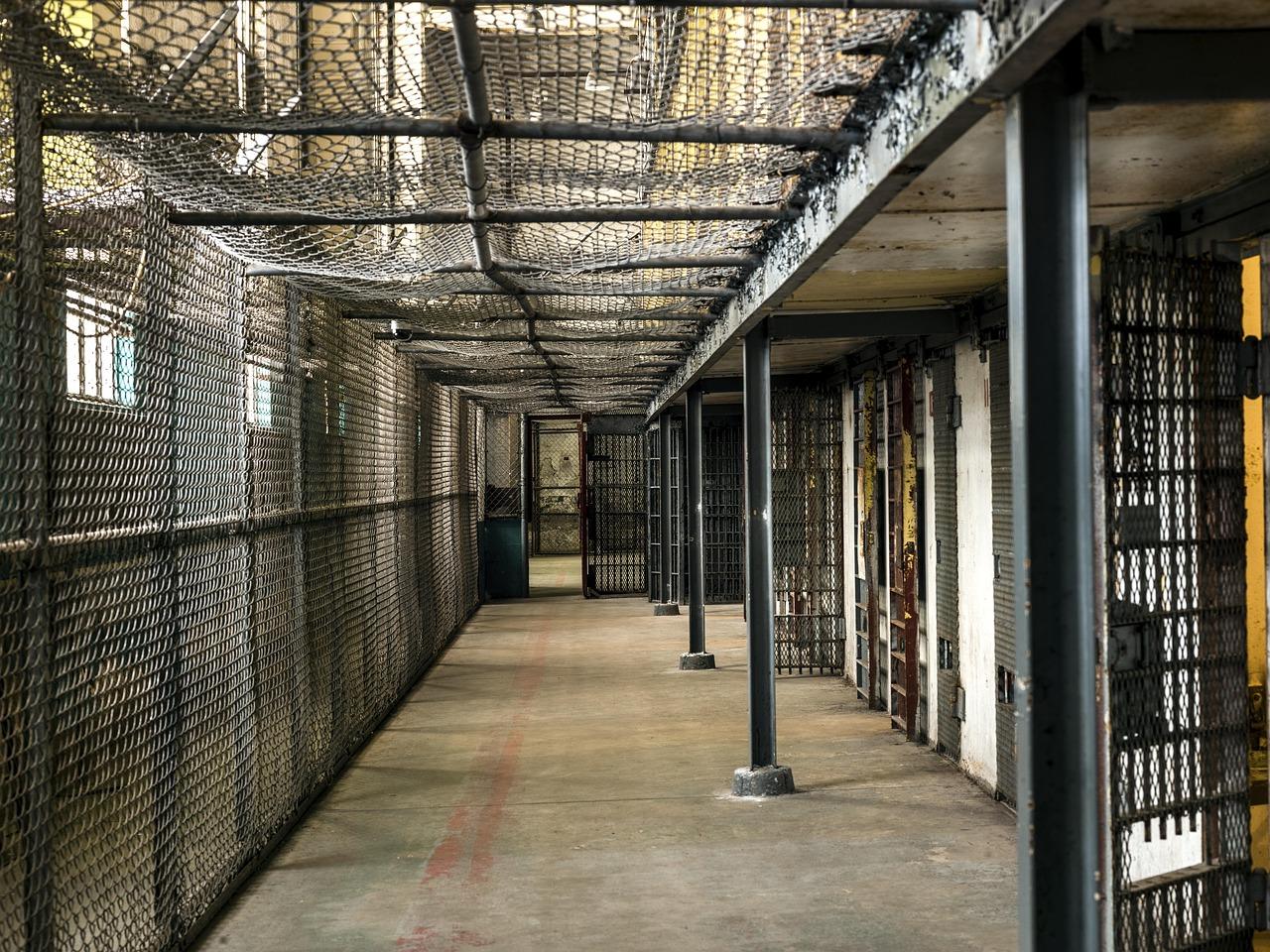
Featured image (illustrative stock photo, not the prison in this story) from: MarcelloRabozzi, via Pixabay