
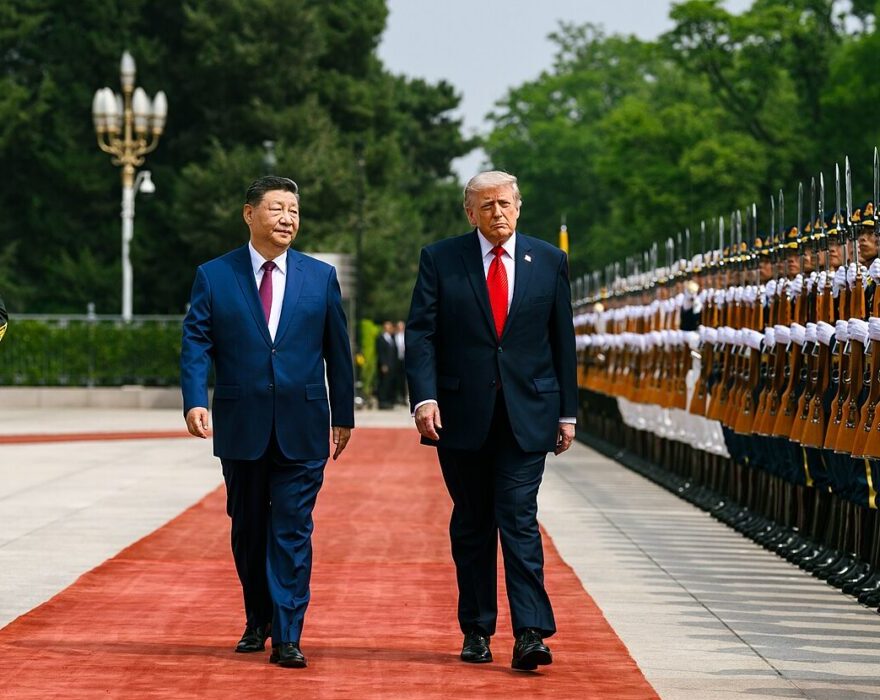
President Donald Trump arrived in China this week hoping to reset relations with Beijing and promote American business interests, but analysts say the United States now faces a difficult challenge in convincing China that it still offers a competitive edge.
While the summit with Chinese President Xi Jinping carries major geopolitical significance, the visit also resembles a high-stakes business mission packed with top American executives seeking new deals in the world’s second-largest economy.
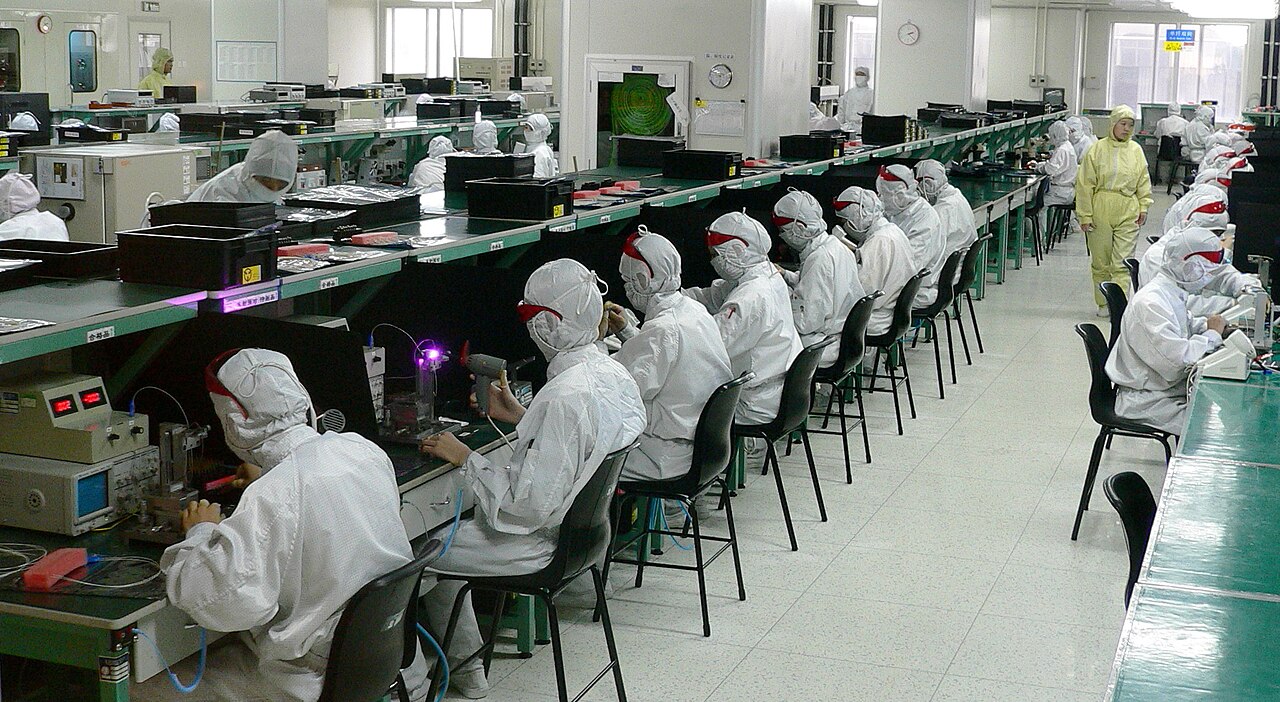
Yet behind the diplomatic pageantry lies an uncomfortable reality for Washington: China has become a global manufacturing powerhouse that increasingly rivals, and in many sectors surpasses, the United States in cost efficiency, industrial scale, and technological innovation.
China’s Manufacturing Advantage
For decades, the United States dominated global innovation and industrial production. Today, however, China controls huge portions of the world’s manufacturing supply chains.
China currently accounts for roughly 28% of global manufacturing output compared to about 18% for the United States.
The country has rapidly expanded its dominance in electric vehicles, batteries, drones, solar panels, and advanced robotics, industries that are expected to shape the future global economy.
Chinese robotics company Unitree, for example, is already selling humanoid robots in the United States for under $18,000, significantly cheaper than many American competitors currently under development.
Yolanda Xie, a marketing manager at Unitree, credited China’s vertically integrated supply chain and engineering talent pool for the company’s rapid growth.
“China has the advantage of the strong supply chain,” Xie said. “Key components are designed, developed, and manufactured by us, which lowers costs and improves efficiency.”
Trump’s delegation includes major American business leaders, including Tesla CEO Elon Musk, whose company heavily depends on Chinese manufacturing facilities.
But even Tesla has struggled to maintain dominance inside China.
China’s EV and Tech Boom
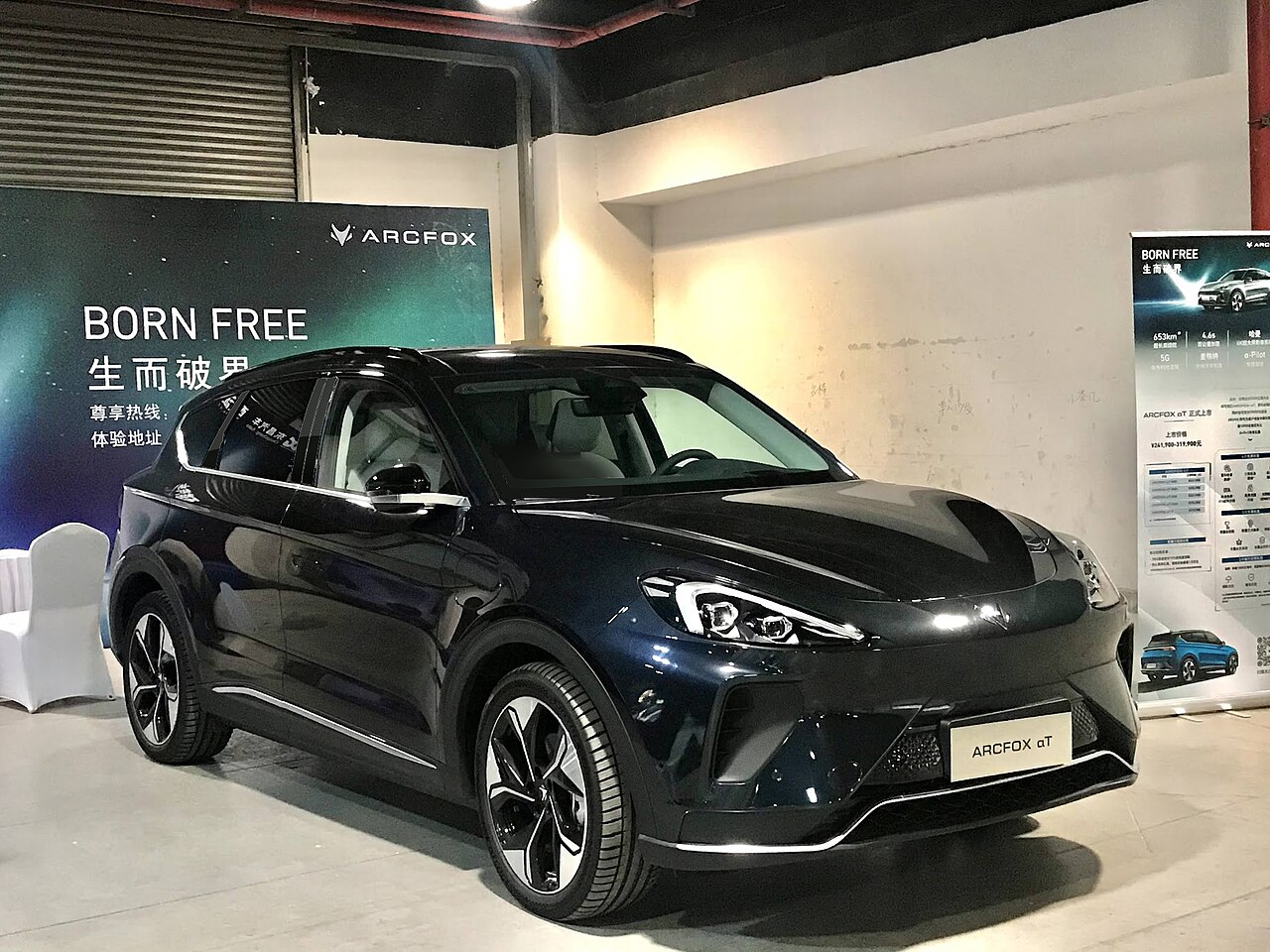
China has become the world leader in electric vehicle production, overtaking Tesla with domestic giant BYD becoming the world’s largest EV manufacturer last year.
BYD sold more than 2.25 million vehicles globally compared to Tesla’s 1.64 million.
Chinese companies have also surged ahead in battery production, renewable energy technologies, and commercial drone manufacturing.
Industry analysts say fierce competition inside China has forced local companies to innovate faster and reduce prices aggressively.
“They have been under pressure for many years,” said Yu Zhang, managing director of Automotive Foresight in Shanghai. “Margins are very low, so companies constantly innovate.”
China now controls more than 70% of the global commercial and consumer drone market.
Meanwhile, U.S. export restrictions targeting advanced microchips and aviation technologies have pushed China to accelerate development of its own alternatives.
Nvidia CEO Jensen Huang recently acknowledged that China’s artificial intelligence industry continues advancing despite U.S. restrictions.
“China’s AI moves on with or without U.S. chips,” Huang said.
Trump Pushes for More Market Access
Trump has repeatedly said he plans to pressure Xi Jinping to “open up” Chinese markets further to American companies.
The president’s trade policies have long centered around reducing America’s trade deficit with China and bringing manufacturing jobs back to the United States.
However, many analysts believe those goals remain difficult because China’s industrial ecosystem has become deeply entrenched.
American companies still maintain major presences in China. Apple manufactures many of its products there, Starbucks operates thousands of stores nationwide, and brands like KFC remain widespread.
But domestic Chinese competitors are rapidly gaining ground.
Tesla’s market share in China, for example, reportedly fell to just over 3% in April despite the company’s strong global reputation.
Some sectors may still offer opportunities for American businesses.
Boeing and GE executives accompanying Trump are expected to pursue aviation-related deals, while agriculture exports, including grains and meat, remain important areas of negotiation.
Financial firms, however, may face greater challenges as China continues expanding its own payment systems and financial infrastructure.
The Hidden Side of China’s Economy
Despite China’s manufacturing strength, the country also faces significant economic struggles that visitors may not immediately see.
Outside major cities, many regions continue dealing with a prolonged property market crisis, shuttered businesses, and slowing economic growth following the COVID-19 pandemic.
China recently lowered its growth forecast to between 4.5% and 5%, its slowest pace in decades.
Youth unemployment and economic frustration have also become growing concerns.
Some younger Chinese citizens have embraced the social trend known as “let it rot,” reflecting disillusionment over job opportunities and rising living costs.
At the same time, China’s export machine continues accelerating.
Vehicle exports from China jumped nearly 85% year-over-year, even as domestic vehicle sales declined sharply.
A Critical Summit With Global Stakes
Trump’s trip comes amid heightened tensions over trade, Taiwan, artificial intelligence, and global supply chains.
While the president hopes to showcase American economic strength and secure favorable agreements, experts say China enters the talks with growing confidence in its industrial and technological capabilities.
For many observers, the summit highlights a broader shift in the global economy, one where China is no longer simply the world’s factory, but increasingly one of its leading innovators as well.
Featured Image from: The White House, Public domain, via Wikimedia Commons