
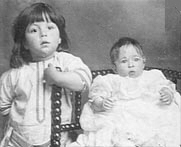
Born just nine weeks before the Titanic sank, Millvina Dean lived nearly a century after the tragedy, becoming the ship’s final surviving passenger.
A Baby Pulled From Disaster
When the RMS Titanic struck an iceberg and sank on April 15, 1912, more than 1,500 people died. Among the 705 survivors was a two-month-old infant, the youngest passenger aboard the ship: Elizabeth Gladys “Millvina” Dean. Her survival was a twist of fate she carried with her for the rest of her 97 years, ultimately becoming the last living link to the Titanic.
Millvina was born on February 2, 1912, in Branscombe, England. Only weeks later, her parents decided to leave for the United States. Her father, Bertram Frank Dean, hoped to start a new life in Wichita, Kansas, where relatives had already settled.
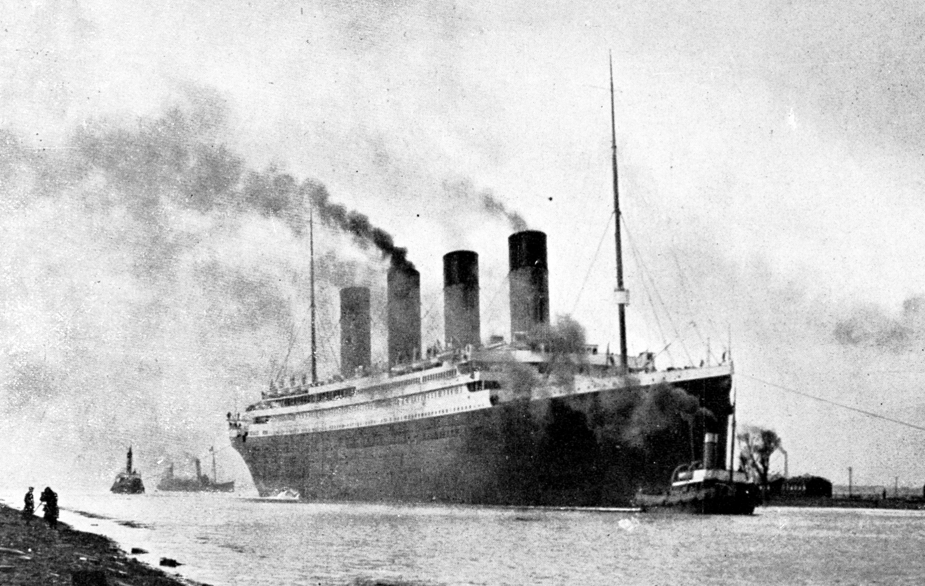
But a coal strike prevented the family from boarding their original vessel. Seeking another ship, they purchased third-class tickets aboard the Titanic. The decision placed them aboard the most storied vessel in maritime history, and, tragically, its most catastrophic maiden voyage.
The Night Everything Changed
On the evening of April 14, 1912, Titanic’s collision with an iceberg sealed the ship’s fate. The impact was felt immediately by Millvina’s father, who realized the seriousness of the situation faster than most. He urged his wife, Georgetta, to take Millvina and her older brother Bertram Jr. to the upper deck at once.
His quick thinking saved their lives.
Infant Millvina was placed into a canvas mail sack to ensure she wouldn’t slip from her mother’s arms during the chaos. The family was ushered into Lifeboat 10, one of the earliest lifeboats lowered into the freezing Atlantic.
The next time the toddler’s family heard news about the Titanic, it was grim: Millvina’s father did not survive. His body was never identified.
Four days later, Millvina, her mother, and her brother arrived in New York aboard the rescue ship RMS Carpathia. The young widow initially planned to continue to Kansas as her husband had intended, but after two weeks, overwhelmed and alone in a foreign country, she decided to return home to England.
A Childhood Marked by Loss, and Unwanted Fame
The Deans returned to England aboard the ship Adriatic, where baby Millvina became a minor celebrity. Newspapers competed for stories about the “Titanic baby,” and passengers lined up simply for the chance to hold her.
The Daily Mirror wrote on May 12, 1912, as cited by The Independent:
“She was the pet of the liner during the voyage, and so keen was the rivalry between women to nurse this lovable mite of humanity that one of the officers decreed that first and second class passengers might hold her in turn for no more than 10 minutes.”
Though she had become a recognizable name, Millvina herself remembered none of it. She would later say she didn’t even know she had been on the Titanic until she was around eight years old.
Millvina and her brother attended school with support from a Titanic survivors fund, but the disaster rarely surfaced in family conversations. Her mother avoided discussing the night her husband died.
A Life Beyond the Titanic
As an adult, Millvina built a quiet, practical life. During World War II, she served as a cartographer for the British government, drafting maps for the war effort. Later, she worked in the purchasing department of an engineering firm until she retired in 1972.
She never married but had a long-term companion, Bruno Nordmanis, who remained by her side for decades.
For many years, she lived outside the public eye. Few even knew her as a Titanic survivor until the 1985 discovery of the wreck by Robert Ballard reignited global fascination with the tragedy.
Suddenly, her private life transformed.
Millvina told The New York Times:
“Nobody knew about me and the Titanic, to be honest, nobody took any interest, so I took no interest either. But then they found the wreck, and after they found the wreck, they found me.”
A Return to the Spotlight
Interest in the Titanic surged through the late 1980s and 1990s, and with it came invitations, conferences, interviews, documentaries, and commemorative events.
Millvina embraced her role as a living witness to history. She attended exhibitions across Europe and North America, spoke with journalists, and met enthusiasts from around the world. Her soft-spoken humility made her a beloved figure among Titanic historians.
Yet she drew one firm line: she refused to watch James Cameron’s 1997 blockbuster Titanic.
She explained to The Irish Times in 2009:
“Although I don’t remember him, know nothing about him, I would still be emotional… I’d be thinking: ‘How did he go down? Did he go down with the ship? Did he jump overboard?’”
Her hesitance was understandable. The film’s dramatic final scenes might have forced her to confront, in vivid detail, the final moments of a father she never truly knew.
The Last Survivor
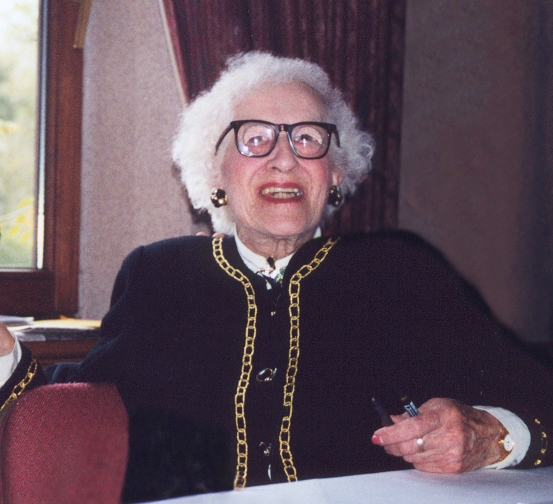
In 2007, after the death of Barbara West Dainton, Millvina became the final living survivor of the Titanic. It was a role she never sought, but one she carried with dignity. She remained active in Titanic commemorations even as her health declined.
Her brother, Bertram Jr., who had also survived the sinking, had died decades earlier, on the 80th anniversary of the collision.
In 2008, newspapers around the world reported that Millvina, then 96, was selling her Titanic memorabilia to help fund her nursing home care. Items included:
- A canvas sack used by her mother in New York
- Family documents
- Letters and artifacts linked to the tragedy
The sale raised nearly $54,000. When actors Kate Winslet, Leonardo DiCaprio, and Titanic director James Cameron learned of her situation, they contributed additional funds to support her care.
Their gesture moved her deeply, though she still declined to watch their movie.
A Final Farewell
Millvina Dean died of pneumonia on May 31, 2009, fittingly, the 98th anniversary of the Titanic’s launch in Belfast. She was 97 years old.
She was survived by two nephews and two nieces. Her ashes were scattered at the docks in Southampton, the very place where she had boarded the Titanic as a newborn.
In her final interview with The New York Times, a journalist asked whether she believed fate or divine providence had shaped her story, placing her on the Titanic, sparing her life, and allowing her to outlive every other passenger.
Millvina smiled and replied:
“Heaven and hell, how can you believe in something up in the sky? Still, I’d love to be proved wrong.”
Her life, shaped by tragedy, resilience, and a reluctant fame, continues to capture the world’s imagination.
Featured Image from: The original uploader was Morhange at English Wikipedia. ; author unknown, Public domain, via Wikimedia Commons