
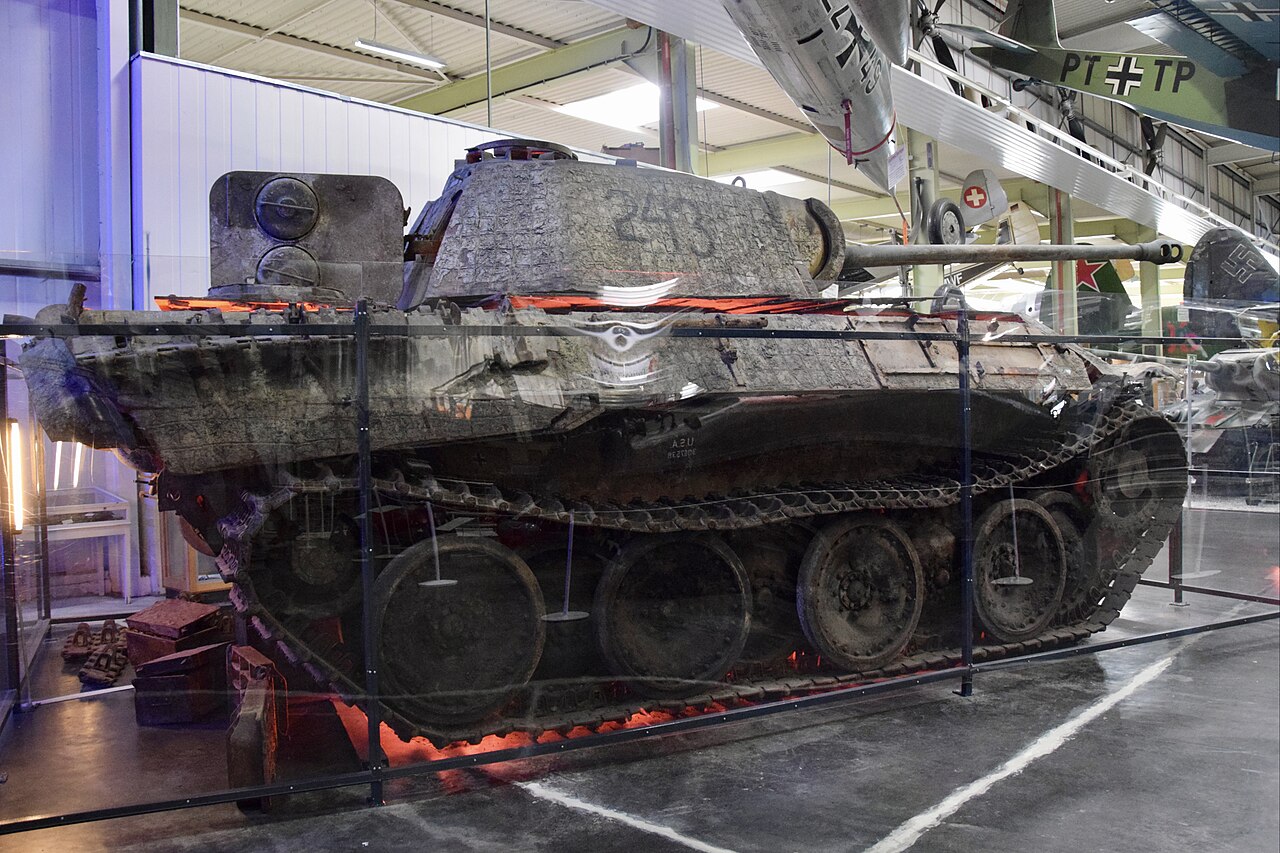
A German court has sentenced an 84-year-old man after authorities uncovered a massive World War II-era weapons collection hidden beneath his home, including a fully restored Nazi tank and anti-aircraft cannon.
The case, which has drawn international attention for years, centered on a retired financier from the northern German town of Heikendorf who stored military artifacts and Nazi memorabilia inside his property.
The man, identified in German media only as Klaus-Dieter F. due to the country’s privacy laws, received a suspended 14-month prison sentence and was ordered to pay a €250,000 fine.
The Discovery That Shocked Germany
Authorities first raided the home in 2015 while investigating stolen Nazi artwork.
What they found instead stunned investigators.
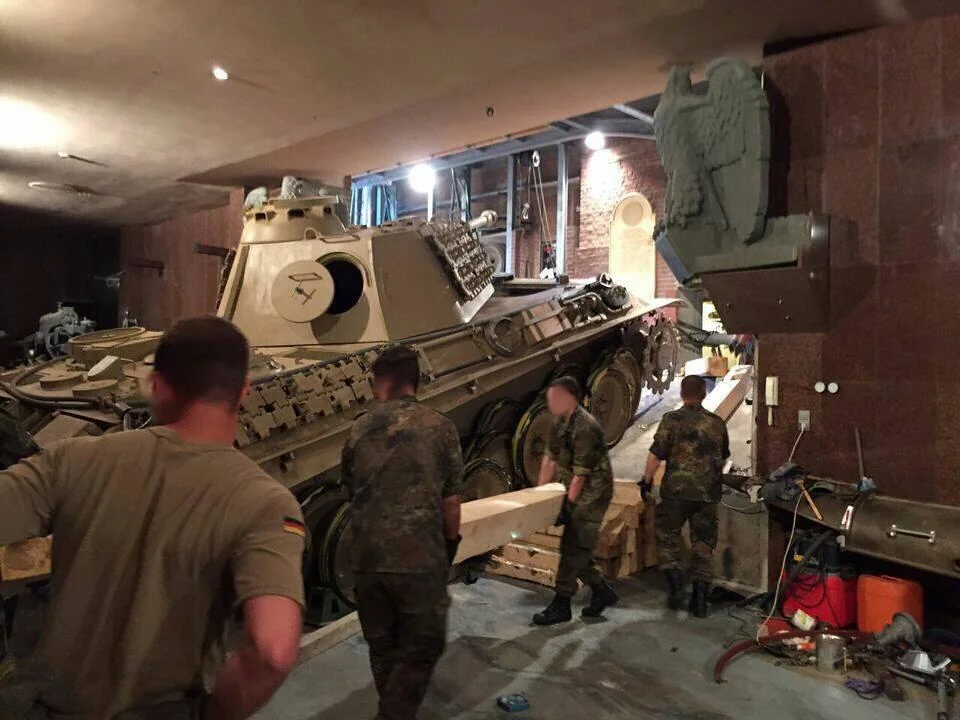
Hidden inside the property’s cellar was a massive World War II arsenal that included:
- A 1943 Panther tank
- An 88mm anti-aircraft cannon
- A mortar
- A torpedo
- Dozens of rifles and machine guns
- More than 1,000 rounds of ammunition
The Panther tank, later nicknamed the “Panther of Heikendorf,” weighed roughly 40 tons and had reportedly been restored by the defendant after being brought from an English scrapyard decades earlier.
Officials said removing the equipment from the house took nearly nine hours and required assistance from German military personnel.
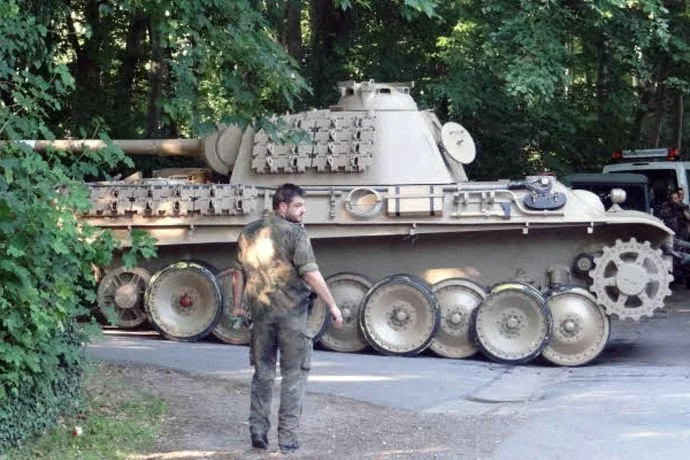
A Tank Used as a Snow Plow
According to local reports, the retired collector was not particularly secretive about owning the tank.
Witnesses said he occasionally drove it and even used it as a snow plow during severe winter weather.
The unusual image of a World War II armored vehicle clearing snowy streets became one of the strangest details in a case already filled with extraordinary revelations.
Despite the scale of the arsenal, many of the weapons were ultimately determined to be non-operational.
That distinction became central to the legal battle.
Why the Sentence Was Limited
German prosecutors had argued the collection violated the country’s strict War Weapons Control Act.
But the court ultimately ruled that most of the items could no longer function as active weapons and instead qualified as historical or museum artifacts.
That ruling significantly reduced the severity of potential penalties.
The court still imposed a substantial financial fine, while also ordering that the tank be transferred to a museum or licensed collector.
Several museums, including some in the United States, have reportedly expressed interest in acquiring the rare vehicle.
Nazi Memorabilia Also Found
In addition to the weapons cache, investigators discovered large amounts of Nazi memorabilia throughout the property.
Reports said authorities found:
- Busts of Adolf Hitler
- Nazi military uniforms
- Reich eagle decorations
- Swastika banners
- SS-themed lamps
Germany maintains some of the strictest laws in Europe regarding Nazi symbolism and historical propaganda because of the country’s history during World War II.
The presence of the memorabilia added another layer of controversy to an already high-profile case.
Why the Case Captured International Attention
The case became one of Germany’s most unusual criminal investigations because it blended military history, weapons law, and postwar German memory culture into a single story.
The Panther tank itself is considered one of the most recognizable armored vehicles used by Nazi Germany during World War II.
Today, only a limited number remain in existence worldwide, making restored versions highly sought after by collectors and museums.
Still, critics questioned how such a large military vehicle and weapons collection remained hidden for years without attracting earlier scrutiny.
The Bottom Line
What began as an investigation into stolen art ended with authorities uncovering one of the most bizarre private military collections Germany has seen in decades.
While the court ultimately classified most of the items as historical artifacts rather than active weapons, the discovery reignited debate over the limits of private collecting and the lingering presence of Nazi-era memorabilia in modern Germany.
For many observers, the image remains surreal: a retired man storing a WWII tank beneath his home , and occasionally driving it through town.
Featured image from: Ank Kumar, CC BY-SA 4.0, via Wikimedia Commons