

A Gentle Soul Destined For Remarkable Bravery
If you had called Desmond Doss a hero, he likely would have quietly disagreed.
He didn’t see himself that way.
The Seventh-day Adventist medic who dragged, carried, and lowered 75 wounded men from the top of the Maeda Escarpment on Okinawa, without firing a single shot, believed he was simply doing what was right.
And if the 2016 film Hacksaw Ridge stunned viewers with its portrayal of this unwavering soldier, the truth is that the movie didn’t tell half of it.
Doss’ story is one of the most extraordinary in military history: a tale of faith, courage, and a refusal to compromise his beliefs even under relentless persecution, and in the face of almost certain death.
Growing Up With Compassion And Conviction
Born on February 7, 1919, in Lynchburg, Virginia, Desmond Thomas Doss was gentle from the beginning. His childhood was defined by compassion, and by an early encounter with violence that shaped the rest of his life.
When he was still young, Doss overheard a desperate plea on a local radio broadcast asking for blood donations to save an accident victim. He walked six miles to give blood to a stranger. Days later, he walked the same route to donate again.
But Doss also witnessed a terrifying family incident: his alcoholic father once threatened his uncle with a loaded .45 pistol. Doss’s mother wrestled the gun away and begged young Desmond to hide it. He did, shaken, horrified, and forever changed.
He vowed never to touch a weapon again.
His commitment deepened through his Seventh-day Adventist faith, which emphasized nonviolence, service, and Sabbath observance. Yet Doss was no shrinking violet. His brother Harold recalled wrestling matches where Desmond wasn’t necessarily stronger, just impossible to defeat. He never quit, never tapped out, and never surrendered.
One day, that stubbornness would save dozens of lives.
A Conscientious Objector, And The Soldier Nobody Wanted
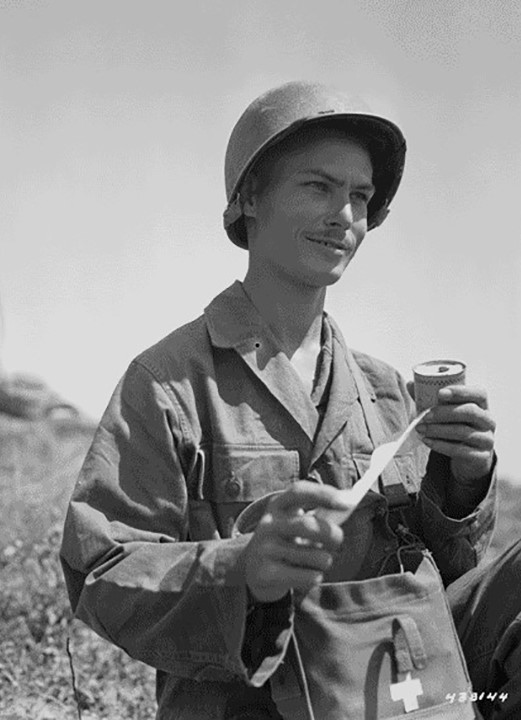
When World War II began, Doss registered for the draft at 18 and worked at the Newport News shipyard. Despite his refusal to carry a weapon, he believed deeply in serving his country.
But the military didn’t know what to do with someone who refused to kill. He was labeled a conscientious objector, a term he hated, not because it was inaccurate, but because people treated him with contempt because of it.
He preferred “conscientious cooperator.”
He wanted to serve.
He just wouldn’t take life to do it.
Initially, the Army placed him in a rifle company, hoping he would quit. They underestimated him.
Filmmaker Terry Benedict, who directed the documentary The Conscientious Objector, said:
“He just didn’t fit the Army’s model of what a good soldier would be.”
Doss endured:
- heckling
- threats
- objects thrown at him while he prayed
- insults for observing his Sabbath
- accusations of cowardice
One soldier even promised, “When we get into combat, I’ll make sure you don’t come back alive.”
The Army pressured him to carry a rifle. He refused.
They tried to court-martial him. He stood firm.
Finally, the Army relented. Desmond Doss became a medic.
And when he deployed, the same men who taunted him would come to realize how deeply they needed him.
The Horror Of Hacksaw Ridge
In May 1945, during the fight for Okinawa, American troops were tasked with capturing the Maeda Escarpment, a sheer cliff laced with caves, machine-gun nests, and Japanese fortifications. The Americans called it Hacksaw Ridge.
It was May 5th. A Saturday.
Doss’s Sabbath.
He went anyway.
The assault was a disaster. Japanese forces held their fire until American troops reached the top of the ridge, then unleashed a devastating ambush. Soldiers were torn apart by bullets, mortars, and artillery. The plateau became a slaughterhouse.
Hundreds were wounded. Many were left for dead.
But one man refused to retreat.
Through explosions, gunfire, and smoke so thick it was nearly blinding, Doss crawled among the wounded, alone, tying tourniquets, applying bandages, and praying.
Again and again, he pulled injured men to the cliff’s edge, rigged a rope sling, and lowered them down by hand.
Each time he finished, he whispered a prayer:
“Lord, please help me get one more.”
For 12 straight hours, he repeated this ritual.
One man after another.
Blood soaking his uniform.
His hands burning from rope friction.
Machine-gun fire shrieking around him.
He saved 75 men that night.
Many were the same soldiers who had once shunned him.
Even Hacksaw Ridge Held Back Part Of The Truth
The film Hacksaw Ridge captured much of this awe-inspiring rescue, but it left out one of Doss’s most astonishing wartime experiences, because director Mel Gibson believed it would seem “too unbelievable.”
Two weeks after Hacksaw Ridge, Doss was tending to wounded soldiers when a grenade landed nearby. He tried to kick it away. It exploded, tearing into his legs with shrapnel.
Still, he refused treatment.
He bandaged his own wounds and waited. After five hours, stretcher-bearers reached him, only for Doss to roll off the stretcher and give it to a more severely injured soldier.
Moments later, a sniper’s bullet shattered the bones in his left arm.
Unable to walk, he crawled 300 yards to safety.
He didn’t realize it then, but his Bible had fallen from his pocket in the chaos. When his unit later secured the area, every man who could walk searched the battlefield until they found it and returned it to him.
Even obsessed Hollywood storytellers couldn’t have invented devotion like that.
A Reluctant Hero Who Changed Military History
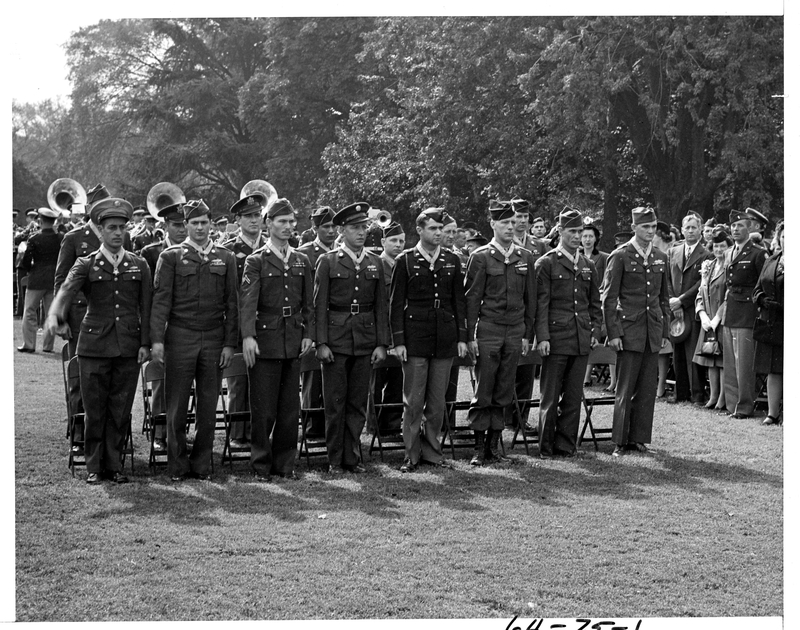
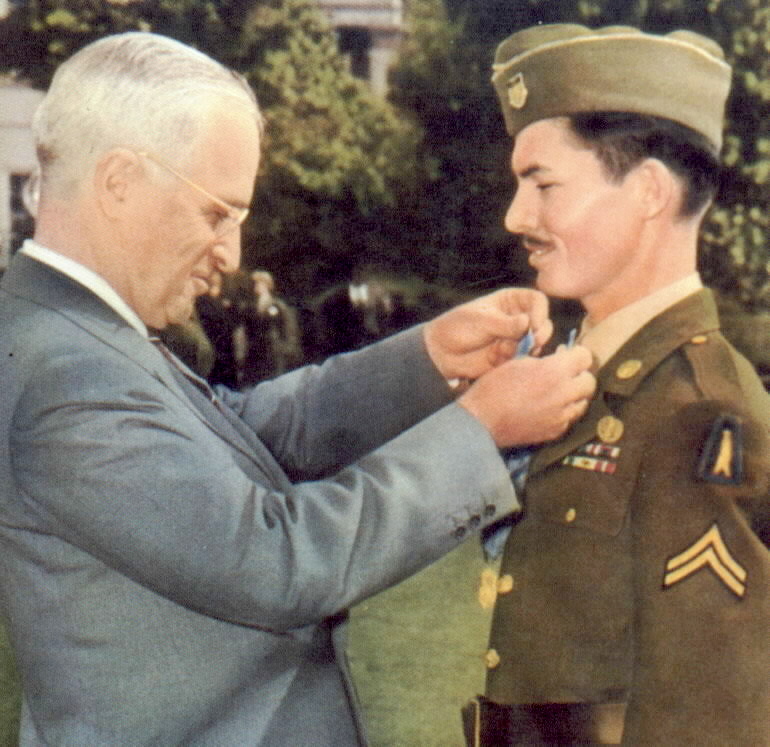
Doss’s commanding officer visited him in the hospital with astonishing news:
he had been nominated for the Medal of Honor.
He would become:
- The first conscientious objector to receive the award
- And the only one who earned it in World War II
President Harry Truman told him:
“I’m proud of you. You really deserve this.”
Doss lived the rest of his life quietly, never seeking fame. He married, raised a family, and ran a small farm. Though he carried the physical scars of war, and lasting lung damage from a vaccine reaction, he remained deeply humble.
He died in 2006, at the age of 87.
Today, his story endures because it upends every traditional idea of a “war hero.”
He fought without firing a gun.
He saved without hesitation.
He proved that courage is not measured by kills, but by compassion and conviction.
And he showed that one man, armed with nothing but faith, can save dozens of lives and change history.
Desmond Doss never believed he was a hero.
But everyone else knew better.
Featured Image from: United States Army (courtesy of the US National Archives), Public domain, via Wikimedia Commons