
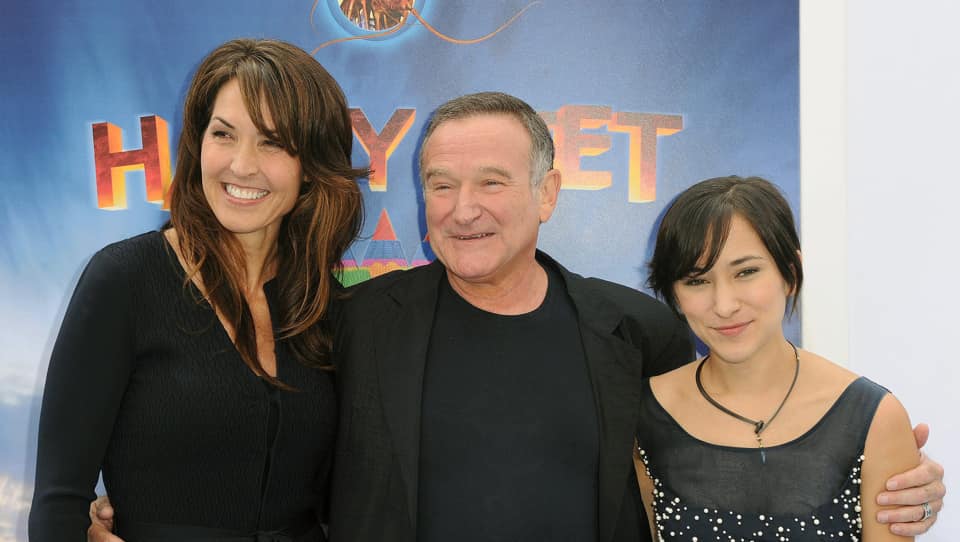
A Quiet Life Changed Forever
For decades, Susan Schneider lived in peaceful anonymity. A California-born artist and graphic designer, she built a life centered on creativity, privacy, and raising her two sons. But in 2007, a routine visit to an Apple Store in Corte Madera changed her life forever.
There, she encountered a man in camouflage-print clothing browsing quietly among the electronics, a man she thought she recognized instantly.
“I walked in and saw this man and I thought: ‘I think that’s Robin Williams,’” she told The Guardian in 2021.
Moments later, she decided to say hello.
Her greeting, “How’s that camo working out for you?”, sparked a conversation that neither could have predicted.
Robin smiled and replied: “Not too good, you found me.”
That playful exchange marked the beginning of a love story that would bring immense joy, profound sorrow, and ultimately, a mission that has become Susan Schneider’s life’s work.
Falling In Love With Robin Williams
Born on January 24, 1964, in Belvedere, California, Schneider attended California College of the Arts and carved out a successful career in graphic design. At the time she met Williams, she had no connection to Hollywood, and no expectation that she would one day be the partner of one of the most beloved entertainers in the world.
But the connection was instant. One year after meeting, they had fallen deeply in love.
Schneider recalled to PEOPLE that their closeness felt effortless:
“There was this instant familiarity and comfort… we met right on time.”
Williams proposed in a moment of simple tenderness, kneeling beside their bed and asking:
“Will you be Mrs. Robin Williams?”
“With all my heart,” she answered.
The two married on October 22, 2011, in Napa Valley. They settled in Paradise Cay, a quiet community in Tiburon, California, where Schneider’s sons joined them. Their life together, filled with art, humor, and home-cooked meals, seemed grounded, healing, and full of optimism.
Then everything changed.
The Mysterious Health Decline No One Could Explain
In October 2013, Schneider began noticing troubling changes in her husband. What started as indigestion quickly spiraled into an unpredictable cycle of symptoms:
- Tremors
- Muscle stiffness
- Digestive problems
- Vision issues
- A stooped posture
- Cognitive lapses
- Heightened anxiety
Every week seemed to bring a new problem.
“It was like playing whack-a-mole,” Schneider later recalled. “Which symptom is it this month?”
Robin confided that he felt like he was “losing his mind.” He told Schneider he needed a “brain reboot.”
Doctors struggled to explain what was happening.
Then, in May 2014, Robin Williams received a diagnosis: Parkinson’s disease.
But the diagnosis didn’t feel right.
His symptoms didn’t fully match.
And his anxiety continued to worsen.
Williams began experiencing terrifying paranoia. He struggled to sleep. His mind raced with irrational fears, including the fear that someone would steal his watches. On the night before his death, he hid them in a sock and drove them to his assistant’s home for safekeeping.
Despite all this, Schneider saw glimmers of hope. She and Robin spent what she later described as a “perfect day” together. They took a walk, shared conversations, and exchanged their nightly, familiar “Goodnight, my love.” Robin retreated to his room with his iPad, the first time Schneider had seen him read or watch anything in months.
They had an appointment scheduled at a neurocognitive testing facility. They were finally getting answers, she thought.
But they were out of time.
August 11, 2014: The Day The World Lost Robin Williams
When Schneider left the house around 10:30 a.m. the next morning to run errands, she believed her husband was sleeping. His door was closed. She didn’t disturb him.
By 11 a.m., his assistant grew alarmed. After knocking, sliding a note under the door, and receiving no response, she jimmied the lock.
Robin Williams had died by suicide.
He was 63 years old.
Schneider’s world, and the world of millions who loved Robin Williams, shattered in an instant.
The Diagnosis No One Expected: Lewy Body Dementia
At first, public statements focused on the depression Williams had battled years earlier. But when the autopsy was completed, a different picture emerged.
Robin Williams had suffered from Lewy body dementia (LBD), one of the most aggressive and devastating brain diseases known.
“The doctors said to me: ‘Are you surprised your husband had Lewy bodies throughout his entire brain and brain stem?’” Schneider recalled. “I didn’t even know what Lewy bodies were.”
Suddenly, everything made sense:
- The paranoia
- The sleep disturbances
- The movement problems
- The cognitive decline
- The emotional swings
- The hallucination-like fears
LBD is caused by abnormal protein deposits that attack neurons, disrupting movement, memory, mood, and behavior. Many symptoms mimic Parkinson’s and Alzheimer’s, making diagnosis extremely difficult.
Schneider became certain of one thing:
“Robin did not die of depression… Depression was one of the 40 symptoms of Lewy body dementia.”
Williams wasn’t losing hope, he was losing neurological function. And he feared hospitalization once he realized something was truly wrong.
The disease, not despair, drove him to suicide.
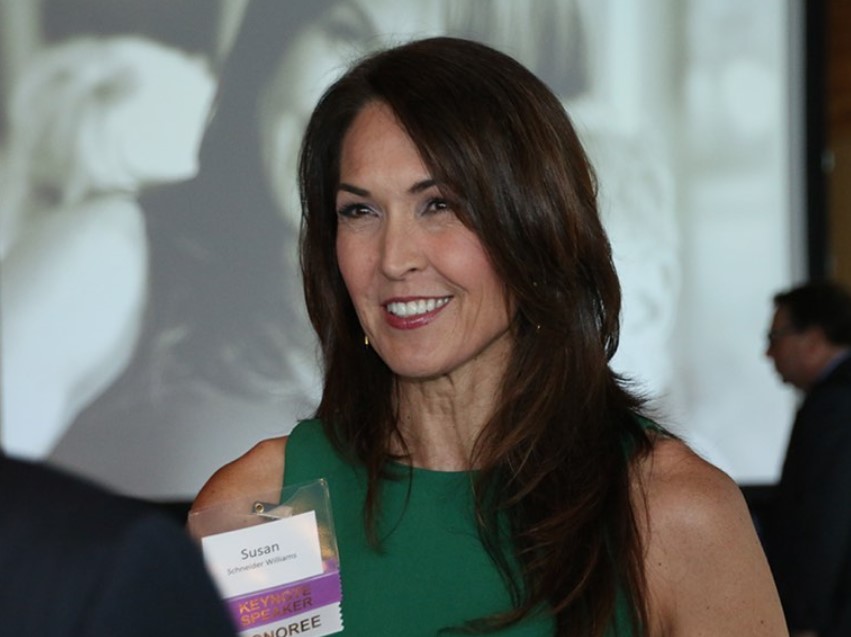
Susan Schneider’s New Mission: Educating The World About LBD
In the years after Robin Williams’ death, Susan Schneider transformed her grief into purpose.
She became one of the most vocal advocates for Lewy body dementia awareness, speaking across the country, collaborating with medical researchers, and bringing public attention to a disease most had never heard of.
She produced the 2020 documentary Robin’s Wish, which explores Williams’ final years and seeks to correct misconceptions about his death. Her advocacy has influenced neurological research, early detection efforts, and public understanding of degenerative brain diseases.
She has emphasized repeatedly:
- Robin Williams wasn’t depressed
- He wasn’t lost
- He wasn’t hopeless
He was fighting a disease so severe, so fast-moving, and so little understood that it stole nearly everything from him before anyone could recognize it.
The Legal Battle With Williams’ Children
In the emotional aftermath of Robin Williams’ death, Schneider found herself in conflict with Williams’ children, Zak, Zelda, and Cody, over his estate.
Williams had left most of his assets to his children, but he intended for Schneider to have the home they shared and sufficient funds to maintain it. The family disagreed on what that meant, leading to a highly publicized legal dispute.
In 2015, they reached a private settlement.
Though painful, Schneider has said little about the conflict since, choosing instead to focus on honoring Robin’s legacy.
Moving Forward While Honoring The Past
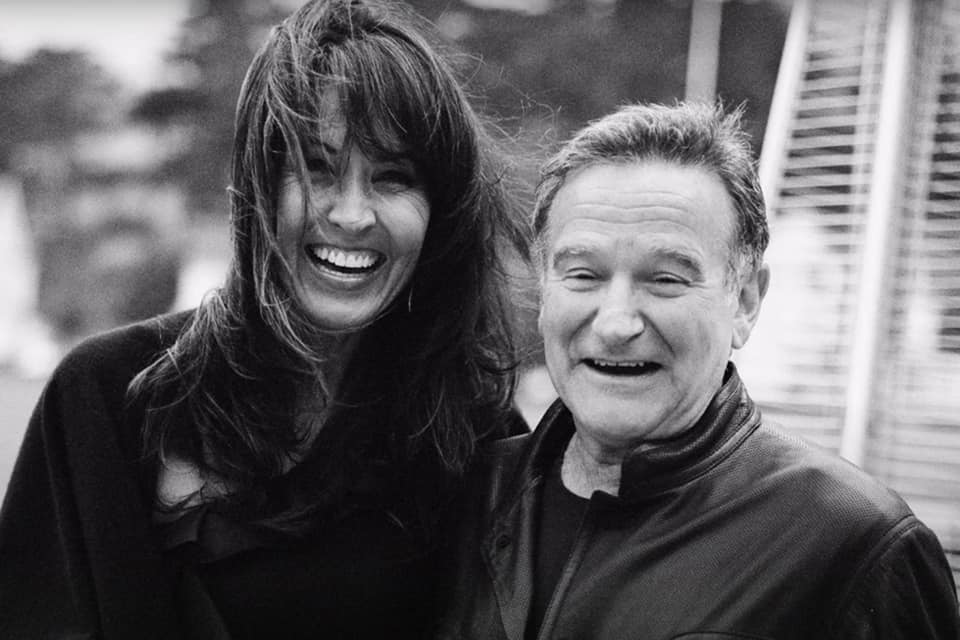
Today, Susan Schneider continues to paint, advocate, and share her story in hopes of helping others understand Lewy body dementia, and helping families recognize the signs she and Robin missed.
She has made it her mission to ensure that Robin Williams is not remembered for the manner of his death, but for the battle he fought silently and the joy he brought the world.
She once described her husband like this:
He was compassionate.
He was brilliant.
He was astonishingly generous.
And despite everything happening inside his brain, he fought to stay present, loving, and gentle to the very end.
Through her work, Susan Schneider keeps that version of Robin alive, not the tragedy, but the truth.
And in doing so, she has become his fiercest protector, his clearest voice, and his greatest champion.
Featured image from Facebook: Robin Willams