
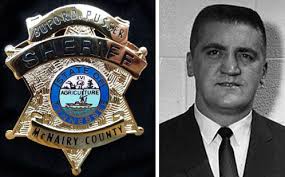
A Folk Hero Born In Blood And Mystery
In the early hours of August 12, 1967, Sheriff Buford Pusser of McNairy County, Tennessee, received a call about a disturbance on a rural road. His wife, Pauline, insisted on going with him, a decision that would define Pusser’s legacy for generations.
According to the story he told for decades, the couple was ambushed by a second vehicle. Gunmen opened fire, killing Pauline instantly and leaving Buford grievously wounded, his jaw blown apart. Pusser survived, but his wife did not.
He vowed revenge, and the legend of the fearless, incorruptible sheriff was born.
The tale became the basis for the film Walking Tall, turning Pusser into a symbol of righteous fury and frontier justice. But as compelling as that story was, later investigations and modern forensic analysis have raised a disturbing possibility:
Buford Pusser may have killed his own wife.
Before looking at that explosive twist, we must understand the larger-than-life figure who captivated America long before the doubts surfaced.
From Tennessee Boy To Wrestling Star
Born on December 12, 1937, in McNairy County, Tennessee, Pusser grew up under the shadow of law enforcement. His father, Carl Pusser, served as police chief in the small town of Adamsville. Buford was big from the start, tall, athletic, and imposing.
Though he joined the Marine Corps, his service was cut short because of asthma. In 1957, the 6’6” Pusser headed to Chicago, where his size made him a natural fit for the local wrestling circuit. He performed under the nickname “Buford the Bull,” winning fans and honing the tough persona that would later define his career as sheriff.
Chicago was also where he met Pauline Mullins, the woman he married in 1959. Shortly after, the couple moved back to Tennessee, where Pusser entered law enforcement just as his father had before him.
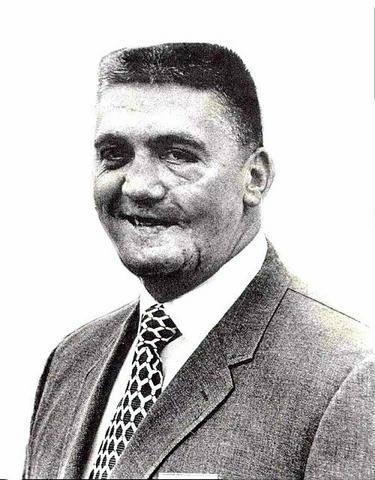
The Making Of A Sheriff, And A Myth
At just 25 years old, Pusser became the youngest police chief and constable in Adamsville history. When Sheriff James Dickey died in a tragic car accident in 1964, the county elected Pusser, only 27, to take his place, making him the youngest sheriff in Tennessee at the time.
His attention turned immediately to the criminal networks plaguing the Tennessee–Mississippi state line:
- The Dixie Mafia
- The State Line Mob
These groups ran illegal moonshine operations, gambling houses, brothels, and protection rackets. Few lawmen dared challenge them. Pusser did, loudly, publicly, and violently.
He tore through illegal gambling halls with a pick-axe, destroyed equipment with his bare hands, and refused all bribes. His war on organized crime made him both a hero and a target.
In his first years as sheriff:
- He was stabbed seven times
- Shot eight times
- Run over by a car
- Survived multiple assassination attempts
According to the Buford Pusser Museum, he once fought off six attackers at once, sending half to the hospital and half to jail.
Then came the ambush that killed his wife, the moment that, for many, cemented his legend forever.
The Murder Of Pauline Pusser
On August 12, 1967, the Pussers set out together to investigate a reported disturbance. What happened next became the cornerstone of his myth:
- A second car appeared beside theirs
- Gunmen opened fire
- Pauline was struck in the head
- Pusser, his jaw blown apart, crashed the car
- The attackers fled
Pusser survived 18 days in the hospital and multiple reconstructive surgeries. When he emerged, scarred and grief-stricken, he vowed revenge.
He publicly named four suspects. None were ever tried in connection with the shooting, but three died violently within a few years:
- Carl Douglas “Towhead” White was found shot to death in 1969
- George McGann and Gary McDaniel were shot and killed in Texas in 1970
Rumors swirled that Pusser was secretly responsible, either personally or through hired hands, but nothing was ever proven.
Meanwhile, he doubled down on his war against the State Line Mob. Newspapers praised him. Locals idolized him. The state celebrated him. And Hollywood made his life into a box-office hit.
Yet behind the growing legend, cracks were forming.
A Violent End To A Violent Life
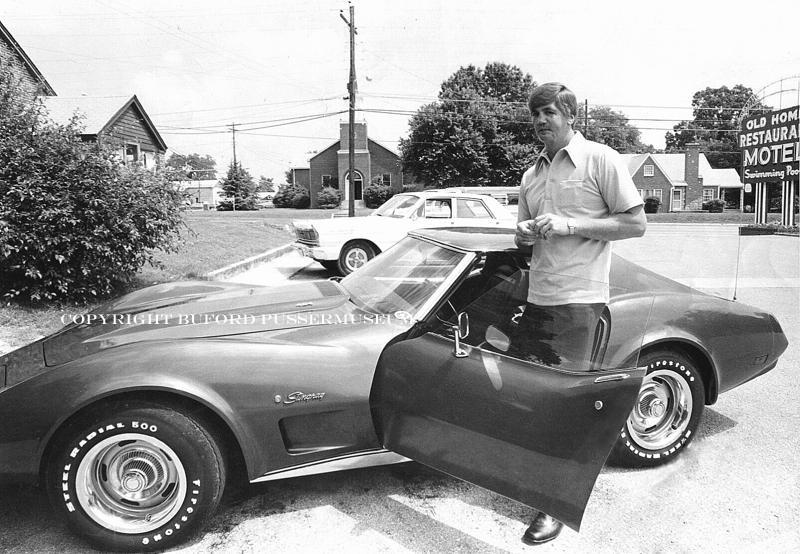
On August 21, 1974, just seven years after Pauline’s death, Buford Pusser lost control of his Corvette on a rural road near Adamsville. The car struck an embankment, flipped, and burst into flames.
He was 36 years old.
The crash was officially ruled an accident, but speculation never ceased. Some believed the Dixie Mafia ordered the hit. Others thought he was assassinated by enemies he’d made along the state line.
But the truth remains officially unresolved.
The 2025 Bombshell: Did Buford Pusser Kill His Wife?
In 2025, Tennessee authorities announced a stunning reassessment of the 1967 ambush, one that challenges every part of the story Pusser told for decades.
The new review uncovered troubling evidence that suggests the shooting may not have been an ambush at all, but a domestic homicide.
Investigators revealed several key findings:
1. Pauline’s injuries do not match the scene inside the car
Forensic analysis of the original crime scene photos shows that the cranial trauma Pauline suffered was inconsistent with gunshots fired from another vehicle. Blood spatter patterns suggest she may have been shot outside the car, not inside it.
2. Pusser’s injuries indicate close-range gunfire
His jaw wound, once believed to have come from attackers shooting from outside the car, is now thought to show evidence of close-range fire, possibly self-inflicted to stage the attack.
3. Evidence of domestic abuse
Newly reviewed documents and witness statements indicate that Pauline may have suffered from domestic violence, a detail not publicized in the 1960s.
4. The timeline does not match Pusser’s account
Investigators noted multiple inconsistencies in Pusser’s story, including the timing of the alleged pursuit and the lack of corroborating witness statements.
Taken together, these findings point toward a chilling possibility:
Buford Pusser may have killed Pauline during a domestic dispute and staged the ambush to cover it up.
The allegations directly contradict the heroic narrative embraced by fans, law enforcement supporters, and the Walking Tall franchise. And yet, the evidence raises questions that can no longer be ignored.
The sheriff who spent his life creating a legend may have used that same legend to hide a terrible truth.
A Legacy Both Heroic And Haunted
For decades, Spencer County residents, historians, and tourists have celebrated Buford Pusser as a man who stood alone against organized crime, survived brutal attacks, and sought justice for his slain wife.
His story inspired books, movies, museums, and folk tales, an American myth steeped in grit and vengeance.
But history is rarely simple. And heroes are rarely pure.
The 2025 revelations do not erase Pusser’s battles against crime, nor his impact on McNairy County. But they do complicate his story, and demand a reexamination of the man behind the myth.
Was Buford Pusser a fearless lawman who refused to bow to corruption?
A violent sheriff who manipulated public sympathy?
A grieving husband bent on revenge?
Or the killer of the woman he claimed to avenge?
More likely, he was all of these things, which makes his story not just legendary, but profoundly human.
Featured Image from Facebook: Buford Pusser: The other story