

Newly Released Records Show Extensive Private Communications Between Bannon and Epstein
For years, Steve Bannon urged the public release of the Epstein files, framing them as a key to exposing corruption among powerful elites.
Now, newly disclosed Justice Department records show Bannon himself appears extensively in those files.
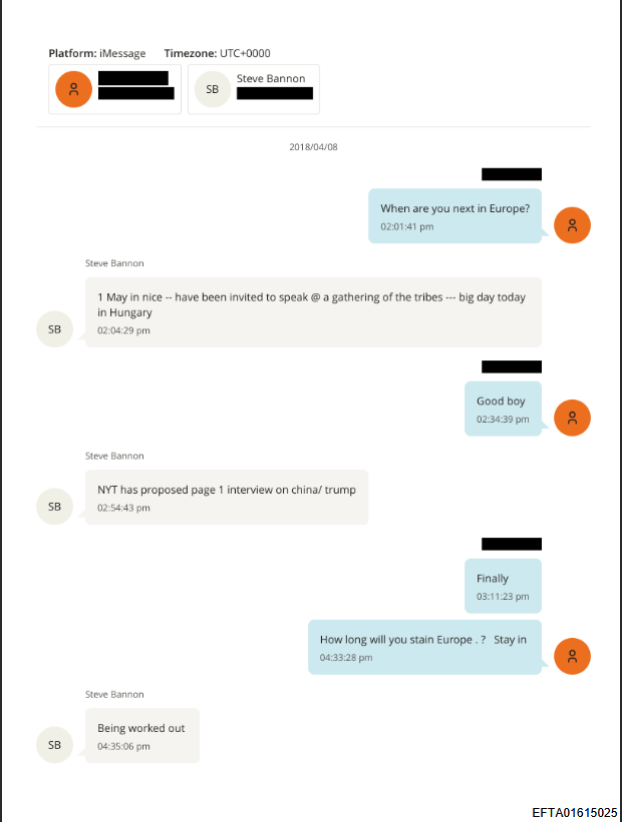
The records detail a series of private emails and text messages between Bannon and Jeffrey Epstein in 2018 and 2019, years after Epstein’s 2008 conviction in Florida for soliciting a minor.
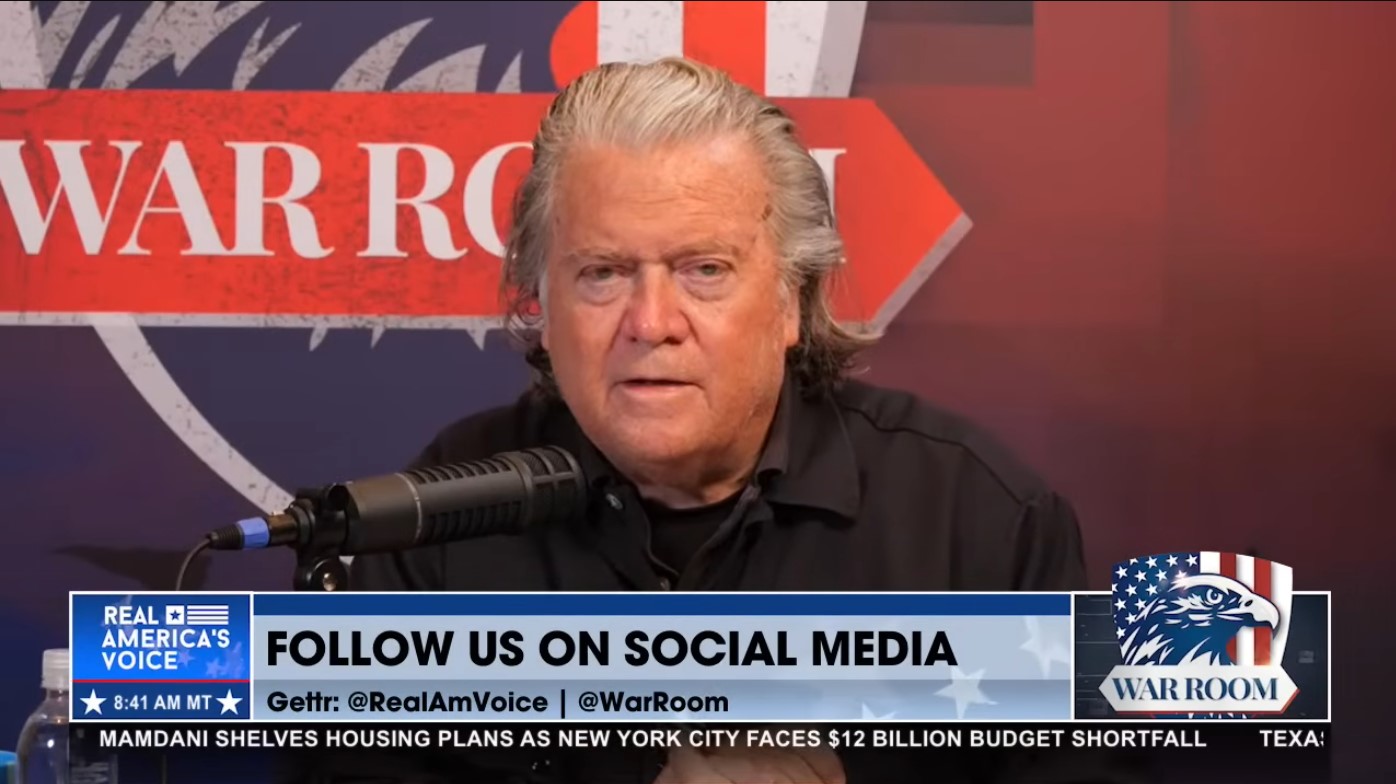
Since the release of those communications, Bannon has largely avoided addressing them publicly on his show, “War Room,” despite previously making Epstein-related disclosures a recurring topic.
Public Pressure, Then Silence
Earlier this month, conservative media programs called for renewed scrutiny of the Epstein scandal following the latest document release.
On Real America’s Voice, hosts urged sustained attention and accountability.
Shortly afterward, Bannon’s own program aired. Over the course of the broadcast, he discussed cultural issues, Republican primaries, and political strategy.
He did not mention Epstein.
A review of recent episodes shows Bannon has not directly addressed the newly released communications or the frequency with which his name appears in them.
This marks a shift from last year, when “War Room” frequently amplified calls to release investigative records tied to Epstein.
What the Messages Show
The released communications show Bannon and Epstein discussing politics, media strategy, and former President Donald Trump.
In 2019, as renewed reporting on Epstein intensified following a Miami Herald investigation, Bannon advised Epstein on public relations strategy.
In one exchange, Bannon wrote:
“First we need to push back on the lies; then crush the pedo/trafficking narrative; then rebuild your image as philanthropist.”
In earlier messages, the two discussed Trump’s presidency and political dynamics within the White House. At one point, Bannon shared an article critical of Trump and discussed internal tensions within the administration.
The communications also show Bannon seeking to film Epstein for a documentary project. Bannon later told The New York Times that he recorded roughly 50 hours of footage and described himself as a filmmaker working to expose Epstein.
The Justice Department released portions of recorded interviews between the two men earlier this year.
Bannon has not publicly detailed how the documentary project would be used or whether it remains in production.

Reaction Inside the MAGA Movement
Some conservative figures have questioned Bannon’s silence.
Laura Loomer said Bannon should be “100% forthcoming” about his ties to Epstein. Former national security adviser Michael Flynn wrote on X that an explanation was overdue.
Rep. Marjorie Taylor Greene also criticized the relationship, writing that there was “no excuse” for maintaining friendly contact with Epstein after his conviction.
Despite those criticisms, Bannon’s show continues to air without interruption. High-profile Republican guests have continued to appear.
One Trump administration official told reporters that Bannon’s audience remains strong enough that the controversy is unlikely to end his influence.

The Contrast With Bannon’s Past Messaging
Bannon has long encouraged skepticism toward official narratives and frequently framed the Epstein case as a gateway to uncovering institutional corruption.
At a 2023 gathering hosted by Turning Point USA, Bannon said, “Epstein is a key that picks the lock on so many things.”
He did not disclose at that event that he had privately exchanged messages with Epstein discussing political strategy and public image management.
The newly released communications also show discussions about global populist movements and media platforms.
In earlier years, Bannon’s podcast prominently displayed a sign reading: “There are NO conspiracies but there are NO coincidences.”
Since the release of his messages, however, Epstein has been largely absent from his programming.
Why This Matters
The broader Epstein file disclosures have renewed attention on individuals across political, academic, and business circles who had contact with Epstein.
In many cases, appearing in documents does not imply criminal wrongdoing. The records often reflect meetings, emails, or social interactions rather than charges.
In Bannon’s case, the issue is not criminal exposure. It is the contrast between his public calls for transparency and his limited acknowledgment of his own documented communications.
For American audiences who have followed years of Epstein-related revelations, the episode raises a simple question: Should public figures who push for full disclosure also directly address their own connections when those records become public?
So far, Bannon has offered little public explanation beyond stating that he was working on a documentary project.
Whether he chooses to address the matter more directly remains to be seen.
Featured image from: Justice/DOJ-disclosures