
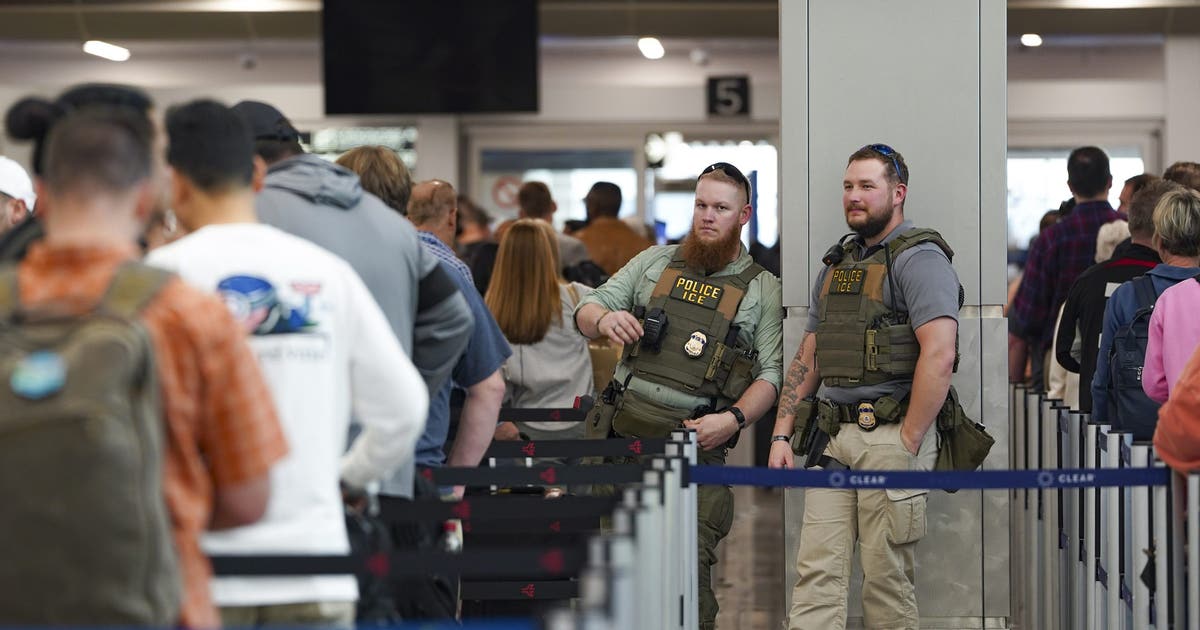
A temporary fix for airport chaos is turning into a longer-term policy, raising new questions about security, enforcement, and public trust
The presence of Immigration and Customs Enforcement (ICE) agents at U.S. airports was initially framed as a temporary solution.
Now, it may be something more permanent.
U.S. Transportation Secretary Sean Duffy confirmed that ICE agents will remain deployed in airports “as long as they’re needed” to assist with security operations, signaling a shift from emergency response to an open-ended policy.
What began as a workaround during staffing shortages is quickly evolving into a broader debate about the role of immigration enforcement inside everyday travel spaces.
From Staffing Crisis to Policy Shift
The move traces back to a growing problem inside the nation’s airports.
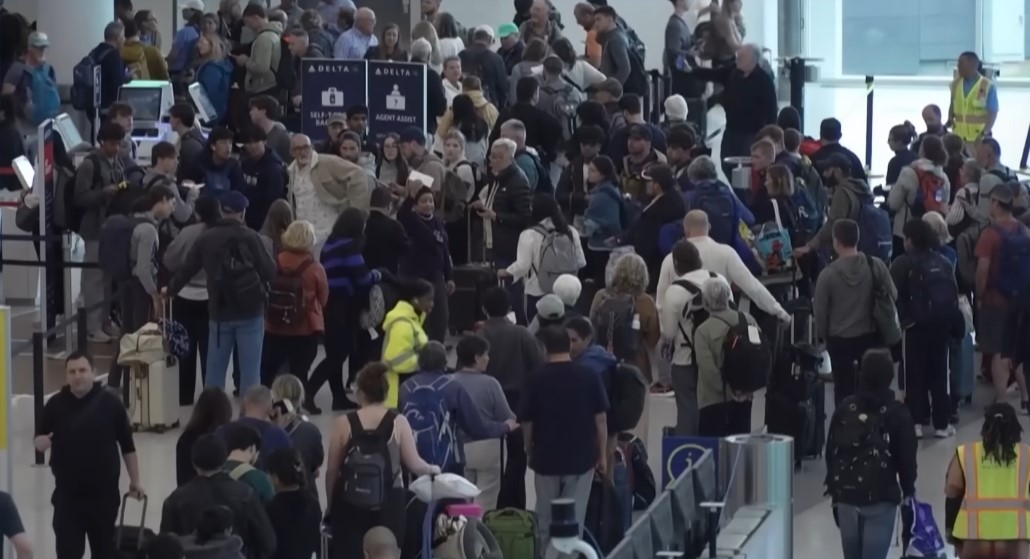
A partial government shutdown and funding issues left Transportation Security Administration (TSA) staffing strained, with long lines, delays, and growing frustration among travelers.
In response, the Trump administration deployed ICE agents to assist.
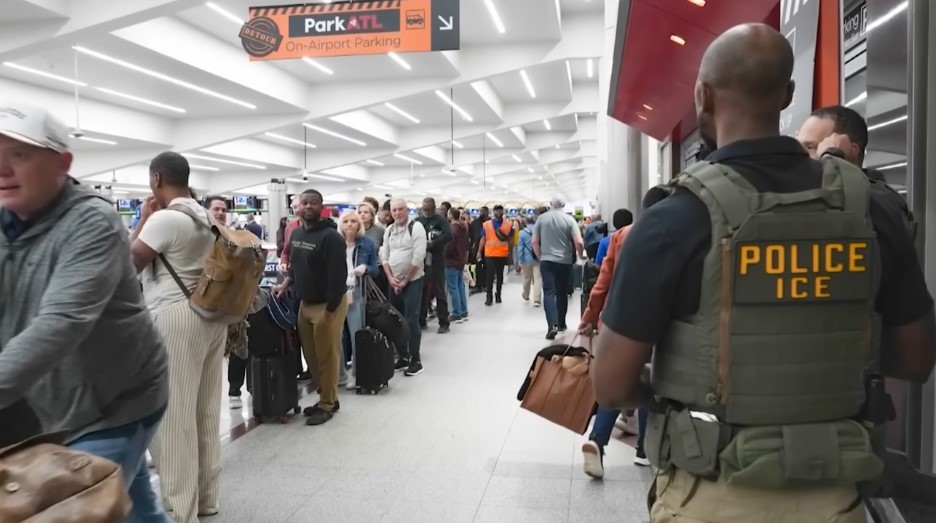
Their role was not to replace TSA entirely, but to support operations, handling tasks like crowd control, checking identification, and managing entry and exit points.
At the time, officials described it as a short-term fix.
Now, with the Transportation Secretary signaling no clear end date, the deployment is starting to look like a longer-term strategy.
What ICE Is Actually Doing at Airports
Despite public concern, ICE agents are not conducting full TSA screenings.
Instead, they are functioning in support roles, what officials have described as a “force multiplier” for airport operations.
Their responsibilities can include:
- Managing lines and crowd flow
- Verifying identification before screening
- Guarding exits and restricted areas
This allows trained TSA officers to focus on more specialized security tasks.
But there is a complication.
ICE is not just a support agency.
It is a federal law enforcement body with broad authority to question, detain, and arrest individuals suspected of immigration violations.
That dual role is at the center of the controversy.
A Growing Debate Over Enforcement in Public Spaces
Critics argue that placing ICE agents in airports changes the nature of those environments.
Airports are already high-security spaces.
Adding immigration enforcement into that mix raises concerns about:
- Racial profiling
- Expanded surveillance
- The potential targeting of undocumented travelers or even legal residents
Civil rights advocates warn that even if ICE agents are not actively making arrests at checkpoints, their presence alone can create fear, especially among immigrant communities.
That concern is not theoretical.
Recent scrutiny of ICE operations, including enforcement practices and detention tracking issues, has intensified national debate about accountability and transparency.
Supporters Say It’s About Efficiency and Safety
Supporters of the policy argue that the focus should remain on practicality.
Airports were facing significant disruptions.
Wait times stretched for hours.
Travelers were missing flights.
In that context, bringing in additional federal personnel was seen as necessary.
Transportation officials have emphasized that ICE agents are trained and capable of assisting with operational needs, even if they are not traditional aviation security personnel.
From that perspective, the goal is simple:
Keep airports moving.
Prevent delays.
Avoid broader disruptions to travel and commerce.
The Tension Between Security and Scope
What makes this situation different is not just the presence of ICE, but how long it may last.
A temporary deployment is one thing.
An indefinite one raises new questions.
How long is “as long as needed”?
Who decides when that need ends?
And what happens if the role of ICE continues to expand?
Experts note that once a federal agency becomes embedded in a new environment, its role can evolve over time, sometimes beyond its original purpose.
That possibility is what’s driving concern among lawmakers and policy analysts.
Public Reaction Is Mixed
For travelers, the experience has been inconsistent.
Some report smoother operations and shorter lines.
Others say the presence of ICE agents feels unusual, or even unsettling.
The reaction often depends on perspective.
For some, it’s an added layer of security.
For others, it’s an expansion of enforcement into spaces that were not previously associated with immigration policing.
That divide reflects a broader national conversation.

The Bigger Picture
The deployment of ICE agents to airports is not happening in isolation.
It is part of a wider shift in how federal agencies are being used across domestic spaces, from transportation hubs to city-level enforcement operations.
At its core, the debate is about boundaries.
Where does security end, and enforcement begin?
And how much overlap is acceptable in places used by millions of everyday travelers?
The Bottom Line
ICE agents were brought into airports to solve a problem.
Now, their continued presence is creating a new one.
The policy may help ease operational strain in the short term.
But over time, it raises deeper questions about the role of immigration enforcement in public life, and how far that reach should extend.
For now, one thing is clear:
What started as temporary is no longer being treated that way.
And the implications are still unfolding.
Featured Image from facebook: Fox 4 DC