
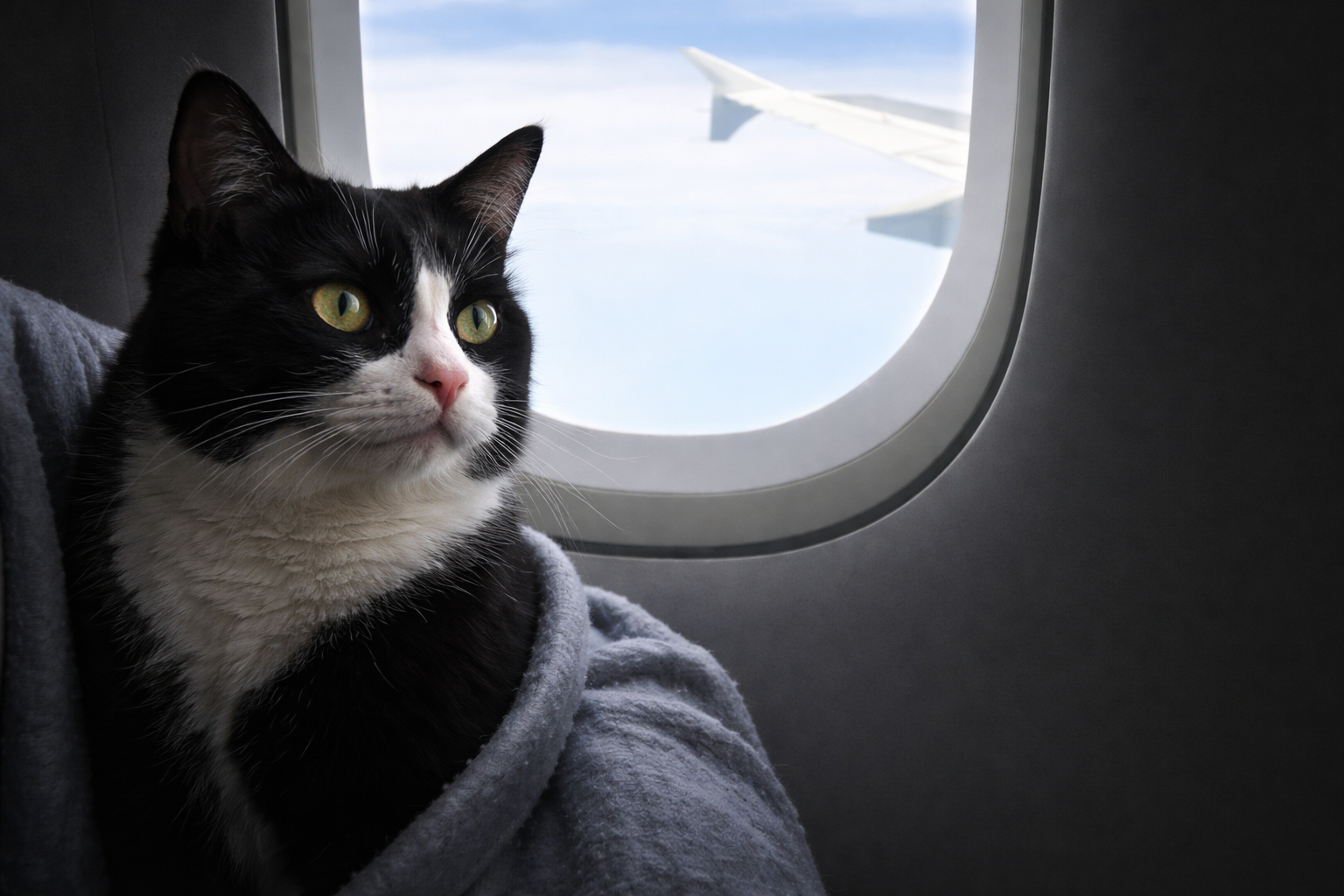
As airspace closures strand thousands, a rare evacuation highlights the growing challenge of escaping conflict zones with animals
As conflict in the Middle East disrupts travel across the region, governments are racing to bring their citizens home.
But for Greece, one detail stood out.
Not just how to evacuate people, but how to bring their pets with them.
In a specially coordinated effort, the Greek government arranged a chartered flight from the United Arab Emirates to Athens, carrying more than 100 passengers along with their animals. The mission reflects a growing reality during modern crises: for many, evacuation is not complete unless every member of the family makes it out.
A Different Kind of Evacuation
The flight arrived in Athens carrying Greeks who had been stranded in Gulf countries as airspace closures and flight cancellations disrupted travel across the region.
But unlike typical evacuation flights, this one included dozens of companion animals, cats, dogs, and other pets that owners refused to leave behind.
The effort required coordination between multiple government agencies, including Greece’s interior and foreign ministries, which worked together for days to make the operation possible.
“Our pets are not luggage, they are part of our families,” said Nikos Chrysakis, Greece’s Special Secretary for the Protection of Companion Animals.
That sentiment shaped the mission.
Instead of separating people from their animals or forcing difficult decisions, the government built an evacuation plan around keeping them together.
A Region Locked Down
The need for such a mission comes from rapidly changing conditions in the Gulf.
Since the escalation of conflict involving Iran, Israel, and the United States, countries across the region, including the UAE and Qatar, have repeatedly shut down their airspace due to missile threats and military activity.
Thousands of flights have been canceled.
Hundreds of thousands of travelers have been stranded.
And for those traveling with pets, the situation has been even more complicated.
Strict international transport rules, limited cargo space, and airline restrictions make flying with animals difficult even under normal conditions.
In a crisis, those challenges multiply.
When Leaving Isn’t Simple
For many expatriates in cities like Dubai and Abu Dhabi, leaving quickly has proven nearly impossible.
Even securing a seat on a commercial flight has been difficult.
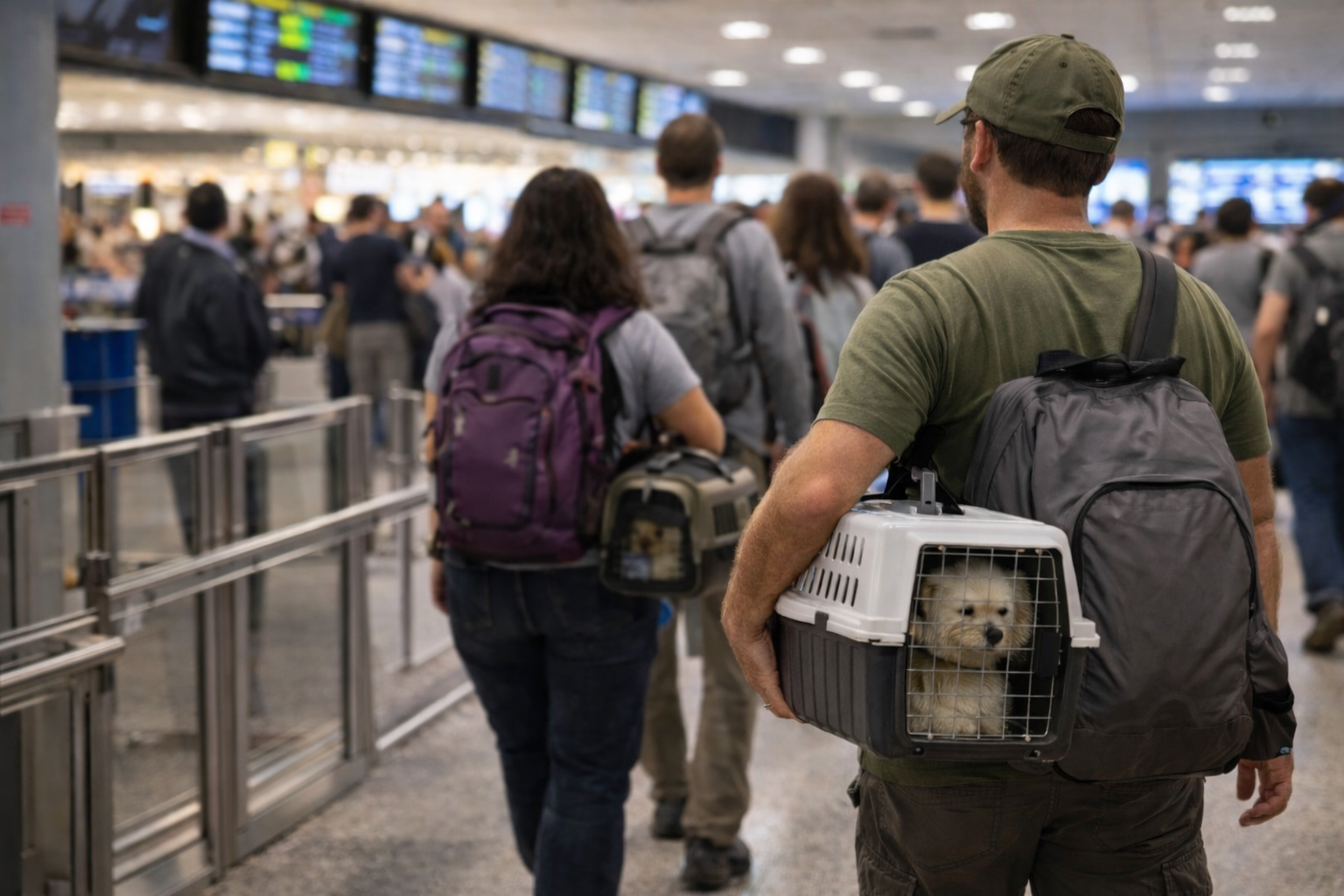
Adding a pet to that equation introduces additional hurdles, paperwork, approvals, crate requirements, and limited availability for animal transport.
“It is very, very difficult to fly out of the country with your pets,” said one passenger, who returned to Greece with her cat.
Others echoed the same experience.
One traveler described arriving home with her dog as “absolutely fantastic,” highlighting just how uncertain the situation had felt before departure.
A Community Caught in the Middle
The Gulf region has long been home to large expatriate populations, including thousands of Greeks drawn by work opportunities, tax advantages, and lifestyle.
When conflict escalates, those communities often find themselves navigating two realities at once:
- A rapidly changing security environment
- And limited options for leaving safely
That pressure has been building for weeks, as tensions in the region disrupt both daily life and international travel.
For many, the Greek evacuation flight was not just convenient, it was necessary.
More Than Logistics
Scenes at the Athens airport captured the emotional weight of the moment.
Families reunited.
Passengers embraced relatives.
And pets, many stressed from travel, were finally released from carriers into the arms of their owners.
The relief was visible.
Because for those onboard, the journey wasn’t just about getting home.
It was about not having to leave something behind.
A Sign of Changing Priorities
The evacuation also reflects a broader shift in how governments respond to crises.
In the past, evacuations focused almost entirely on people.
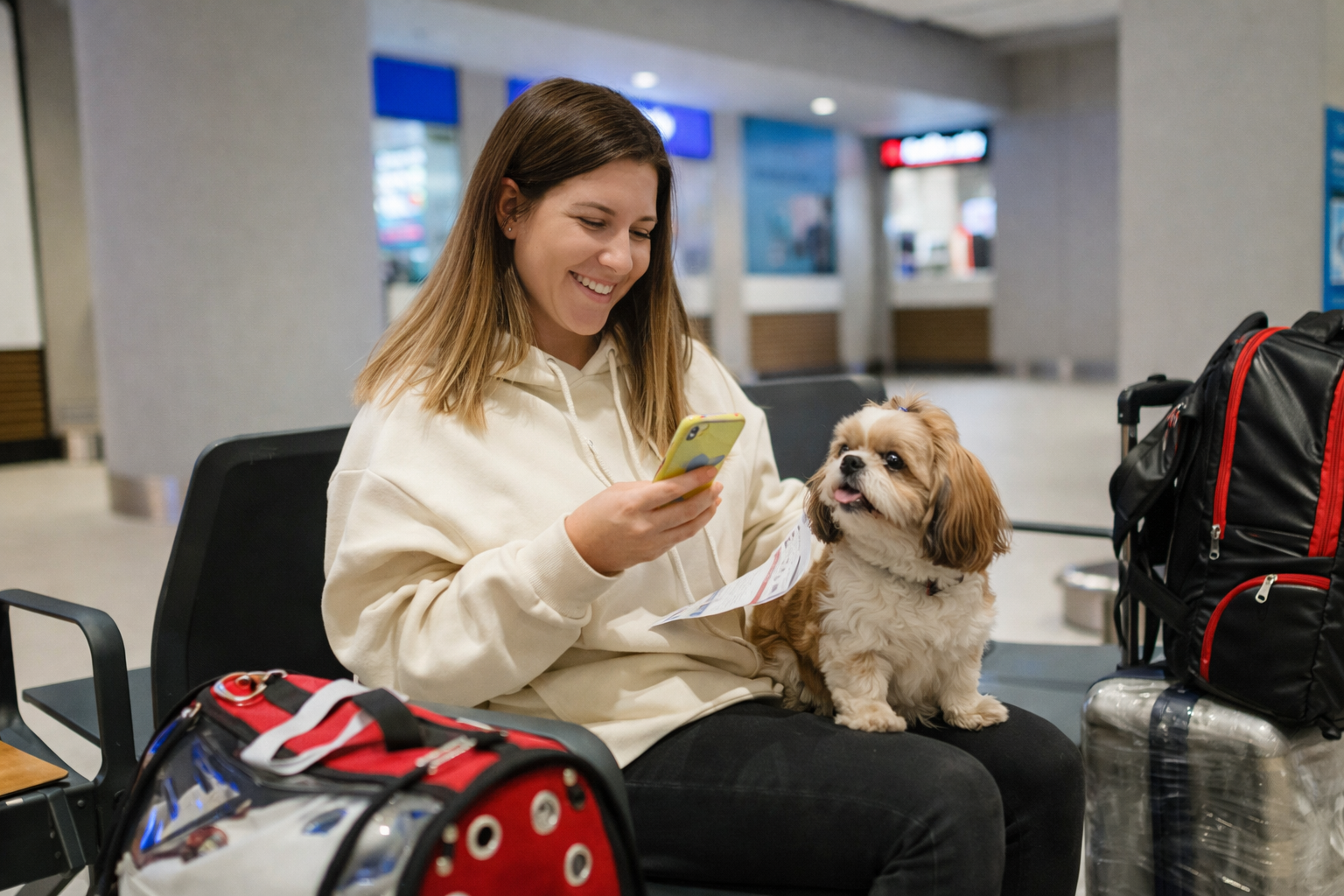
Now, there is growing recognition that pets are part of that equation.
For many families, animals are not optional.
They are companions, sources of comfort, and part of daily life.
That reality is influencing how evacuation plans are designed, and what citizens expect from them.
What Happens Next
While this flight successfully brought one group home, the wider situation remains unstable.
Airspace disruptions continue.
Travel remains unpredictable.
And thousands of people across the region are still looking for ways to leave.
For governments, that means balancing urgency with logistics.
For individuals, it means navigating uncertainty, sometimes with limited options.
The Bottom Line
Greece’s “animal airlift” stands out not just for what it accomplished, but for what it represents.
A recognition that in times of crisis, evacuation is not just about moving people.
It’s about preserving the connections that matter most.
As conflicts reshape travel and displacement, that idea may become increasingly important.
Because for many, leaving safely doesn’t just mean getting out.
It means bringing everyone with you.
Featured image from: Delightful Daily