
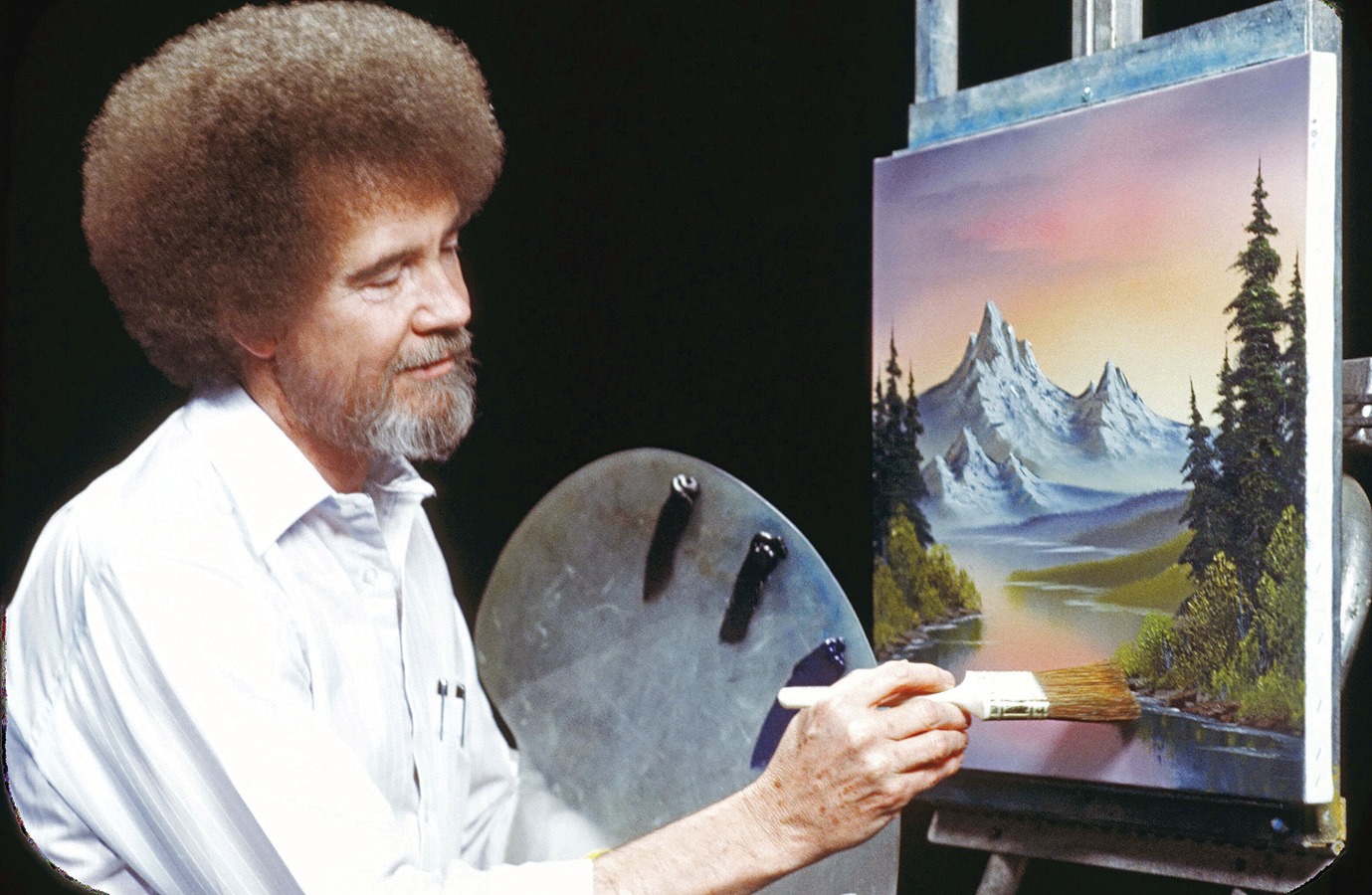
Ross died at age 52 after battling lymphoma, but his final months were consumed by conflict over control of the $15 million empire built around his name.
The Quiet Death Of A Man Who Taught Millions To Paint
When Bob Ross died in 1995, the New York Times obituary announcing his passing was understated: “Bob Ross, 52, Dies; Was A Painter On TV.” No photograph. No headline prominence. Just a brief acknowledgment of a man who had, quietly and without spectacle, inspired generations of viewers to pick up a paintbrush.
Today, Ross is a cultural icon. His soft-spoken encouragement, “You can do anything”, and his serene landscapes have outlived him, building a global fanbase far larger than he ever witnessed in his lifetime. But the years and months leading up to Ross’s death were marked by turmoil. Behind the gentle public persona was a man fighting not only cancer, but also a bitter legal struggle over his estate, his name, and the future of everything he created.
Ross died on July 4, 1995, in Orlando, Florida, after a short but devastating battle with lymphoma. He was only 52. His health deteriorated so quickly that even his viewers noticed; in the last season of The Joy of Painting, his once energetic presence appeared noticeably frailer. Off-camera, the decline was even more severe.
But before cancer claimed his life, an even more painful battle consumed his final days, a battle fought from his deathbed.
Bob Ross’s Path To National Treasure
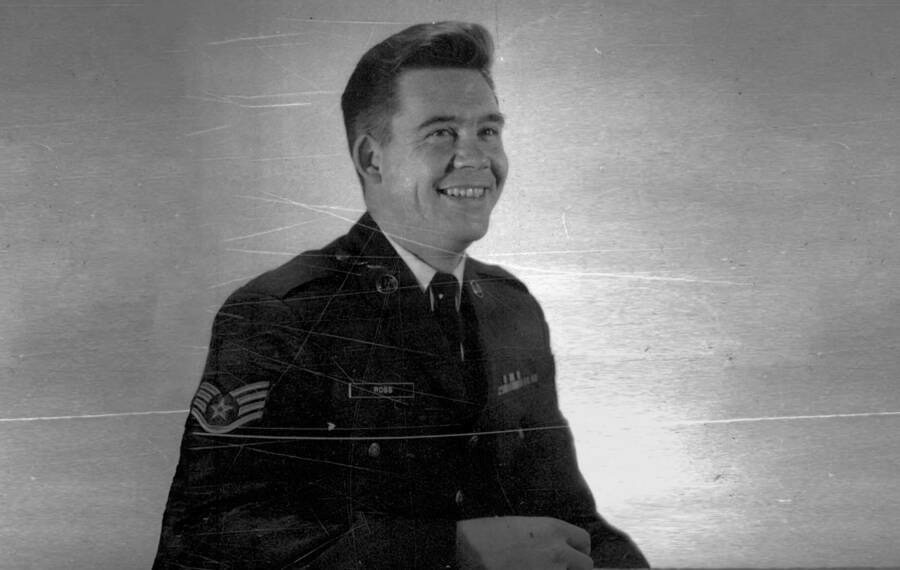
Born in Daytona Beach in 1942, Ross grew up around his father’s carpentry tools and dropped out of school in ninth grade. After joining the Air Force at 18, he spent two decades stationed primarily in Alaska. It was there, in the quiet hours after long days as a drill sergeant, that he discovered painting.
Ross vowed never to yell again once he left the military, a vow he famously kept in his soothing television delivery.
Trained under painter William Alexander, Ross mastered the wet-on-wet technique, allowing him to complete a canvas in under half an hour. That rare combination of artistry and speed made him ideal for television. The Joy of Painting premiered in 1983 and aired for 31 seasons.
Despite his fame, Ross lived modestly. He rehabilitated injured animals, remained deeply private, and delighted in simple pleasures, including cruising around in a restored 1969 Corvette. His life reflected the world he painted: calm, gentle, and full of possibility.
But the simplicity of his public persona hid an increasingly fraught business relationship behind the scenes.
How Did Bob Ross Die?
Ross had long believed he would die young. He smoked heavily and had already survived heart attacks and an earlier cancer. But the diagnosis of lymphoma in 1994 marked the true beginning of the end.
His trademark perm fell out. His voice grew hoarse. By the final months, he lacked the strength to paint at all. The Joy of Painting ended its run, and Ross returned to Orlando, where he spent his final months surrounded by close friends and family.
He insisted his funeral be small, simple, private, and quiet. Those closest to the “happy painter” honored that wish.
All except two: the Kowalskis, his former business partners, did not attend.
The Legal War That Overshadowed His Final Days

By the mid-1990s, Bob Ross, Inc. (BRI) was a multimillion-dollar brand. His face appeared on art supplies, instructional kits, easels, and books. He taught private lessons for hundreds of dollars per hour. The business, built on his talent, charm, and kindness, was now worth more than $15 million.
And others wanted control of it.
According to reporting by The Daily Beast, Ross’s business partner Walt Kowalski delivered what was described as a “declaration of war,” asserting that he and his wife Annette sought total ownership of Ross’s name, likeness, and artistic output.
The Kowalskis had been instrumental in helping Ross transition from student to television star, and the partnership had once been warm. Ross even originally listed Annette as the person who would oversee his estate. But the relationship soured after Ross’s second wife Jane, a co-owner of the company, died in 1992. Her share passed to Ross and the Kowalskis, giving them majority control.
As Ross’s health deteriorated, the pressure intensified. His son Steve recalled his father shouting into the phone from his deathbed during a dispute with the Kowalskis, an agonizing contradiction to the painter’s lifelong refusal to raise his voice.
In the end, Ross made final-hour revisions to his will. He stripped Annette of control over his name and image and transferred those rights to his son Steve. His third wife, Lynda, whom Ross married shortly before his death, inherited his estate.
But the battle did not end there. Litigation continued into the 21st century, and Bob Ross, Inc., still controlled by the Kowalski family, ultimately secured legal rights to Ross’s name and likeness. Steve Ross, despite his father’s wishes, does not control his father’s image today.
The Legacy That Outlived The Conflict
For a time, Ross faded from public memory. The Joy of Painting reruns continued locally, but the cultural presence he once occupied grew faint.
Then came the internet.
In 2015, the live-streaming platform Twitch launched with a marathon of The Joy of Painting, and millions of young viewers discovered Bob Ross for the first time. The response was explosive. A new generation fell in love with his calm voice, his gentle optimism, and the idea that making art didn’t require perfection, only joy.
Today, Ross’s legacy is more powerful than ever. His instructional style continues to be taught worldwide. His episodes rack up millions of views. His quotes populate social media. And his philosophy, that mistakes are just “happy accidents”, remains deeply influential.
Ross once said painting was less about technique and more about believing in yourself. In that sense, the legacy he built cannot be owned, seized, or litigated away.
It belongs to everyone who has ever picked up a brush because he told them they could.
featured Image from Facebook: “The Joy of Painting” with Bob Ross