
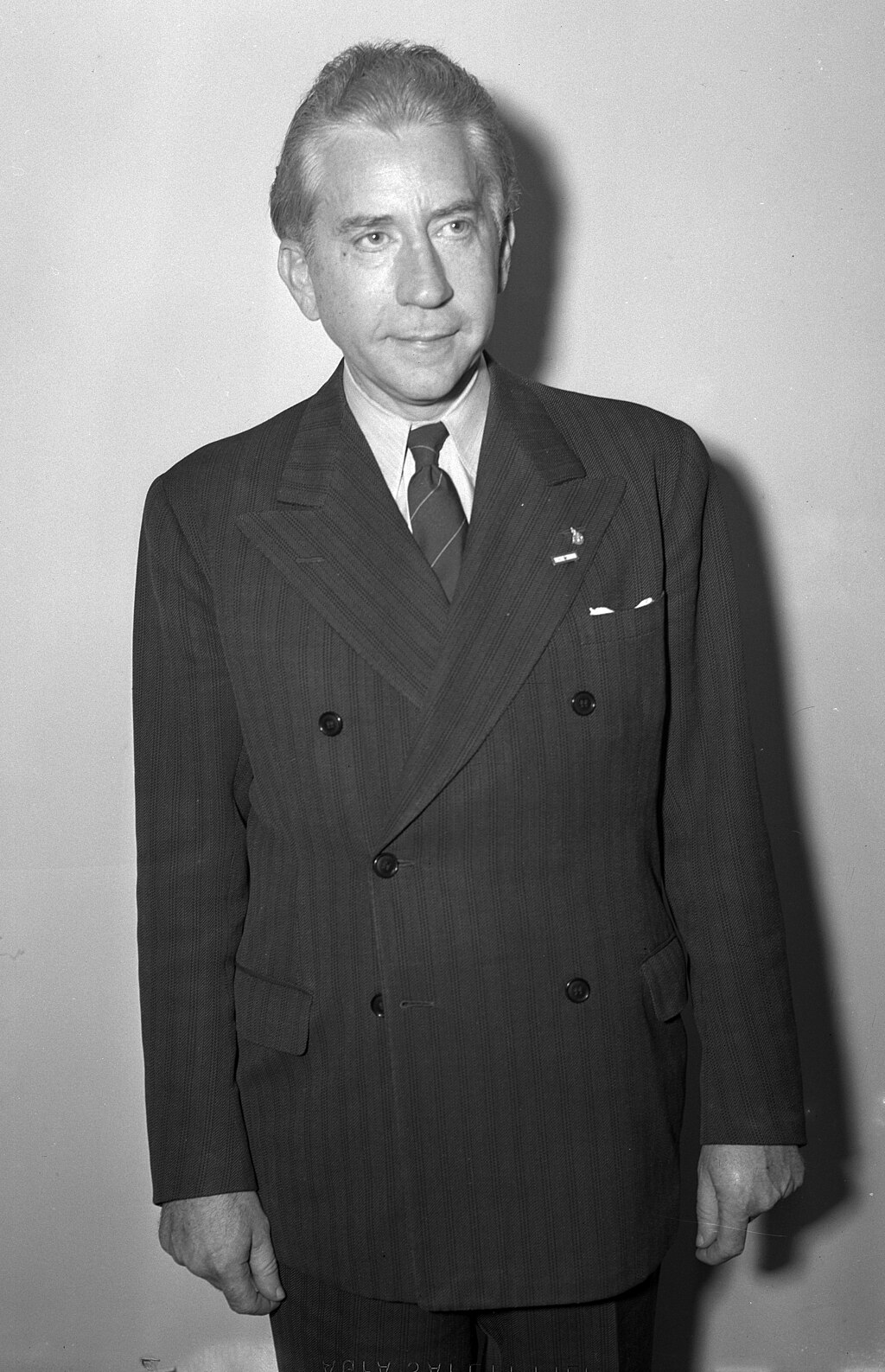
From oil fields in Oklahoma to an art museum in Los Angeles, J. Paul Getty built a vast fortune, but his extreme frugality, failed marriages, and chilling response to his grandson’s kidnapping defined his public image.
From Small-Town Boy To Oil Billionaire
Jean Paul Getty Sr. was born on December 15, 1892, in Minneapolis, Minnesota, to Sarah and George Getty. His father began as an attorney and devout Christian Scientist, but in 1903, George Getty made a decision that would shape the family’s future: he bought 1,100 acres of land in Oklahoma and started drilling for oil, founding the Minnehoma Oil Company.
The family moved to Oklahoma, where young J. Paul attended the Garfield School and watched his father’s gamble pay off. Within a few years, Minnehoma Oil was producing around 100,000 barrels of crude oil each month, turning George Getty into a multimillionaire almost overnight.
With their new wealth, the Gettys relocated again, this time to Los Angeles. J. Paul graduated from Los Angeles’ Polytechnic High School in 1909 and went on to study at the University of Southern California and the University of California, Berkeley, before transferring to Oxford University in England. There, he focused on political science and economics, securing a foundation that would later guide his business decisions.
Getty returned to the United States in June 1914 and, like his father, entered the oil business. George gave him $10,000, seed money that J. Paul used to buy a lot in Haskell, Oklahoma. Within a year, the well struck oil, and the young Getty became a millionaire in his early twenties.
Flushed with cash, Getty spent a few years living leisurely in Los Angeles before diving back into oil in 1919. Over the next decade, he expanded his holdings, acquiring leases and companies and adding an estimated $3 million to his personal fortune.
But while his business career was on the rise, his personal life was already becoming a storm of scandal, broken relationships, and legal trouble.
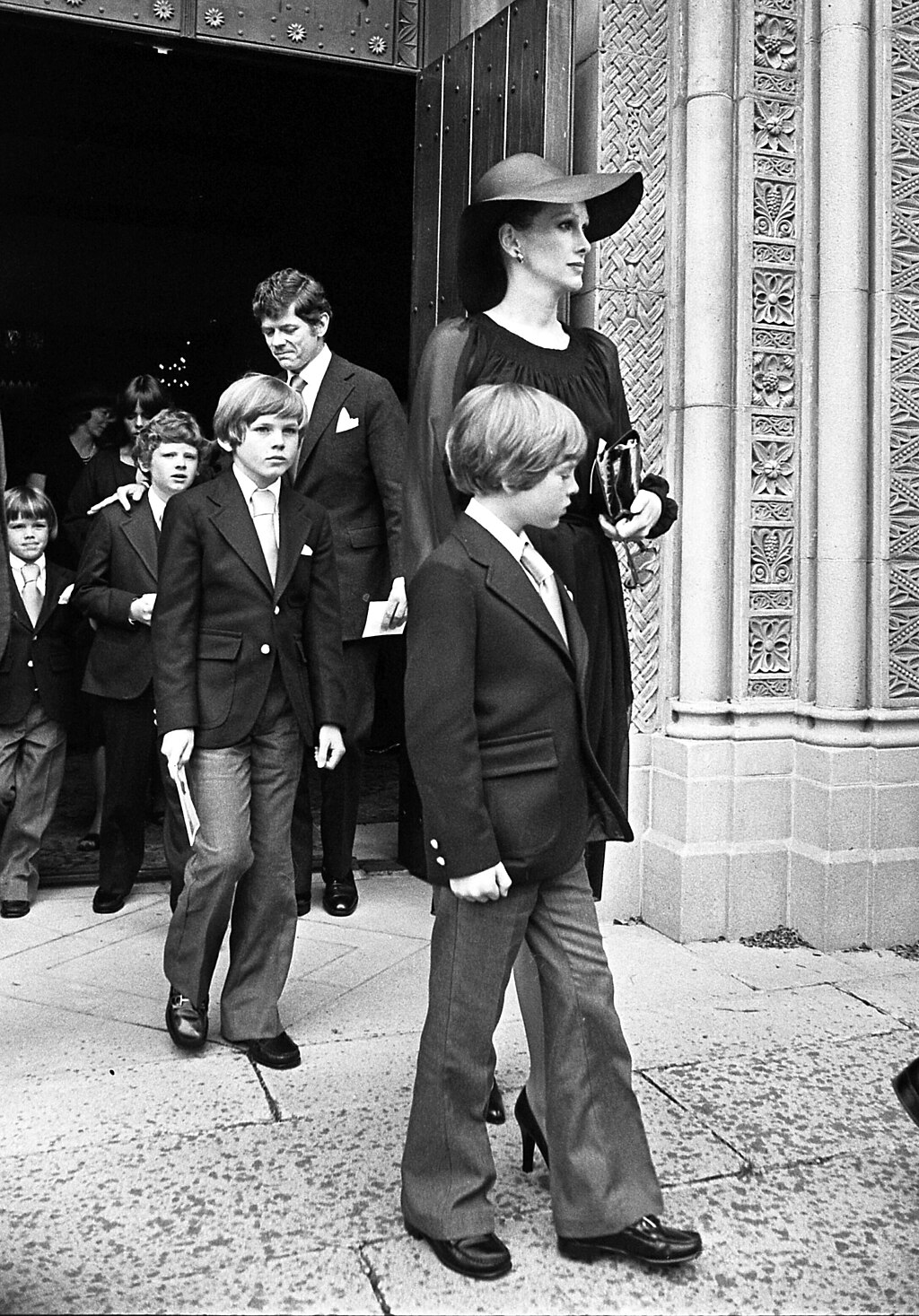
Womanizing, Scandals, And Five Failed Marriages
As a young, wealthy oilman, J. Paul Getty quickly drew attention, especially from women. His personal life in the 1910s and 1920s was marked by affairs, rushed marriages, and bitter divorces.
In 1917, a woman named Elsie Eckstrom filed a paternity suit against the 25-year-old Getty, claiming that he was the father of her daughter, Paula, and that he had taken her virginity while she was drunk. According to a later Los Angeles Times report, Getty’s lawyers attempted to portray Eckstrom as promiscuous to discredit her story. In the end, Getty settled the case for $10,000, and Eckstrom raised Paula alone.
Getty married five times:
- First marriage (1923–1926): He wed Jeanette Demont, with whom he had a son, George Getty II. The marriage ended in divorce three years later.
- Second marriage (1926–1928): That same year, Getty met 17-year-old Allene Ashby in Mexico City. Despite still being legally married to Demont when they met, Getty and Ashby eloped. Their marriage lasted only two years.
- Third marriage (1928–1932): After splitting from Ashby, Getty met another 17-year-old, Adolphine Helmle, in Vienna. Her father disapproved of the match, Getty was more than twice her age and twice divorced, but they married anyway and moved to Los Angeles, where they had a son, Jean Ronald Getty. In 1929, Helmle’s father convinced her to return to Germany with their child. Their divorce dragged on for three years, ending with a large settlement and full custody for Helmle.
Getty’s pattern of brief marriages and affairs worried his father. George Getty believed his son was reckless, both personally and financially. When George died in 1930 with an estate worth around $10 million, J. Paul received just $500,000, a fraction of what he had once expected.
Yet Getty’s lifestyle didn’t slow down.
- Fourth marriage (1932–1936): In 1932, Getty married Ann Rork, whom he had first met nine years earlier when she was 14 and he was 28. They rekindled their relationship when she was 21, but had to wait until his divorce from Helmle was settled. The couple had two sons: John Paul Getty Jr. and Gordon Peter Getty. Their marriage ended four years later, with Rork accusing Getty of emotional abuse and neglect. The court awarded her $2,500 per month in alimony and $1,000 per month for each child.
- Fifth marriage (1939–1950s): Getty’s final wife was Louise Dudley “Teddy” Lynch, whom he married in 1939. They had one son, Timothy Ware Getty. Lynch later described their troubled marriage in her book Alone Together: My Life With J. Paul Getty. She recalled a brutal argument in which Getty criticized her for spending money on treatments for their six-year-old son, who had gone blind due to a brain tumor. When Timothy died six years later, Getty, living abroad, did not return for the funeral.
Getty later summarized his attitude toward relationships with a particularly cold remark:
“A lasting relationship with a woman is only possible if you are a business failure.”
In the end, it was clear that Getty’s greatest enduring commitment was not to any of his wives or children, but to his business, and his money.
The Kidnapping Of His Grandson, And A Chilling Response
Getty’s reputation for miserliness reached its most infamous point in 1973, when his 16-year-old grandson, John Paul Getty III, was kidnapped in Rome.
The abductors, members of an Italian organized crime group, demanded a ransom of around $17 million, more than $100 million in today’s money, for the teenager’s safe return. But J. Paul Getty was skeptical. He was estranged from the boy’s father, disapproved of his grandson’s bohemian lifestyle, and suspected the kidnapping might be a ploy by his own family to extort him.
He flatly refused to pay.
“I have 14 grandchildren, and if I pay a penny of ransom, I’ll have 14 kidnapped grandchildren,” he told the press.
The kidnappers, stunned that the richest man in the world wouldn’t pay for his own grandson, could hardly believe it. As recounted in Painfully Rich: The Outrageous Fortunes and Misfortunes of the Heirs of J. Paul Getty, one of them angrily asked John Paul’s mother, Gail:
“Who is this so-called grandfather? How can he leave his own flesh and blood in the plight that your poor son is in. Here is the richest man in America, and you tell me he refuses to find just 10 miliardi for his grandson’s safety. Signora, you take me for a fool.”
Months passed. Then, in a horrifying escalation, the kidnappers cut off John Paul’s right ear and mailed it to a newspaper, along with locks of his hair. They dropped their ransom demand to about $3 million.
At last, J. Paul Getty agreed, but even then, it was on his terms. He paid $2.2 million, reportedly the maximum amount his lawyers advised was tax-deductible. He then loaned the remaining money to John Paul Getty III’s father, on the condition that it be repaid, with four percent interest.
The young John Paul was released in December 1973, severely traumatized. When Gail insisted her son call his grandfather to thank him, J. Paul Getty refused to come to the phone.
The ordeal left lasting damage. John Paul Getty III spiraled into addiction and, in 1981, suffered a stroke that left him partially paralyzed, with limited speech and vision, for the rest of his life.
A Life Of Extreme Frugality, Even In Luxury
Despite his vast wealth, J. Paul Getty was legendary for his stinginess. Even as one of the richest men on Earth, he lived with habits more suited to a struggling clerk than a billionaire.
For a time, he lived at the Ritz in London, but he eventually moved to his English country estate, Sutton Place, because it was cheaper. He reportedly hand washed his own underwear in the sink at night rather than pay for hotel laundry services. He also installed a coin-operated phone at Sutton Place so visitors would have to pay to make calls.
Getty’s romantic life remained active even in his later years. According to Vanity Fair, he kept multiple live-in girlfriends at his estate and took an experimental drug known as H3 to maintain his sexual stamina. Yet those women hoping to inherit a portion of his empire were largely disappointed. In his will, Getty left some of them token sums, one woman received just $209 per month.
For all his miserliness, Getty was not blind to the burdens of wealth. As The New York Times reported after his death, he often expressed frustration that people only cared about his money, that he was overcharged, and that he was expected to tip excessively simply because he was rich. At one point, he claimed he was receiving up to 3,000 letters a month from strangers asking him for financial help.
He once remarked:
“If I were convinced that by giving away my fortune I could make a real contribution toward solving the problems of world poverty, I’d give away 99.5 percent of all I have immediately. But a hard-eyed appraisal of the situation convinces me this is not the case.”
Art, The Getty Museum, And A Complicated Legacy
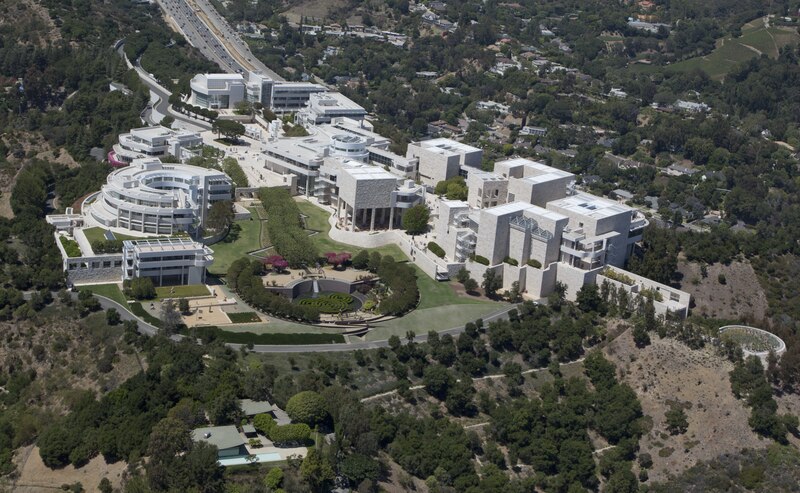
For all his tightfistedness in other areas, J. Paul Getty spent lavishly on art. Over the years, he amassed a massive collection of paintings, antiquities, and decorative arts. Much of this collection became the foundation for the Getty Museum, ensuring his name would remain associated not only with money, but with culture and history.
Getty died of a heart attack on June 6, 1976. In death, as in life, his legacy defied simple labels. He was a visionary businessman who followed his father into the oil fields and built a global empire; a notorious womanizer who failed at five marriages; an art lover who created a lasting cultural institution; and a grandfather whose reluctance to pay a ransom shocked the world.
Ultimately, J. Paul Getty is remembered less for greed in the conventional sense, and more for a relentless, sometimes callous frugality, an almost obsessive unwillingness to part with his fortune, no matter the human cost.
Featured Image from: Los Angeles Daily News, CC BY 4.0, via Wikimedia Commons