

The president’s latest remarks raise new questions about the future of the alliance that has defined Western defense for decades
President Donald Trump is once again raising the possibility of a dramatic shift in U.S. foreign policy, this time, one that could reshape the global balance of power.
In a recent interview, Trump said the United States is “strongly considering” withdrawing from NATO, the military alliance that has anchored Western security since the aftermath of World War II.
His comments come after tensions with allies over U.S. military action against Iran, and reflect a long-standing skepticism he has expressed toward the alliance.
But this time, the language appears more definitive.
“Beyond Reconsideration”
According to the interview, Trump described NATO as a “paper tiger” and suggested that leaving the alliance is now “beyond reconsideration.”
“I was never swayed by NATO,” he said, adding that he believes adversaries like Russia already view the alliance as weak.
The remarks mark one of the strongest signals yet that a U.S. exit, once seen as unlikely, is now being openly discussed at the highest level.
A Long History of Tension With NATO
Trump’s criticism of NATO is not new.
During both his previous presidency and current term, he has repeatedly questioned:
Whether NATO allies are contributing enough financially
Whether the U.S. is carrying too much of the burden
Whether the alliance still serves American interests
At the center of his argument is defense spending.
NATO members have agreed to spend at least 2% of their GDP on defense, but not all countries consistently meet that target.
Trump has often pointed to that gap as evidence that the U.S. is subsidizing the security of other nations.
However, supporters of NATO argue that the alliance provides strategic advantages that go beyond spending, including global influence, military coordination, and deterrence.
Why the Iran Conflict Changed the Conversation
What appears to have shifted the tone is the recent conflict involving Iran.
Trump’s frustration reportedly intensified after some NATO allies did not fully support U.S. military actions.
That lack of unified backing has raised questions within the administration about the reliability of the alliance during major conflicts.
For Trump, the issue is not just financial.
It’s about alignment.
If allies are unwilling to support U.S. operations, the argument goes, what is the value of the alliance?
What Leaving NATO Would Actually Mean
A U.S. exit from NATO would be one of the most significant geopolitical shifts in modern history.
The alliance’s core principle, Article 5, states that an attack on one member is considered an attack on all.
The United States has long been the central pillar of that commitment.
If the U.S. were to withdraw:
Europe would need to rapidly reassess its defense structure
Russia’s strategic position could strengthen
Global military alliances could shift or fragment
U.S. influence in international security decisions could decline
At the same time, some analysts argue that the U.S. could redirect resources toward other priorities, including domestic policy or competition with China.
Legal and Political Barriers
Despite the rhetoric, leaving NATO is not a simple decision.
In recent years, U.S. lawmakers have taken steps to limit a president’s ability to withdraw unilaterally.
Legislation passed with bipartisan support requires congressional approval for any formal exit from NATO.
That means even if the administration pushes forward, it would likely face legal and political challenges.
Congress, across both parties, has historically supported the alliance.
Allies Respond With Concern
European leaders have not formally responded to the latest remarks, but previous statements from NATO officials have emphasized the importance of unity.
NATO Secretary General Jens Stoltenberg has repeatedly argued that the alliance remains essential for collective security, especially amid ongoing tensions with Russia and instability in other regions.
For many allies, the possibility of a U.S. withdrawal raises concerns about:
Security guarantees
Military coordination
Long-term strategic stability

A Turning Point or Negotiating Strategy?
Some analysts view Trump’s comments as part of a broader negotiating approach.
By raising the possibility of withdrawal, the administration may be attempting to pressure allies to increase defense spending or align more closely with U.S. policy.
Others believe the rhetoric reflects a deeper shift in how the U.S. views international alliances altogether.
Either way, the conversation itself marks a turning point.
For decades, NATO membership has been considered a cornerstone of U.S. foreign policy.
Now, it is being openly questioned.
The Bottom Line
The idea of the United States leaving NATO was once considered unlikely.
Now, it is part of the national conversation.
Whether it becomes policy remains uncertain.
But the implications are clear:
If the U.S. steps back from NATO, it wouldn’t just change an alliance.
It would reshape the global order that has existed for generations.
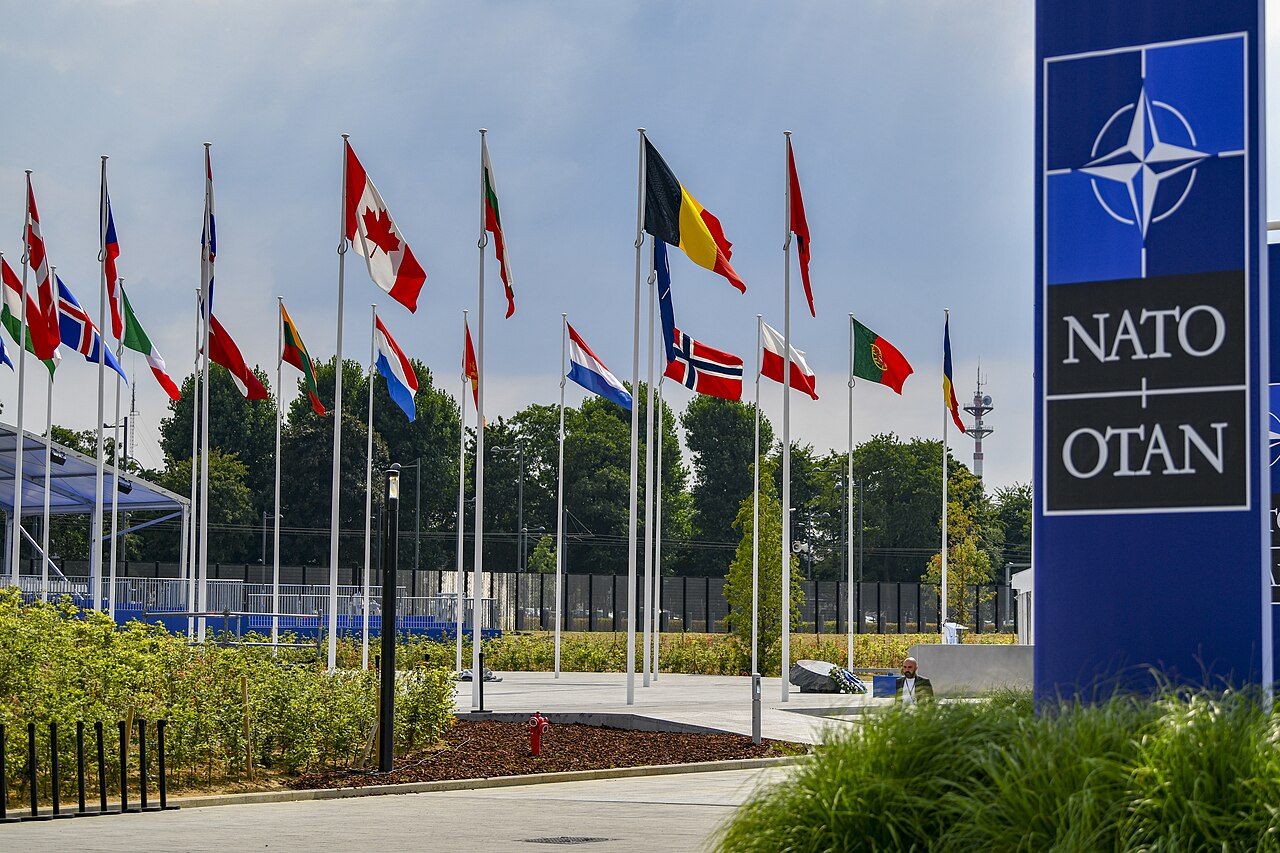
Featured Image from: Ad Meskens / Wikimedia Commons