

Edward VIII’s love story with Wallis Simpson has become one of the most famous royal scandals in history. What is often forgotten is that Wallis was not the first woman to capture Edward’s heart. That distinction belongs to Thelma Furness, a glamorous American socialite whose life was already turbulent long before a future king entered it. Her story is one of privilege, trauma, ambition, and betrayal, unfolding against the glittering but ruthless world of high society and royalty.
Thelma Furness was born in 1904 in Lucerne, Switzerland, alongside her twin sister, Gloria. From the moment of her birth, her life was marked by extremes. Her father worked as an American diplomat, and her mother was a volatile, controlling presence who claimed descent from Spanish royalty. Whether that lineage was real hardly mattered, what mattered was that Thelma was raised to believe she was special, exceptional, and destined for a life above ordinary rules.
That upbringing came at a cost. Her mother ruled the household through fear, emotional manipulation, and sudden rages. Thelma later described growing up in a constant state of anxiety, never knowing what minor infraction might trigger punishment. Her attachment to her mother became unhealthy and all-consuming, leaving her ill-prepared for independence.
The family’s nomadic lifestyle only added to the instability. Moving between countries and cultures, Thelma learned to adapt quickly but never felt rooted. At times, her mother’s cruelty crossed into outright horror. One childhood incident, involving beloved pet birds ordered killed and served for dinner, left a lasting scar and symbolized the emotional violence that defined Thelma’s youth.
When her father eventually left Europe for work, Thelma was left alone with her mother. Without any moderating influence, the abuse intensified. Her mother isolated her, poisoned her view of her father, and kept her financially dependent. War soon made matters worse, scattering the family and leaving Thelma stranded in unfamiliar places during World War I.
Despite the chaos, Thelma demonstrated remarkable ingenuity. As a preteen, she forged documents to reunite herself and her sister with their father in New York, an audacious move that finally gave her a taste of freedom. The city became her emotional anchor, the first place where she felt truly alive.
That freedom, however, came with vulnerability. Young, beautiful, and inexperienced in matters of love, Thelma was quickly drawn into a destructive relationship with an older man who manipulated her emotions and rushed her into marriage while she was still a teenager. The marriage collapsed into alcoholism, debt, and cruelty, leaving her emotionally shattered and pregnant, only to miscarry and discover her husband’s disturbing lack of compassion.
After leaving him, Thelma drifted through Hollywood and high society, chasing independence and meaning. She tried acting, flirted with fame, and brushed shoulders with powerful men. But she was never suited for the sacrifices demanded by stardom. What she truly craved was stability, and love.
That desire led her to Marmaduke Furness, a wealthy British nobleman. With him, Thelma entered a world of luxury, influence, and privilege. She became a viscountess, moved in elite circles, and believed she had finally found security. Yet even this life came with strings attached: relentless press scrutiny and a marriage that slowly eroded under suspicion and distance.
The turning point came when Thelma crossed paths with the Prince of Wales, Edward. What began as companionship grew into a passionate affair. Edward adored her, doted on her, and drew her into his private world. For a time, Thelma believed she had found someone who truly saw her, not as an accessory or an obligation, but as a partner.
She knew marriage was impossible. Edward would one day be king. Still, she trusted him completely. That trust proved to be her undoing.
When Thelma traveled to America for several weeks, she asked a friend, Wallis Simpson, to keep Edward company. It was a decision she would regret for the rest of her life. During her absence, Edward transferred his affections to Wallis. By the time Thelma returned, the emotional ground beneath her had shifted irreversibly.

The betrayal was devastating. Not only had Edward moved on, but he had done so with someone Thelma had trusted. Though she attempted to reclaim her dignity and even sought comfort in another high-profile romance, the damage was permanent. She had lost both the man she loved and the illusion that loyalty mattered in that world.
In later years, Thelma withdrew from public life. She devoted herself to caring for her twin sister and navigating family obligations. Though she rebuilt parts of her life, the emotional wounds never fully healed.
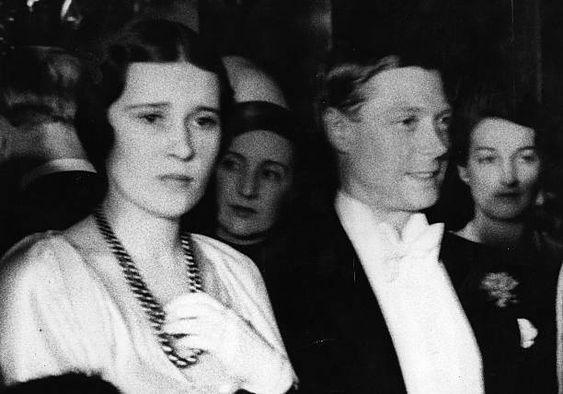
When Thelma Furness died in 1970, she was found carrying a small, worn teddy bear, a gift Edward had once given her. It had stayed with her for decades, a quiet testament to a love that shaped her life but never rewarded her devotion.
History remembers Edward VIII for abdication. Wallis Simpson for scandal. But behind them stands Thelma Furness, a woman whose life was just as dramatic, whose losses were deeply personal, and whose story reveals the emotional cost of standing too close to power.
Featured Image from: Campana, who was the maker of the product., Public domain, via Wikimedia Commons