

Dog people have been saying it forever: dogs aren’t just pets, they’re family. They feel joy, guilt, excitement, and love in ways that often seem almost human. Now, a scientific study out of Japan has given dog lovers something they never thought they’d have: proof that dogs may cry tears of joy when reunited with their humans.
Yes. Actual tears.
If that doesn’t melt your heart, nothing will.
Tears That Aren’t Just for Cleaning Eyes
Until recently, scientists believed dog tears served a purely biological function, keeping their eyes moist and free of debris. Emotional tears? That was considered uniquely human.
But that assumption is starting to change thanks to research led by Professor Takefumi Kikusui of the Laboratory of Human-Animal Interaction and Reciprocity at Azabu University in Japan.
Kikusui’s curiosity was sparked by an unexpectedly tender moment: he noticed his standard poodle’s eyes filling with tears while she nursed her puppies.
That observation raised a question few scientists had seriously explored before, could dog tears be linked to emotion?
Putting Dog Love to the Test
To find out, Kikusui and his team studied 18 dogs using the Schirmer Tear Test, a common veterinary method that measures tear production.
The experiment was simple but powerful:
- Researchers measured dogs’ baseline tear levels
- Dogs were separated from their owners for 5–7 hours
- Tear levels were measured again within 5 minutes of reunion
The results were striking.
“Tear volume increased by about 10% after reunion with the owner,” Kikusui told CNN.
In other words, dogs produced significantly more tears when they saw their person again.
Not Just Happy to See Anyone
To rule out the idea that dogs were simply excited by familiar humans, researchers ran additional tests.
The dogs were reunited with people they knew, but who weren’t their owners.
No increased tears.
The emotional response was specific.
Dogs cried more only when reunited with their primary caregiver.
So no, your dog doesn’t love your sister more than you. Science has spoken.

The Oxytocin Connection
To dig deeper, researchers explored the role of oxytocin, the hormone often called the “love chemical.” In humans, oxytocin surges when we bond with our children, romantic partners, or even pets.
When researchers applied an oxytocin solution to the eyes of 22 dogs, tear production increased dramatically compared to a control solution.
This suggests that dogs’ tears are closely tied to the same bonding chemistry that underpins human love and attachment.
In short: dogs don’t just act like they love us. Their bodies respond to us the way ours respond to loved ones.
Why This Matters
The findings deepen what scientists already know about the unique bond between humans and dogs, a relationship shaped over thousands of years of co-evolution.
Dogs don’t just rely on us for food and shelter. They form emotional attachments that are biologically reinforced.
And while the study didn’t examine whether dogs cry from sadness or distress, the evidence for tears of joy is compelling.
It also helps explain something dog owners have always felt but struggled to articulate: that reunion moment isn’t just exciting, it’s emotional.
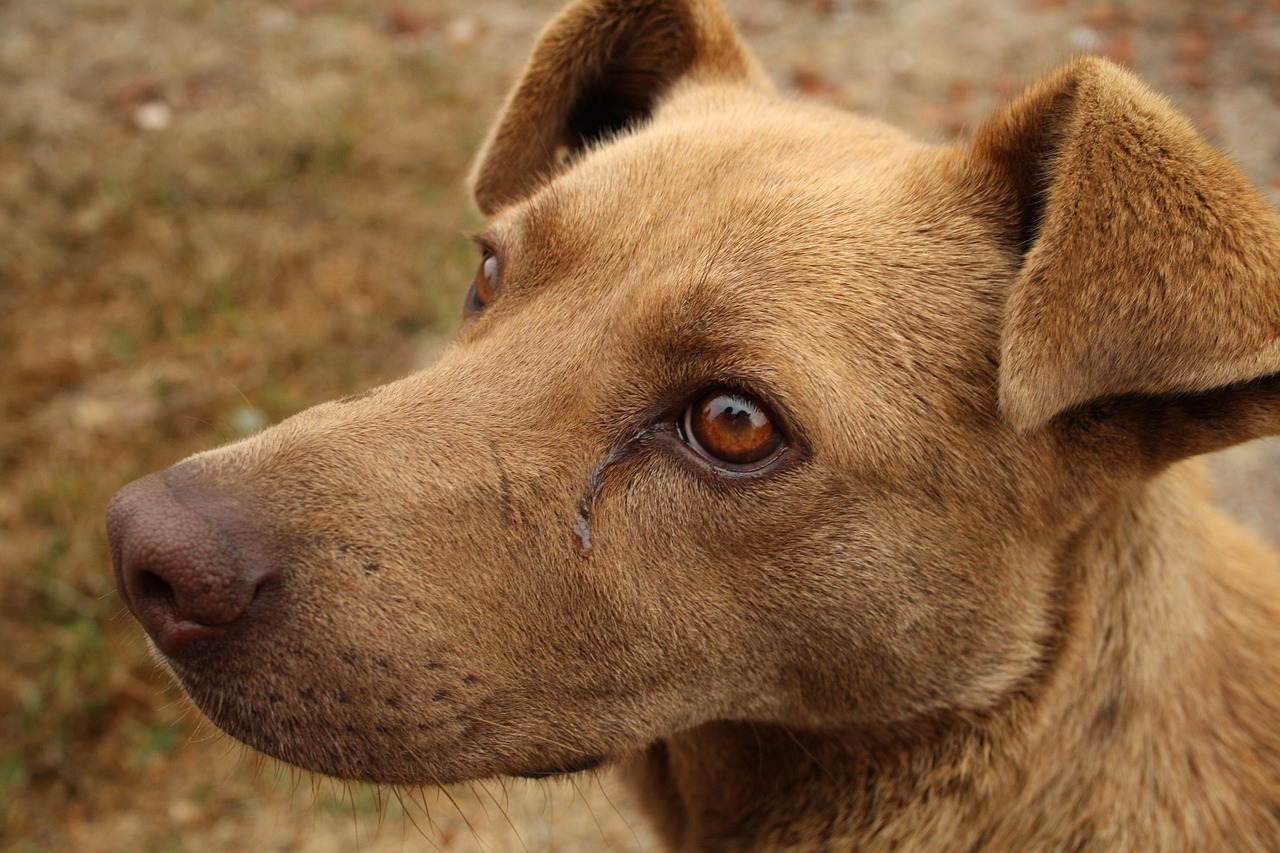
Dog Owners Everywhere Feel Vindicated
For dog lovers, this study doesn’t come as a shock, it feels like validation.
They’ve seen the full-body wiggles.
They’ve felt the intensity of reunion greetings.
They’ve sworn their dogs miss them.
Now, there’s scientific backing for all of it.
So the next time your dog stares at you like you’re their entire world, remember: it’s not just in your head.Your dog loves you so much…
They might just cry about it.
Featured image from: StockSnap from Pixabay