
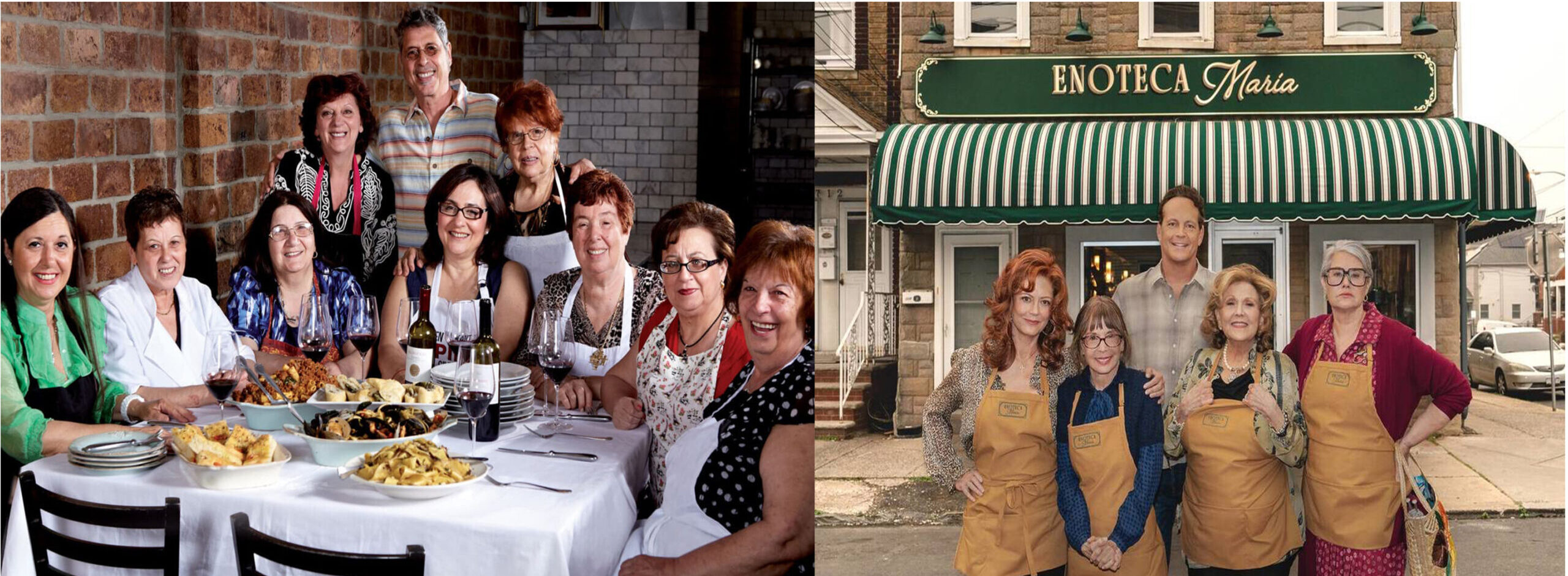
At Staten Island’s Enoteca Maria, women from around the world take turns cooking their family recipes, an idea so heartwarming it inspired Netflix’s Nonnas.
Before Nonnas began streaming on Netflix, filling living rooms with laughter, love, and the clatter of kitchen spoons, the story was already real on a quiet Staten Island street. Inside a 35-seat restaurant called Enoteca Maria, the chefs aren’t graduates of culinary schools or contestants on cooking shows. They’re grandmothers from across the world, armed with worn recipe notebooks and the kind of confidence that only comes from a lifetime of feeding people they love.
Each night, a new nonna takes her turn at the stove: Sri Lankan one evening, Greek the next, perhaps Mexican or Uzbek after that. The menu changes constantly, but the heart of it never does.
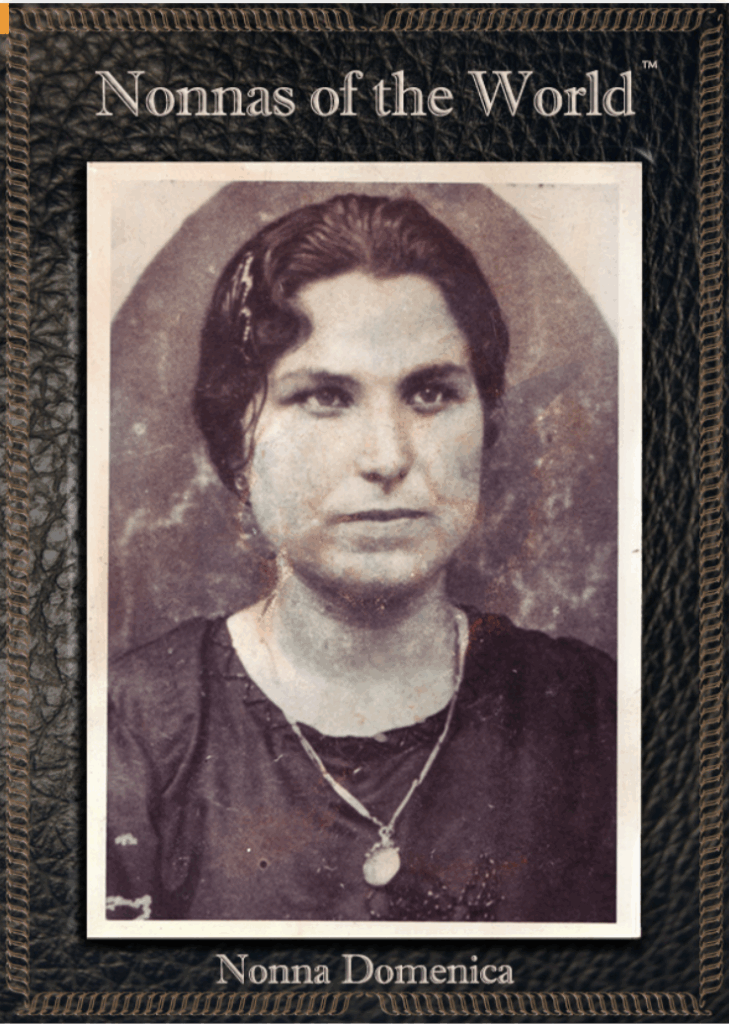
Recipes aren’t read, they’re remembered, tasted, and adjusted by instinct. And somehow, through a swirl of languages, spices, and generations, those memories have built one of New York’s most extraordinary restaurants, and inspired a Netflix film that captures its warmth on screen.
Dinner at Grandma’s (Even If She Isn’t Yours)
It’s 7:30 p.m. on a balmy Friday night, and I’m in the arms of someone else’s grandma. Grandma Maria, hair pinned neatly, eyes sparkling, has already decided my table’s fate: we’re ordering everything.
She squeezes my shoulder with the easy authority of someone who has spent decades telling people what’s good for them. Then she vanishes back into the kitchen, leaving behind the faint perfume of simmering tomatoes and garlic.
Image of Nonna Maria and Joe Scaravella via Jody Scaravella’s Instagram @nonnasoftheworld
The restaurant hums like a family dinner. Plates clink, laughter bounces off the brick walls, and Italian pop music drifts under the chatter. The décor is a jumble of affection: comic-book figurines, kids’ drawings, family photos. It feels less like a restaurant and more like someone’s basement, if that someone happened to invite 35 strangers to dinner every night.
This isn’t a celebrity-chef hotspot or a viral TikTok gimmick. It’s Enoteca Maria, where grandmothers from around the world take turns behind the stove, cooking the foods they once made for their own families.
One night you might taste Turkish lahmacun; another, Mexican beef stew or Sri Lankan curry fragrant with cardamom. Every dish tells a story, and every story ends with the same message: you’re home here.
The Spark: A Restaurant Born from Grief
The warmth of Enoteca Maria was born from heartbreak.
Years ago, Staten Island native Joe Scaravella lost his parents and his grandmother, Domenica, within a short span of time. The silence that followed was crushing. “I just tried to recreate that part of my life that was gone,” Scaravella told People. “This is like therapy for me.”
He found a small space near the St. George Theater and envisioned an Italian restaurant filled with the kind of love he’d grown up with. To staff it, he placed a simple ad in America Oggi, a local Italian-language paper, calling for casalinghe, housewives who could cook their regional dishes.
What happened next felt like divine intervention. “All these ladies showed up at my house with their husbands and their children and their grandchildren and their neighbors and their cousins,” he recalled to Bon Appétit. “I had a house full of people following me around with plates of food.”
He hired every one of them.
On opening night in 2007, six nonnas stood ready in the basement kitchen. When the dining room sat empty, one woman dropped to her knees and began praying to Padre Pio. Fifteen minutes later, the restaurant was packed.
A portrait of the saint still hangs on the wall, a quiet tribute to that night and the faith that somehow filled the room with people.
The Evolution: From Italian Nonna to Global Family
At first, Enoteca Maria was purely Italian. The women cooked what they knew, Sicilian ragù, Neapolitan gnocchi, crisp veal Milanese, and filled the air with laughter that needed no translation. But over time, Scaravella began to notice something deeper in his kitchen.
“Most of these ladies, their husbands have passed away, the children have grown up and moved out,” he told People. “They’re packed with culture, and they need an outlet.”
So he widened the circle.
“These ladies are the source,” he explained to TODAY.com.
“They really are able to represent the culture, and that’s what we do. So, they’re really looking for an outlet and they have it here. And you know, if they’re not hugging me, they’re hugging their customers.”
By 2015, the kitchen had become a miniature United Nations. There was Wen Xian from Shanghai, Kathy Viktorenko from Uzbekistan, Ana Calderon from Argentina, Fatma Polat from Turkey. Each woman brought her own rhythm and recipes—some handwritten on scraps of paper, others stored entirely in memory.
Now, the restaurant’s website features a “Nonna Calendar,” listing who’s cooking each evening. Diners check it like theater lovers check playbills.
What could have been chaos somehow works. The nonnas share tips and ingredients like old neighbors. Someone swaps basil for cilantro; another teaches how to roll dumplings without a press. They don’t speak the same language, but in this kitchen, they don’t need to.
The Experience: What It’s Really Like to Eat There
Getting a table at Enoteca Maria is almost a pilgrimage. When you finally sit down, the atmosphere feels less like dining out and more like being adopted for the evening.
[Image: Interior of Enoteca Maria filled with diners and laughter – Courtesy of Enoteca Maria]
On one night, Nonna Diana from Mexico commands the stove. Between stirring a pot of stew and shaping tortillas, she tells diners about the film premiere she attended with Vince Vaughn the week before. Across the room, Grandma Maria, the restaurant’s unofficial matriarch, glides from table to table, pressing cheeks, pouring wine, and insisting everyone try “just one more bite.”
Plates arrive in waves, burrata with late-season tomatoes, pistachio-feta dip with mint, meatballs in sweet-sour sauce. Then the entrées: Argentine beef stew, Japanese eggplant, roasted rabbit, lasagna. “You know when you go to a diner and think the menu’s too big for everything to be good?” writer Lindsey Ramsey confessed for Delish. “That’s decidedly not the case here.”
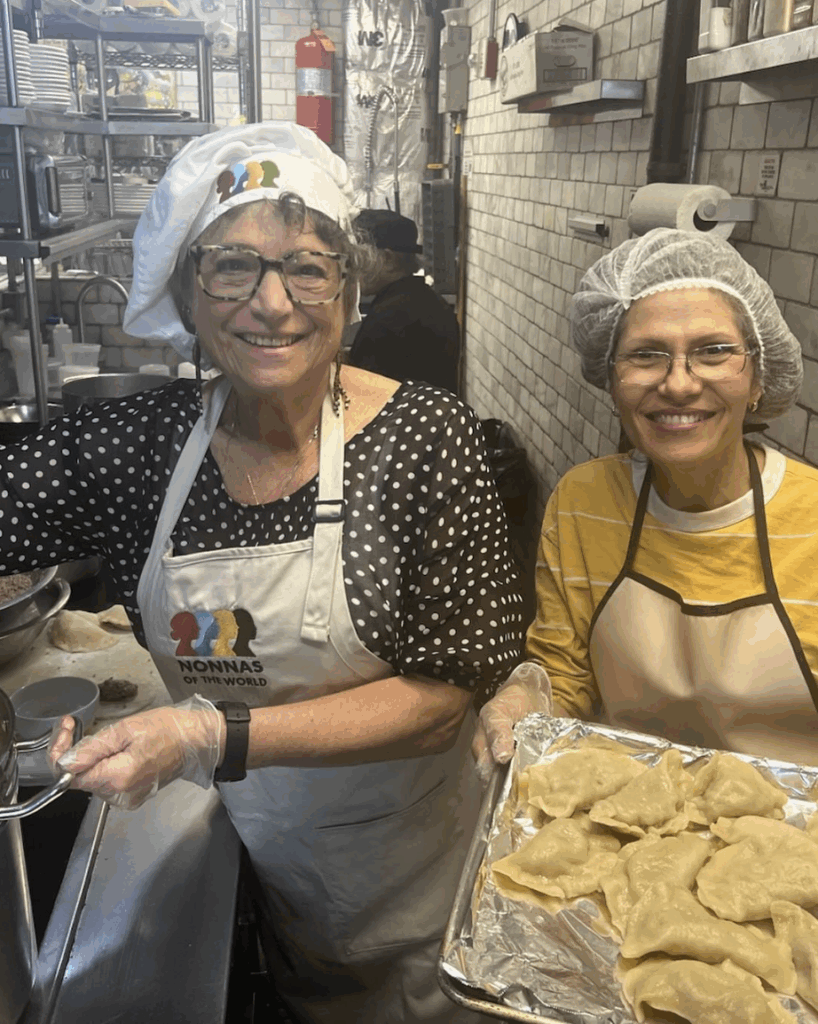
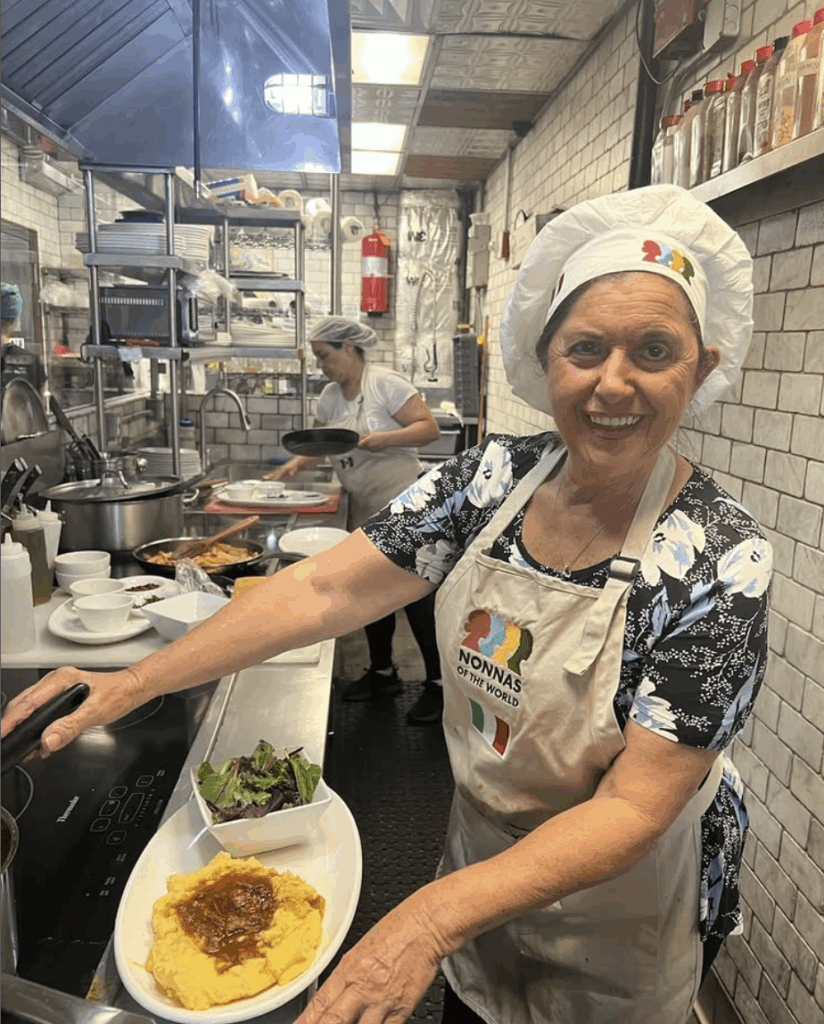
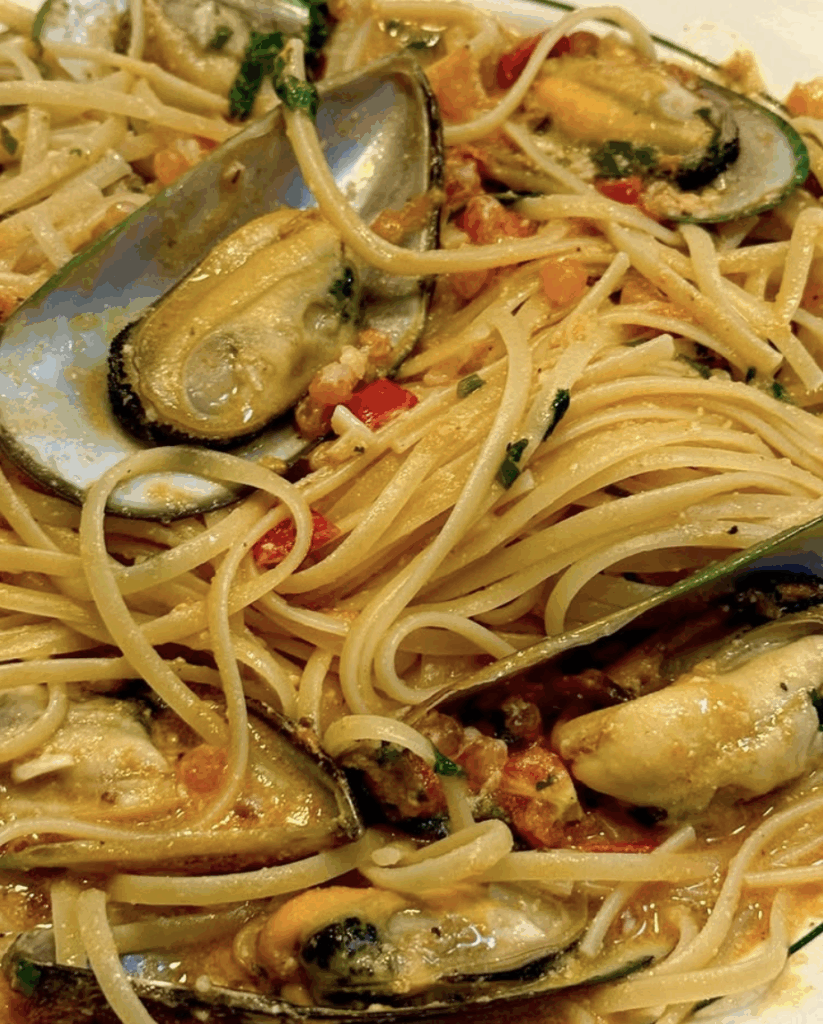
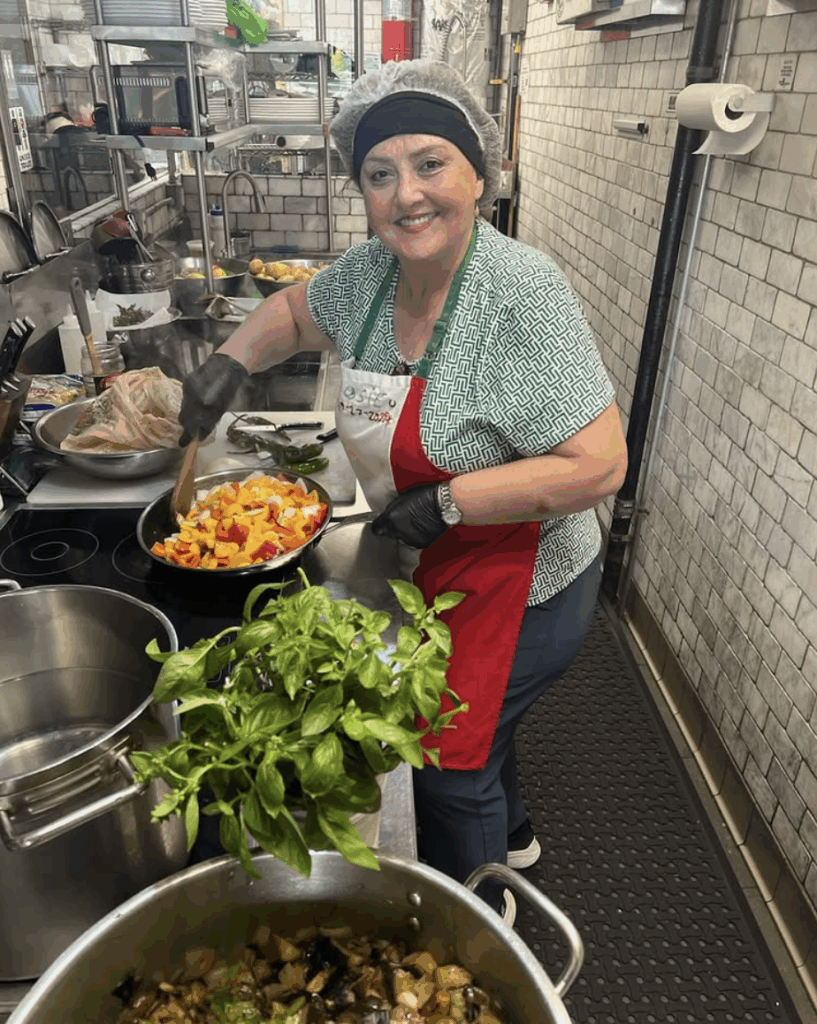
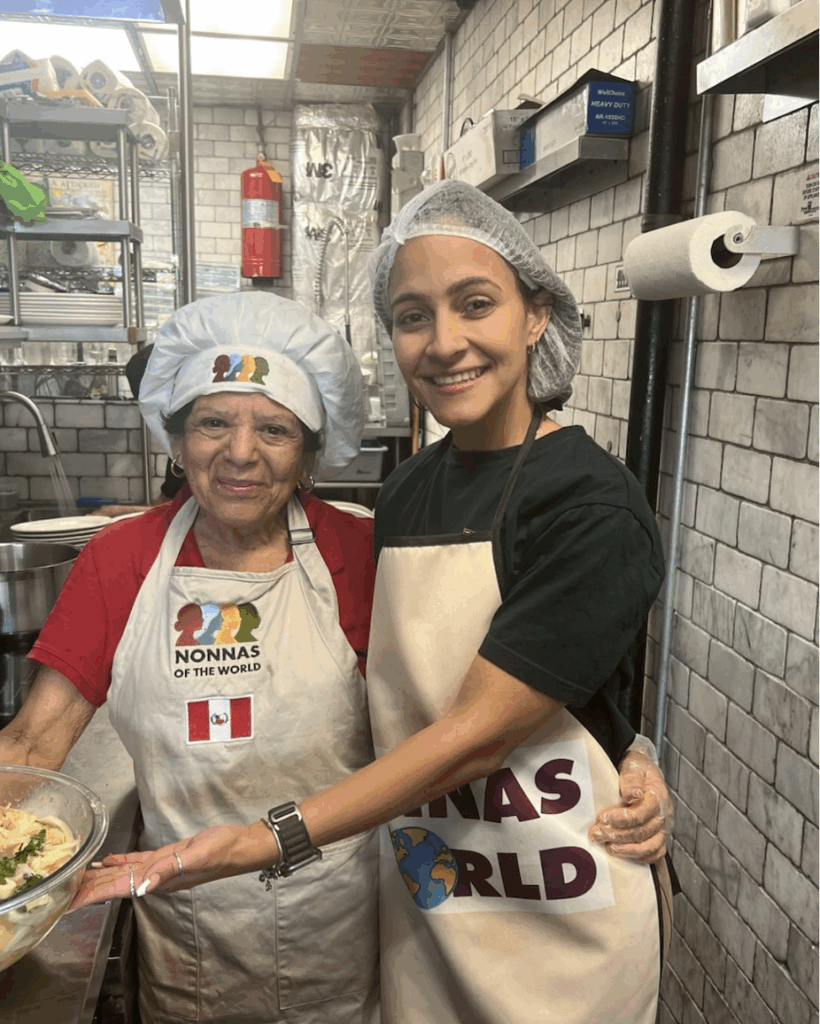
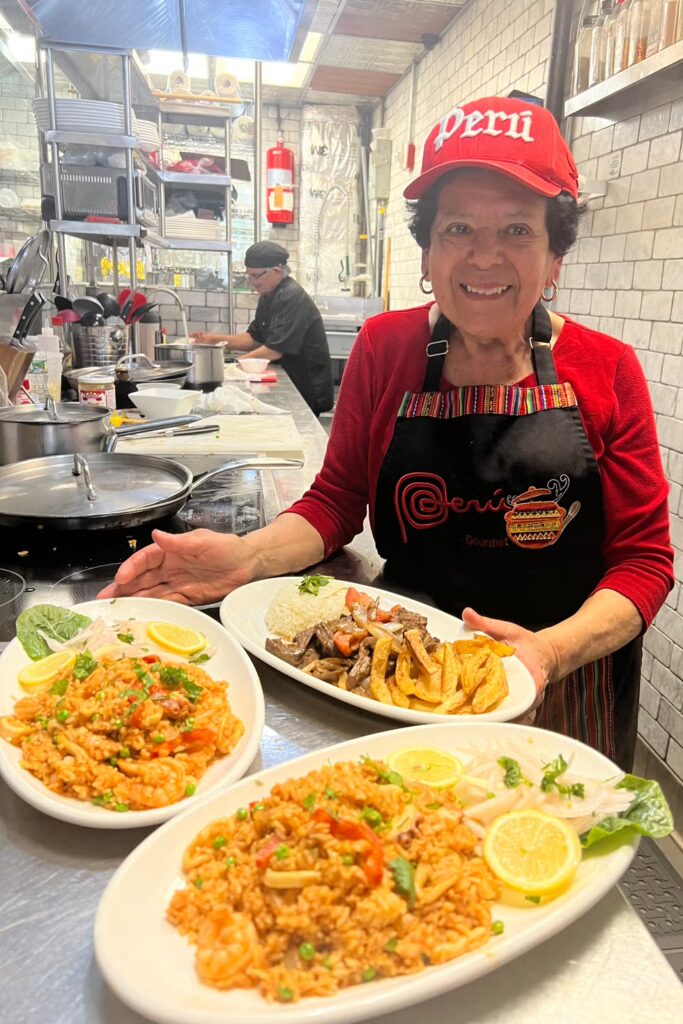
The food tastes like memory itself—rich, comforting, and nostalgic, even if you’ve never eaten it before. Diners lean into conversations with strangers; someone laughs too loudly; someone else wipes away a tear. That’s the magic of Enoteca Maria: it feeds more than hunger. It feeds connection.
More Than a Meal: Preserving Memory and Tradition
“It’s incredible to feed people and see the joy in food,” Melanie Mandel told Bon Appétit. “It’s a satisfaction from within—it’s just what I was taught to do.”
Around her, the kitchen hums like a living archive. From Shanghai, Wen Xian said, “Everything is here,” tapping her temple to show where her recipes live. And from Uzbekistan, Kathy Viktorenko added, “When you come here, you feel like you’re with family. As if you’re in your own kitchen cooking for someone.”
Scaravella sees it the same way. “The ladies possess a lot of old-world knowledge,” he told Bon Appétit. “They carry tradition forward.”
Each grandmother becomes a guardian of heritage. They teach visiting chefs how to make sauce without measuring, how to know when the dough “feels right,” how to tell a story while stirring a pot. Every meal is part cooking lesson, part cultural exchange, and part therapy session, served family-style.
From Kitchen to Screen: A Story Worth Telling
Eighteen years after Scaravella opened his doors, Enoteca Maria found a second life on Netflix. The streaming giant’s film Nonnas stars Vince Vaughn as Scaravella, alongside Susan Sarandon, Lorraine Bracco, Brenda Vaccaro, and Talia Shire as the grandmothers who bring his story to life.
[Image: Vince Vaughn, Susan Sarandon, Lorraine Bracco, and Talia Shire in Nonnas – Courtesy of Netflix / Jeong Park]
“It’s too unreal to think that Vince would play me,” Scaravella told TODAY.com. “I still don’t believe it, really.” Watching his story unfold on screen, he said, was emotional. “I cried through the whole movie. The audience—you could hear them crying and laughing and gasping.”
The cast felt the same. “It made me really think about my mother and her family,” Brenda Vaccaro told People. “It became important to me that I was playing an Italian lady.”
“Food is love. Friendship is love. Family is love,” Lorraine Bracco said in People.
“I really got moved when I read this script,” Vince Vaughn told TODAY.com. “It focused on the grandmothers, these matriarchs who still love to feed people and create that atmosphere.”

[Image: Joe Manganiello and Vince Vaughn dining with the real Joe Scaravella – Courtesy of Netflix]
In a sweet twist of art imitating life, Vaughn and co-star Joe Manganiello visited the real Enoteca Maria before filming. “We got to hang out with those two guys for the night,” Manganiello recalled. “It made the story feel real.”
The Heart of It All: What the Nonnas Teach Us
When you step out of Enoteca Maria after dinner, the scent of basil and olive oil clings to your clothes. But something else lingers too: a feeling that you’ve just been somewhere sacred.
[Image: A grandmother at Enoteca Maria hugging a diner goodbye – Courtesy of Enoteca Maria]
“Food is love. Friendship is love. Family is love,” Bracco told People. It’s more than a quote, it’s the restaurant’s mantra. Each night, that love travels across continents and generations, ladled into bowls and baked into casseroles.
“They’re packed with culture,” Scaravella said to People, “and they need an outlet. And that’s what we do.”
For the grandmothers, Enoteca Maria is a stage and a sanctuary. For the diners, it’s proof that the simplest acts, feeding, sharing, remembering, can bridge entire worlds.
And for Scaravella, who once turned grief into a kitchen full of laughter, it’s a daily reminder that love doesn’t fade. It just changes form. Sometimes, it becomes dinner.
Feature Image via Nonna’s House by Jody Scaravella with Elisa Petrini & Netflix Nonna’s/Jeong Park