
Epstein Survivor Uses Portraiture to Preserve Stories and Spotlight Resilience
Maria Farmer was one of the earliest women to report Jeffrey Epstein’s abuse to federal authorities.
Years later, she is using art to ensure that survivors’ stories are not forgotten.
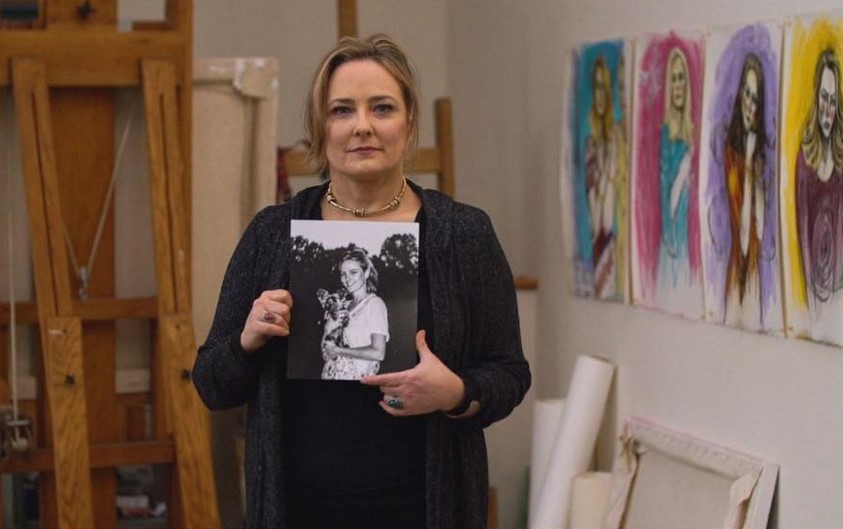
Farmer, who has publicly described her own experiences involving Epstein and his network, now paints portraits of fellow survivors. The artwork serves as both tribute and testimony, a way to humanize individuals whose lives were often reduced to court filings and headlines.
Her portraits are not commercial commissions. They are personal acts of remembrance.
An Early Voice in the Epstein Case
Maria Farmer has said she first reported Epstein to the FBI in 1996, alleging sexual misconduct and exploitation. Her account, later detailed in media investigations and court proceedings, became part of the broader public record as federal cases against Epstein unfolded.
When Epstein was arrested in 2019 on federal sex trafficking charges, Farmer’s earlier warnings gained renewed attention. Epstein later died in federal custody; his death was ruled a suicide by the New York City medical examiner.
Farmer has continued speaking publicly about her experiences and about what she believes were systemic failures in how authorities handled early complaints.
Her decision to paint other survivors reflects that continued engagement.
Portraits as Preservation
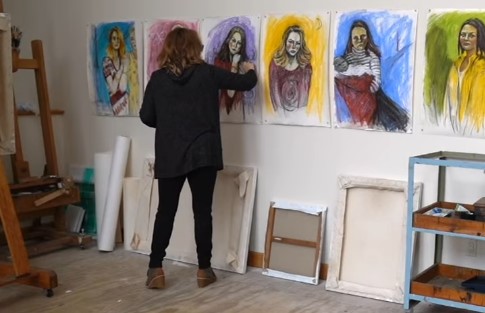
Farmer’s paintings focus on women who have come forward about Epstein’s abuse.
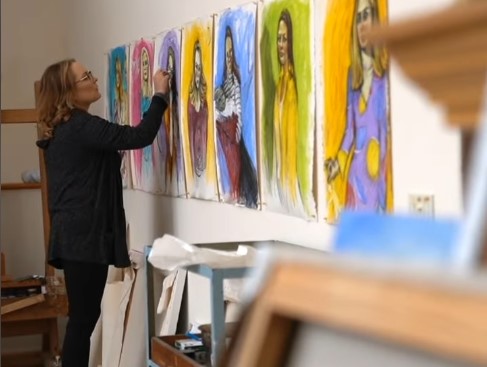
The portraits are not abstract. They are intimate and direct, often centered on the subject’s face, capturing expressions of strength rather than victimhood.
Farmer has described the project as a way to restore dignity to individuals whose identities were frequently debated, questioned, or dissected in public forums.
Each painting represents a real person who chose to speak publicly about traumatic experiences.
By creating visual records, Farmer aims to shift the narrative from scandal to survival.
Art as Advocacy
While Farmer continues to speak about her own experience, her art allows her to amplify others.
The Epstein case involved years of legal battles, media scrutiny, and public controversy. Survivors often faced skepticism and intense personal exposure.
Farmer’s portraits present them not as legal witnesses, but as individuals with identity, agency, and strength.
The project also intersects with broader conversations about how survivors of abuse are represented in public life.
Advocates for victims of trafficking and exploitation often emphasize the importance of storytelling, not just through testimony, but through cultural forms like art, writing, and film.
Farmer’s work fits within that tradition.
Why This Still Matters
The legal cases tied to Jeffrey Epstein and Ghislaine Maxwell have largely concluded, but the cultural impact continues.
Maxwell is currently serving a 20-year federal sentence after being convicted in 2021 of sex trafficking and related charges. Investigations into Epstein’s broader network remain a subject of public and political debate.
For survivors, however, the story did not end with court verdicts.
Farmer’s paintings underscore that the consequences of abuse extend far beyond legal timelines.
For American audiences, the project also reflects a larger shift in how survivors choose to reclaim their narratives. Instead of allowing their identities to be defined solely by criminal proceedings, some are shaping how their stories are remembered.
A Personal Mission
Farmer has described painting as both healing and purposeful.
The portraits are not presented as political statements. They are acts of recognition.
In an era where major cases can quickly fade from public attention, the artwork functions as a form of permanence.
The faces on canvas remain, even as news cycles move on.
The message behind the work is straightforward: survivors deserve to be seen as full human beings, not just as footnotes in high-profile scandals.
Featured Image screenshot from facebook: ABC 20/20