
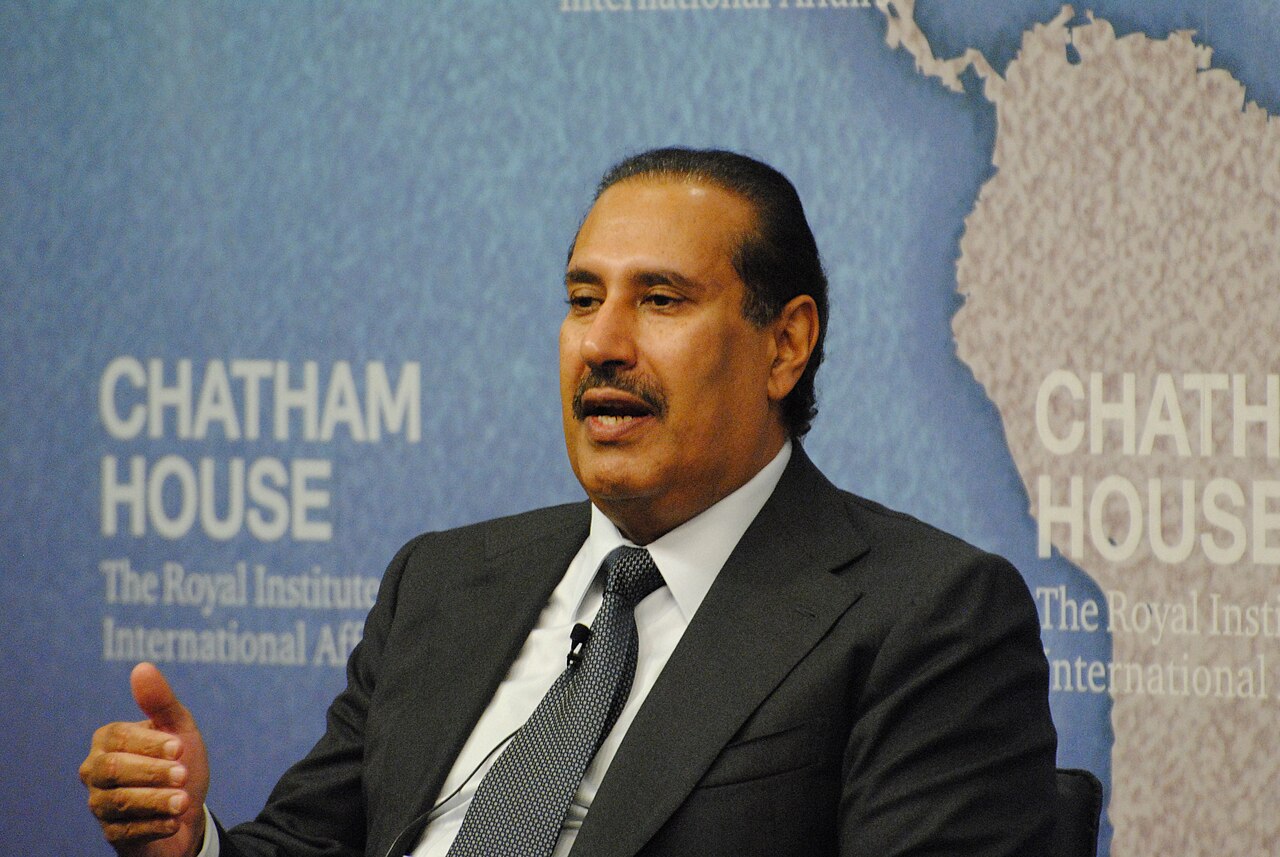
Sheikh Hamad bin Jassim says escalating tensions could drain regional wealth and stability while benefiting outside powers
A senior figure in Middle East diplomacy is warning that the escalating conflict involving Iran, the United States, and Israel could leave Gulf nations caught in a dangerous and costly position.
Sheikh Hamad bin Jassim Al Thani (HBJ), Qatar’s former prime minister and longtime foreign minister, has cautioned that countries in the Gulf Cooperation Council (GCC) risk being drawn into a “lose-lose” scenario as tensions spread across the region.
HBJ, who played a central role in shaping Qatar’s foreign policy for decades, is not an outside commentator. His remarks carry weight among regional leaders and observers, particularly given his experience navigating past Middle East crises.
A Warning From a Veteran Diplomat
HBJ’s central concern is that Gulf states could become entangled in a conflict that brings high economic and security costs, without delivering clear strategic benefits.
His comments reflect a broader concern among some regional analysts: that the current conflict could evolve into a prolonged confrontation where local countries bear the consequences, while major global powers remain more insulated.
Gulf economies are heavily tied to:
- Energy exports
- Global shipping routes
- Regional stability
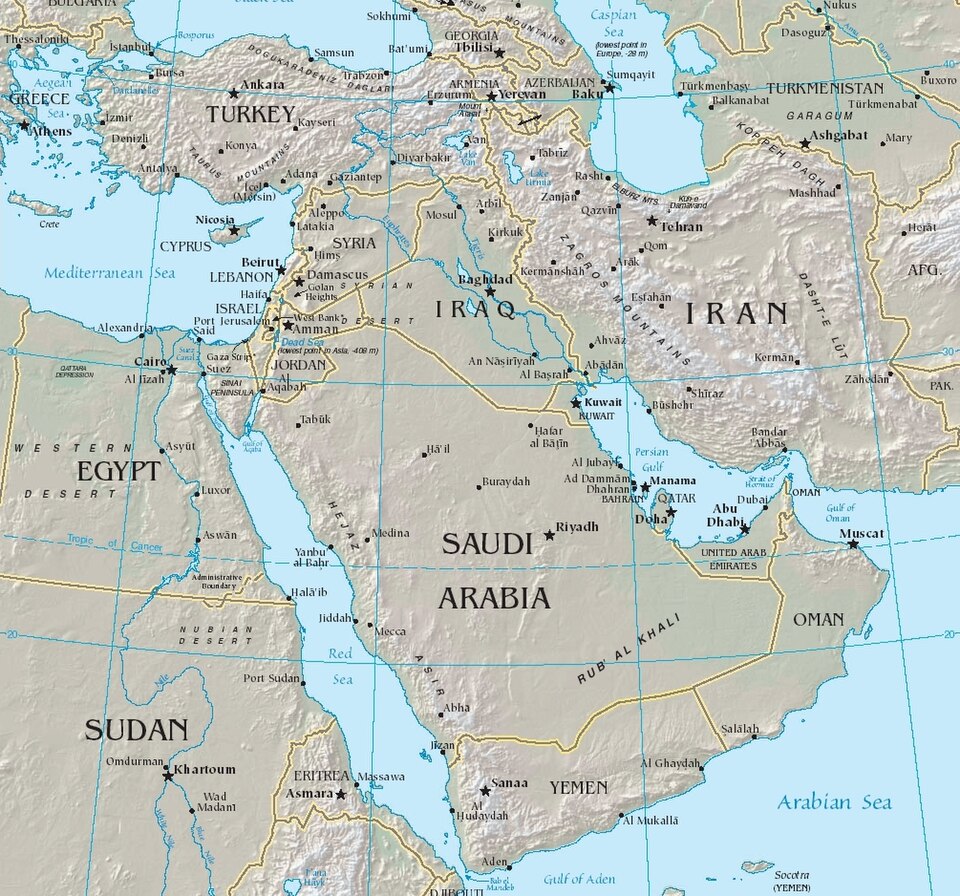
Any prolonged disruption, particularly involving the Strait of Hormuz, could have significant economic consequences for countries like Saudi Arabia, the United Arab Emirates, and Qatar.
Concerns Over a Prolonged Conflict
HBJ’s remarks come as the conflict between Iran and U.S.-aligned forces has expanded across the region, with missile and drone attacks affecting multiple countries.
Recent weeks have seen:
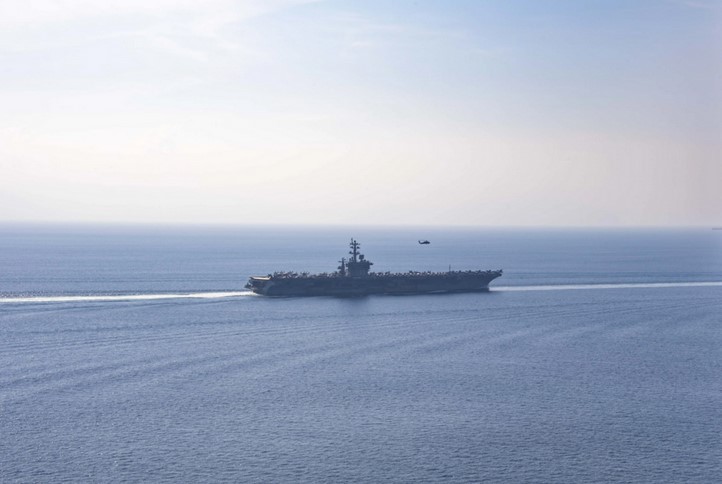
- Strikes near U.S. military facilities in Gulf states
- Airspace disruptions affecting regional travel
- Rising tensions across key energy infrastructure zones
While Gulf nations have historically relied on U.S. security partnerships, some analysts say there is growing concern about being pulled into a broader confrontation.
HBJ’s warning suggests that escalation could lead to long-term instability, particularly if the conflict widens further.
Economic Stakes for the Gulf
The Gulf region sits at the center of global energy markets, and instability has immediate ripple effects worldwide.
Even short-term disruptions have already contributed to:
- Volatility in oil prices
- Shipping delays across the Gulf
- Increased insurance costs for tankers
If the conflict continues, Gulf nations could face:
- Reduced export capacity
- Infrastructure risks
- Long-term economic uncertainty
HBJ’s remarks highlight a key concern: that regional countries may absorb the economic shock while having limited control over how the conflict unfolds.
Calls for Regional Caution
Despite rising tensions, Gulf states have generally sought to avoid direct involvement in the conflict.
Countries such as Qatar and Oman have historically played roles as mediators in regional disputes, including past negotiations involving Iran.
HBJ’s comments align with that approach, emphasizing the importance of:
- Restraint
- Diplomatic engagement
- Avoiding escalation
His warning about internal divisions reflects fears that prolonged conflict could strain relationships within the region itself.
A Region Caught Between Powers
The Middle East has long been shaped by competition between regional and global powers.
The current conflict adds another layer to that dynamic, as Gulf nations balance:
- Security partnerships with the United States
- Economic ties across global markets
- Geographic proximity to Iran
HBJ’s comments suggest concern that Gulf states could become caught between competing interests, with limited ability to influence outcomes.
While some policymakers argue that strong alliances provide protection, others warn that proximity to conflict zones increases risk.
A Familiar Pattern?
HBJ’s broader message reflects a recurring theme in Middle Eastern geopolitics: that regional conflicts can have asymmetrical impacts.
Local countries often face:
- Direct security threats
- Economic disruption
- Domestic instability
Meanwhile, external powers may experience fewer immediate consequences.
While officials in the United States have framed recent military actions as necessary for security, debates continue over the long-term impact on regional stability.

What Happens Next
As the conflict continues, Gulf states are likely to face difficult decisions about how closely to align with military actions or pursue diplomatic alternatives.
For now, most governments in the region appear focused on:
- Protecting critical infrastructure
- Maintaining economic stability
- Avoiding direct escalation
HBJ’s warning underscores the stakes.
If tensions continue to rise, Gulf nations could find themselves increasingly exposed, economically, politically, and militarily.
His message is ultimately one of caution:
In a conflict shaped by larger powers, the region itself may have the most to lose.
Featured Image from: Chatham House, CC BY 2.0, via Wikimedia Commons