
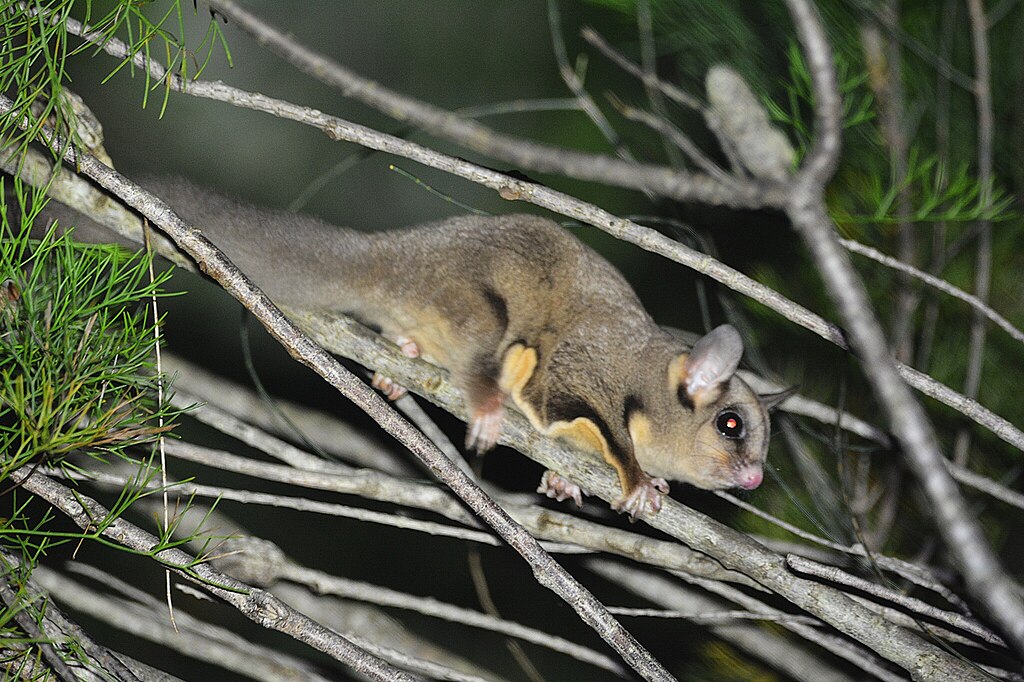
After bushfires wiped out a third of the Gliders habitat, scientists weren’t sure if their innovative “Goldilocks” boxes would work, until one researcher saw hope with her own eyes.
A Moment of Joy in the Forest
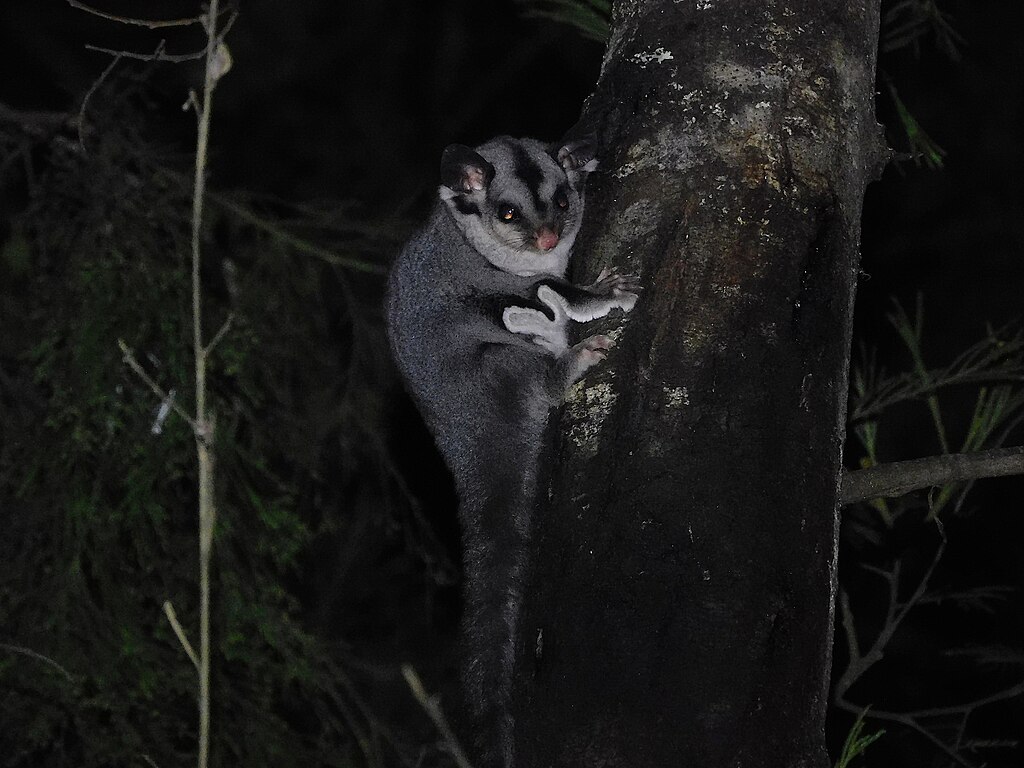
When Dr. Kita Ashman, a Threatened Species and Climate Adaptation Ecologist at WWF-Australia, opened one of the newly installed nesting boxes for endangered greater gliders, she had no idea what she would find.
The boxes had been designed to replace the natural tree hollows destroyed in Australia’s catastrophic 2020 wildfires, but no one knew whether the shy, tree-dwelling marsupials would use them.
Then, during her second inspection, she looked inside and saw a glider.
“I just burst into tears. I was so surprised and so happy,” Dr. Ashman told ABC News Australia.
It was a moment of overwhelming relief and proof that years of research, collaboration, and hope had paid off.
A Species on the Brink

Greater gliders, fluffy, nocturnal marsupials native only to eastern Australia, are among the most vulnerable species affected by climate change and habitat loss.
They rely on old-growth forest hollows for shelter and nesting, structures that take over a century to form. After bushfires destroyed roughly one-third of their remaining habitat, the species faced a desperate shortage of homes.
“The tree hollows greater gliders rely on can take 100 years to form,” explained the Australian National University (ANU) team. “They can’t just find new trees when their homes are gone.”
To help, ANU, Greening Australia, and the World Wide Fund for Nature–Australia developed a high-tech nesting box: insulated, fire-resistant, and designed to regulate temperature.
“I’ve affectionately been calling this design the Goldilocks box,” said Dr. Ashman. “We hope it will keep greater gliders not too hot and not too cold, and help increase their resilience in a changing climate.”
The Science of Hope
Traditional wildlife boxes weren’t suitable for gliders, as their thin walls allowed heat to build up dangerously. The new design includes non-toxic, heat-reflective coatings to protect the animals from extreme temperatures.
“Producing and installing high-quality nest boxes is costly,” said Dr. Kara Youngentob, ANU research fellow. “This project will help us understand if expensive interventions like nest boxes are the best use of funding in our urgent mission to save greater gliders.”
To everyone’s relief, the gliders began using the boxes within months.
“Much to our delight, within a few months of them going up they are already being used by gliders,” said Dr. Youngentob. “We know the individuals themselves like them and use them.”
Over 200 nesting boxes have now been installed across Victoria’s East Gippsland and Tallaganda National Park in New South Wales, offering researchers new insights into how many gliders are left in the wild.
The greater glider population has plummeted by 80% in just 20 years, and the species was officially listed as endangered in July 2022.
“They’re a treasure for this country,” Dr. Youngentob told ANU. “The more people know about them, the more they’ll fall in love and want to protect them too.”
A Glimmer of Light After the Fires
The discovery was more than a scientific success, it was a rare moment of emotional triumph after years of environmental devastation.
For Dr. Ashman, who grew up watching gliders in the Dandenong Ranges, the sight of one nesting safely was deeply personal.
“They have a really special place in my heart,” she said.
In a world often defined by environmental loss, a single glider poking its head out of a nesting box symbolized something bigger: the possibility of recovery when science, compassion, and innovation work together.
Featured image from: Ben Jobson, CC BY 4.0, via Wikimedia Commons