
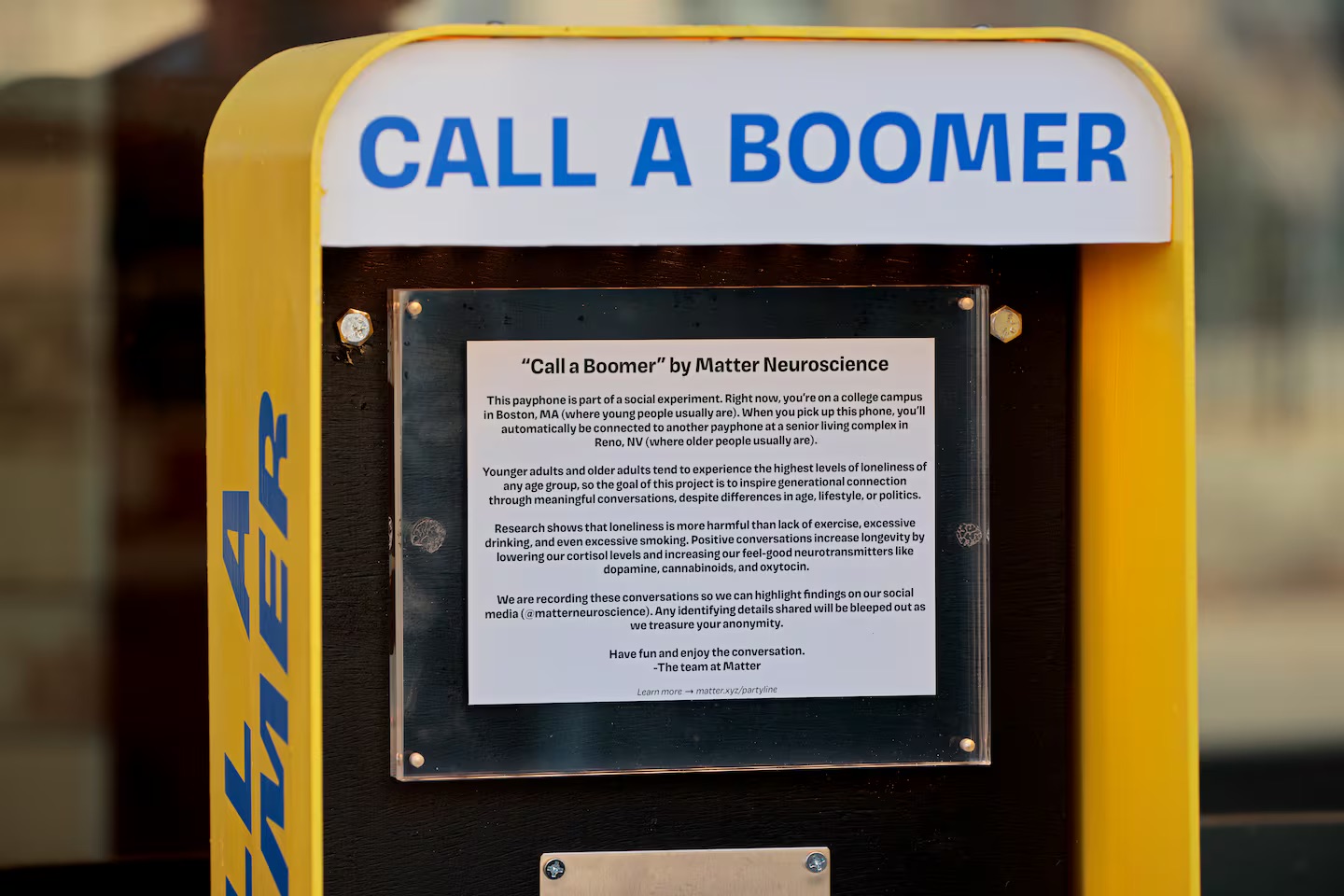
A simple public installation is turning random moments into real conversations between generations, and testing whether connection can still cut through loneliness
On a busy stretch near Boston University, a bright yellow phone is stopping people in their tracks.
It looks simple. Almost outdated.
But when someone picks it up, they’re not calling a friend or ordering food.
They’re connected to a complete stranger, often a senior living thousands of miles away.
The project, called “Call a Boomer,” is turning an ordinary sidewalk into something unexpected: a space for real, unscripted human connection.
A Phone That Rings Across Generations
The installation sits along Commonwealth Avenue, one of Boston’s most active student corridors.
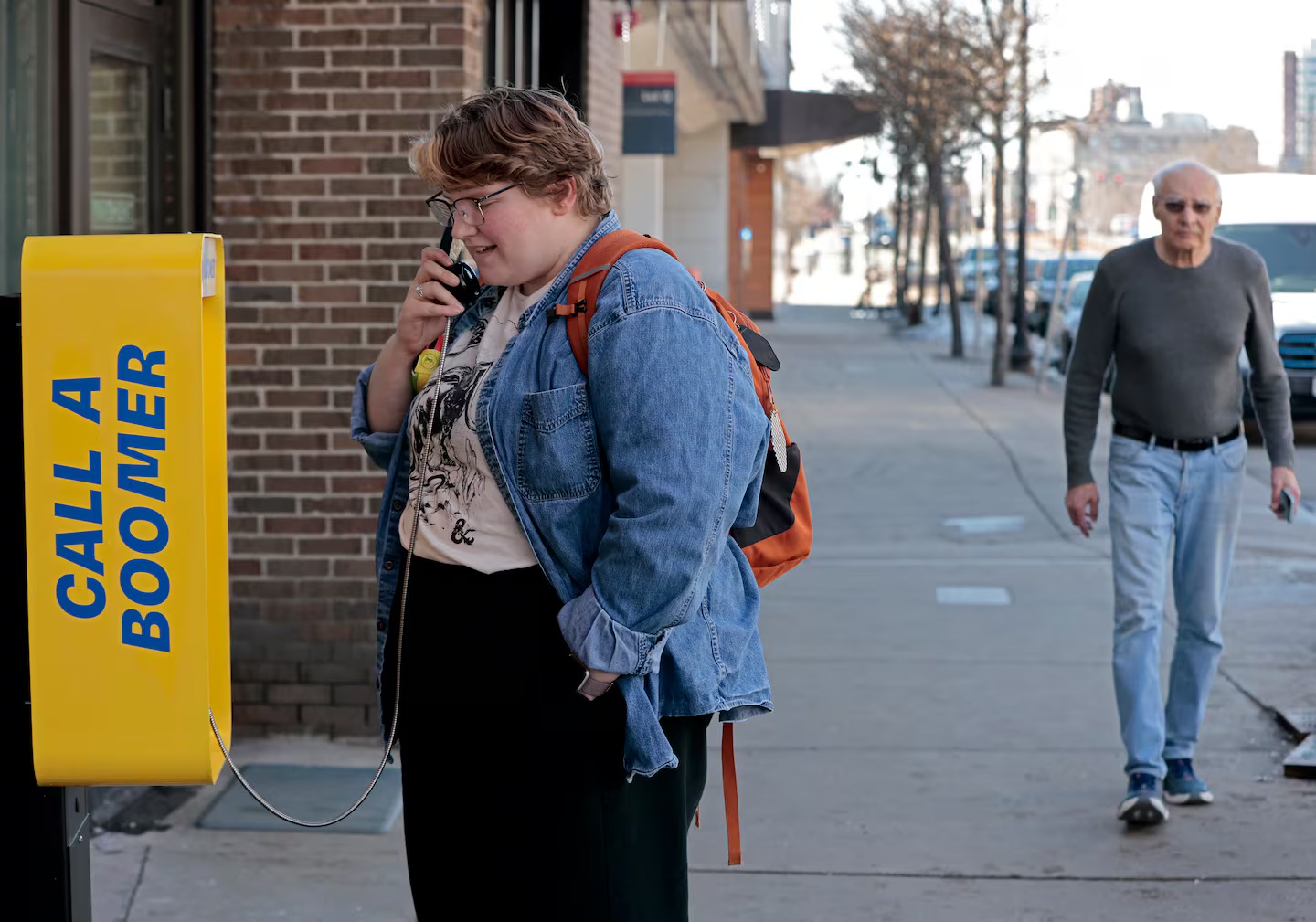
Anyone passing by can pick up the handset.
If someone answers on the other end, they’re instantly connected to a senior resident in a housing community in Reno, Nevada.
No app. No login. No algorithm.
Just a phone call.
The conversations are unplanned and unpredictable. Some last a few seconds. Others stretch longer, evolving into stories, questions, or simple exchanges about daily life.
If no one answers, callers can leave a voicemail, another layer of connection that may still reach someone later.
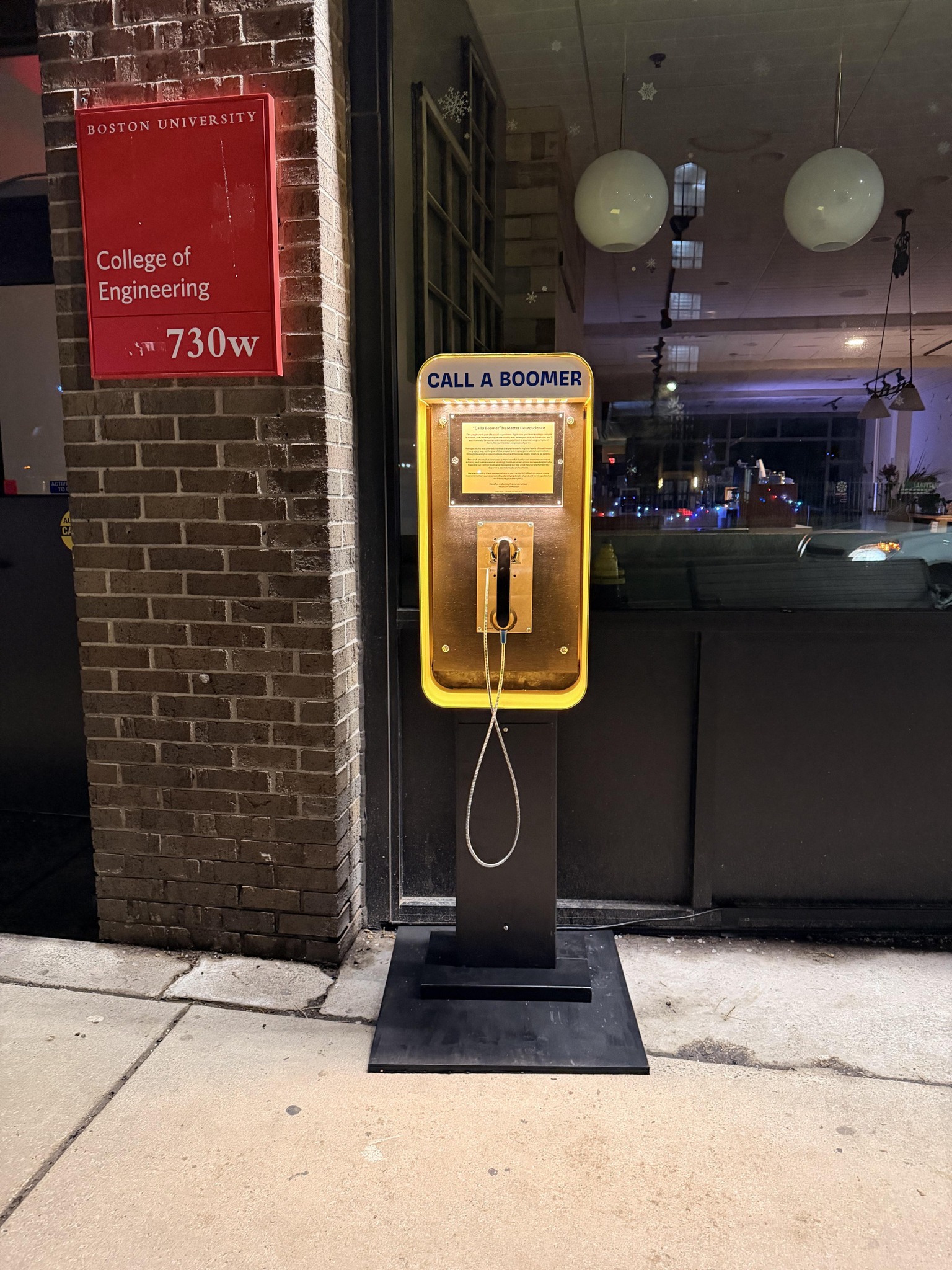
Designed to Be Simple, On Purpose
The project was created by Matter Neuroscience, a biotech company exploring how small, real-world interactions can impact mental health.
Unlike many tech-driven solutions aimed at loneliness, this one intentionally strips things back.
There are no profiles. No filters. No curated matches.
Just curiosity.
The idea is that by lowering the barrier to entry, making the interaction as easy as picking up a phone, it becomes more likely that people will engage, even briefly.
And those brief moments, organizers believe, can still matter.
Loneliness on Both Sides
While the installation may appear playful, it’s built around a serious issue.
Loneliness is not limited to one age group.
Older adults often face isolation due to mobility, distance from family, or life transitions. But younger people, including college students, are increasingly reporting similar feelings, despite being constantly connected online.
That shared experience is part of what makes the project work.
Instead of framing the interaction as helping one group, it creates a space where both sides can benefit.
A student might expect to offer companionship.
Instead, they may find themselves receiving advice, perspective, or simply a different kind of conversation than they’re used to.
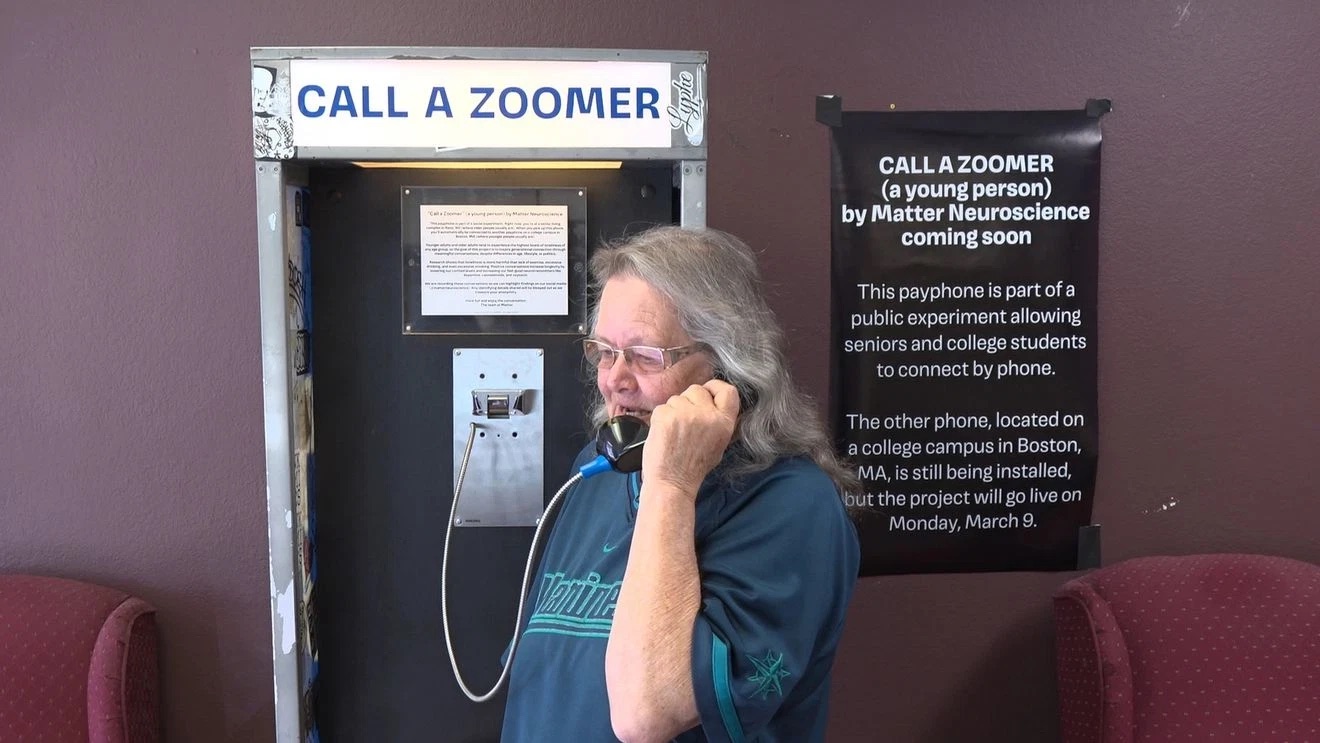
Conversations Without Expectations
One of the defining aspects of the project is its unpredictability.
There’s no script. No goal.
A call might start with an awkward hello and end quickly.
Or it might turn into a meaningful exchange about life, relationships, or memories.
That unpredictability is intentional.
Organizers say it removes pressure. People don’t have to perform or present themselves in a certain way. They just have to be willing to talk.
Some of the conversations are recorded and may later be shared on social media, extending the reach of the project beyond the physical installation.
But the core experience remains offline and immediate.
A Different Kind of “Social Network”
The concept builds on an earlier experiment that connected people in politically different cities.
That version focused on bridging ideological divides.
This one shifts the focus to age.
But the underlying idea is similar: creating direct, human conversations between groups that might not normally interact.
In a world where most communication is filtered through screens, comments, and curated feeds, the project offers something simpler, and, for many, unfamiliar.
A real voice. In real time.
Testing a Bigger Question
The installation is currently planned as a limited-time activation, running for about a month.
But its purpose goes beyond the phone itself.
It’s testing something broader:
Can curiosity still bring people together in a distracted, fast-moving world?
Or have people become too used to controlled, digital interactions to engage with something this open?
Early reactions suggest there’s still interest.
People stop. They look. They hesitate.
And then some of them pick up the phone.
Why It’s Resonating
Part of the project’s appeal is its contrast with everyday communication.
Most interactions today are:
- Filtered
- Delayed
- Or shaped by algorithms
This is none of those things.
It’s immediate, human, and slightly uncomfortable.
And that discomfort may be part of what makes it meaningful.
Because it forces people to step outside familiar patterns and engage in something unscripted.
The Bottom Line
The “Call a Boomer” phone isn’t trying to solve loneliness on its own.
But it’s offering something increasingly rare:
A moment of real connection between two people who might never have met otherwise.
In a world built around constant communication, it’s a reminder that connection doesn’t always come from more technology.
Sometimes, it starts with something much simpler.
A phone.
And someone willing to answer.
Featured image from facebook: RGB