
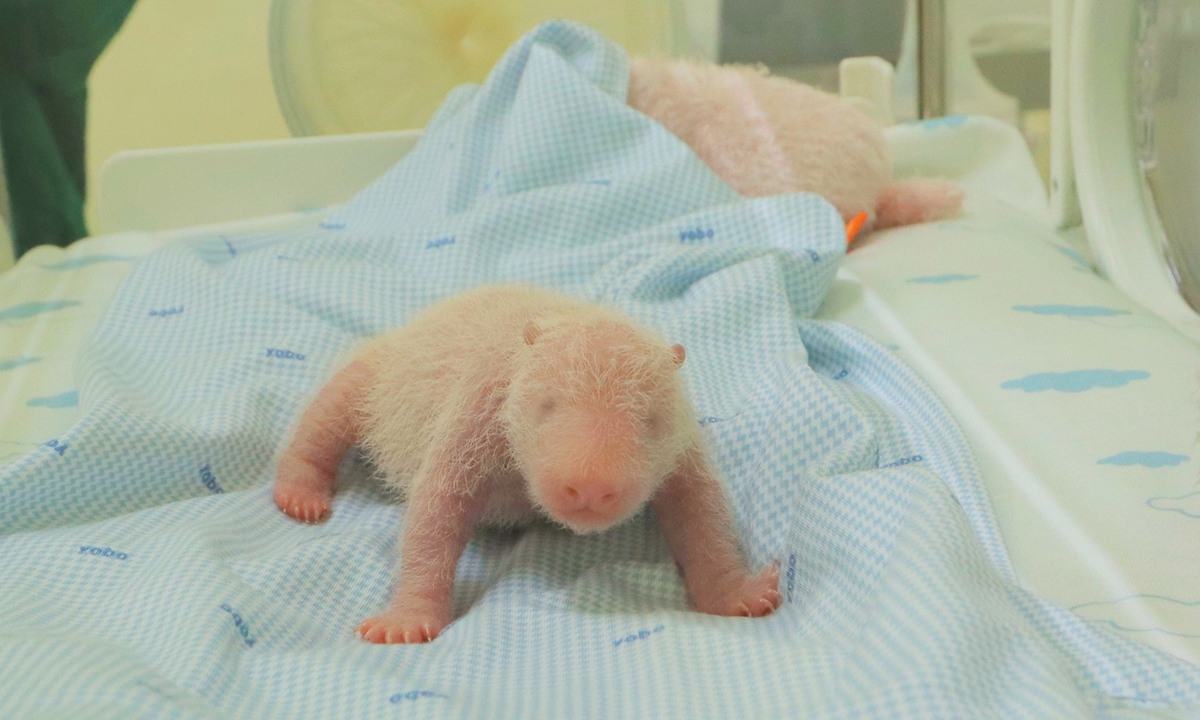
A giant panda cub born in Indonesia is showing strong signs of healthy development just 40 days after his birth, offering a rare and celebrated success story for conservationists.
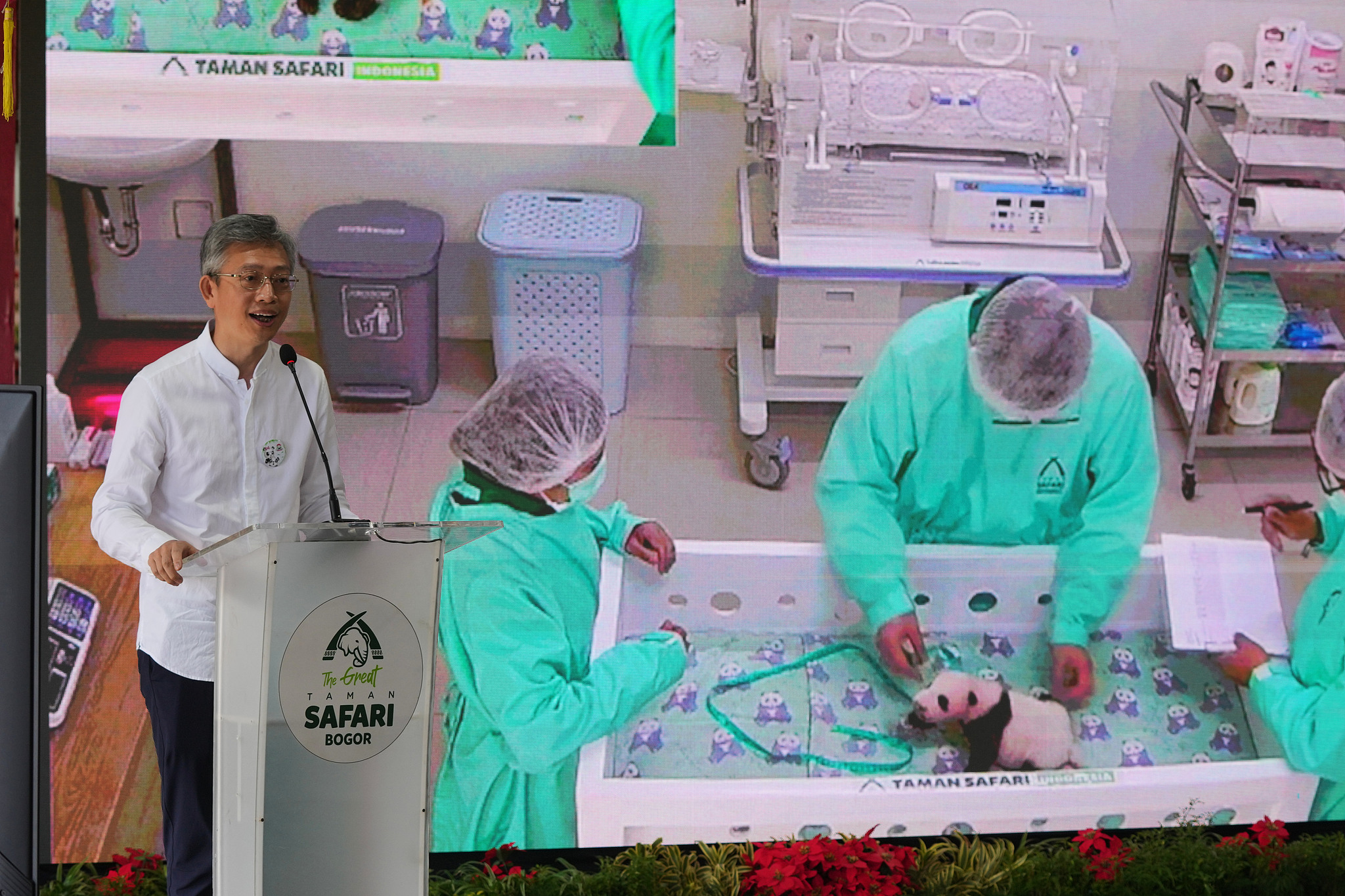
Indonesia’s Taman Safari conservation park released a video Tuesday documenting the growth of the male cub, officially named Satrio Wiratama and affectionately nicknamed “Rio.” The footage shows Rio being examined by veterinarians for the first time outside his incubator, revealing his transformation from a tiny pink newborn into a panda cub with distinctive black-and-white markings.
Rapid Growth in First Weeks
Veterinarians at the park in Cisarua, West Java province, said Rio’s progress has exceeded expectations. During the examination, staff measured his weight and body length, marking an important milestone in early panda development.
“The panda cub is developing healthily and growing very well,” said Bongot Huaso Mulia, a veterinarian overseeing Rio’s care. “Its body weight has increased by 46% over the past 30 days, while its body length has increased by 95%.”
Such early growth is critical for giant pandas, which are known for their fragile first months of life.
A Long-Awaited Birth
Rio was born on Nov. 27 to Hu Chun, a 15-year-old female panda, and Cai Tao. The pair arrived in Indonesia in 2017 as part of a 10-year conservation partnership with China and live in a specially designed enclosure about 70 kilometers (43 miles) south of Jakarta.
According to Mulia, the birth came after years of persistent effort.
“So we tried natural mating four times first, followed by four rounds of artificial insemination. It really was not easy,” he said.
The successful birth occurred after the fourth artificial insemination attempt, highlighting the challenges associated with panda reproduction.

A Symbol of Conservation and Cooperation
Giant pandas are widely regarded as an unofficial symbol of China, and their placement in overseas conservation programs is often linked to international cooperation, a practice commonly referred to as “panda diplomacy.”
There are fewer than 1,900 giant pandas remaining in the wild, found only in China’s Sichuan, Shaanxi, and Gansu provinces. Because pandas are notoriously difficult to breed, each successful birth is considered a major achievement.
“This is the moment we’ve been waiting for,” said China’s Ambassador to Indonesia Wang Lutong. “After years of hard work, finally we’ve got real. The baby panda, joining the global panda family.”
For now, Rio remains under close observation as caretakers monitor his development during the most delicate stage of his life, one that conservationists hope will continue to thrive
Featured Image from facebook: PandaPaws