
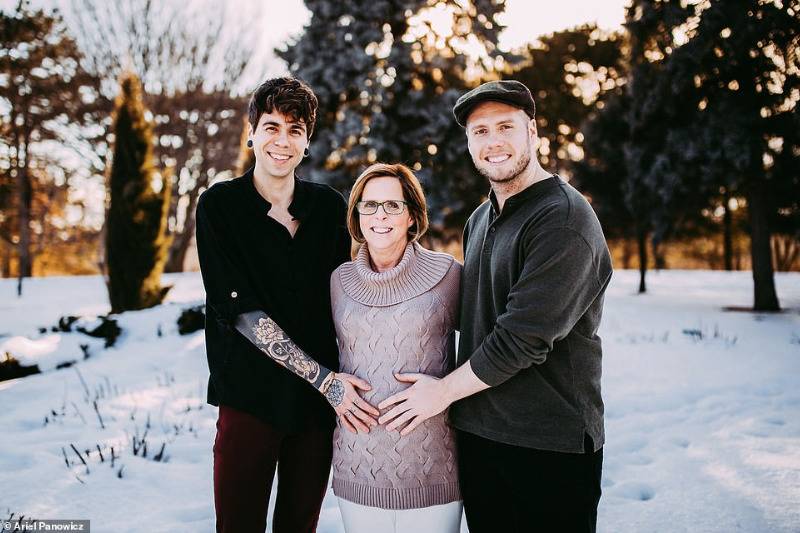
Surrogate motherhood looks different for every family, but at its core, it is rooted in love, sacrifice, and showing up when it matters most. For Cecile Eledge, love meant going much further than encouragement or support. When her son and his husband wanted a child but faced financial and biological barriers, Cecile made a decision few parents ever would: she volunteered to carry their baby herself.
At 61 years old, long past menopause and decades removed from her last pregnancy, Cecile became both mother and grandmother in one remarkable act of devotion.
Matthew Eledge had built a life he was proud of. He was a devoted teacher, a loving husband, and a son who felt deeply supported by his family. Still, one dream remained unfulfilled. He and his husband longed to become parents, but the cost of surrogacy placed that dream just out of reach.
Cecile saw the ache her son carried. The couple had already begun exploring IVF, quietly hoping for a solution. That’s when Cecile surprised them with an offer that stunned everyone.
“I thought if I could do it, I would do it,” she told BuzzFeed News, adding that being her son’s surrogate felt like “a no-brainer.”
The idea was loving, but medically complex. Cecile was in her early 60s and had not been pregnant in more than 30 years. She had gone through menopause over a decade earlier. Carrying a child at that age is rare, and many doctors would not even consider it.
Finding a physician willing to help was the first hurdle. Eventually, the family connected with a reproductive endocrinologist who agreed to evaluate Cecile’s health and oversee the process. After extensive testing, including blood work, ultrasounds, mammograms, and cardiovascular screenings, doctors concluded that Cecile was healthy enough to proceed.
Still, the risks were real.
Dr. Carolyn Maud Doherty explained that pregnancies at this age are highly unusual and not an option for most people. “It’s important for people to note that not every 60-year-old is in good enough health to be a surrogate,” she told BuzzFeed News, emphasizing that only a very small number of individuals nationwide could safely attempt it.
Despite the warnings, the family chose to move forward, together.
The process became a true family effort when another relative stepped in. Matthew’s sister-in-law offered to donate her eggs, allowing the baby to be biologically connected to the family on both sides. The eggs were fertilized using Matthew’s sperm and implanted into Cecile’s uterus.
Against the odds, the first attempt worked. Cecile became pregnant right away.
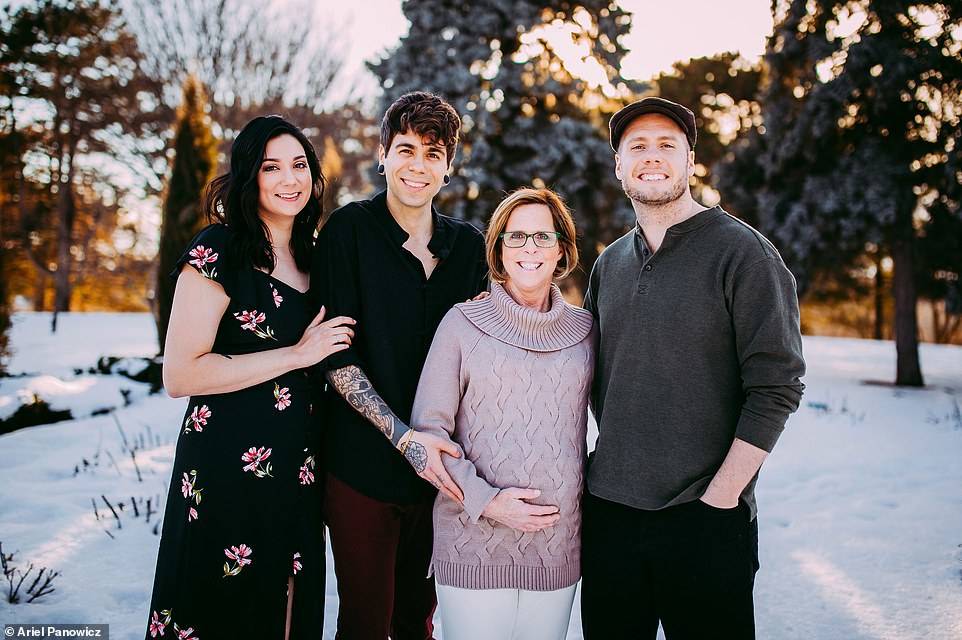
Cecile approached the pregnancy with focus and discipline. She exercised regularly, stayed active, and carefully managed her diet. She later reflected that in some ways, the pregnancy felt easier than those she had experienced decades earlier.
“Because I’m older, my diet’s been easier to control,” she said. “And I didn’t have the responsibility of other children, just this pregnancy.”
Though she experienced typical symptoms like morning sickness and occasional blood pressure concerns, Cecile carried the baby to term. She delivered a healthy baby girl named Uma, without needing a C-section.
For Matthew and his husband, the moment was overwhelming.
“I don’t know how to describe her; she’s remarkable,” Matthew told The Daily Mail. “I have such deep respect for her and am so grateful that even as a grown adult she continues to go above and beyond for me.”
Cecile had no hesitation about handing the baby to her parents after birth. She was never confused about her role. She was not the baby’s mother, she was her grandmother, and she had completed the job she set out to do.
Not everyone who heard the story reacted positively. Some questioned whether Cecile had gone too far or blurred emotional boundaries. Others struggled to understand the biology or the family dynamics involved.
Matthew acknowledged the confusion but emphasized acceptance over judgment. “People didn’t understand at first,” he told the New York Post, “but once they do, they’re ridiculously supportive. They think it’s radical and amazing.”
He added that as a gay couple, they felt fortunate to be raising a child at a time when society, and medical technology, made their family possible. “We all did this together,” he said.
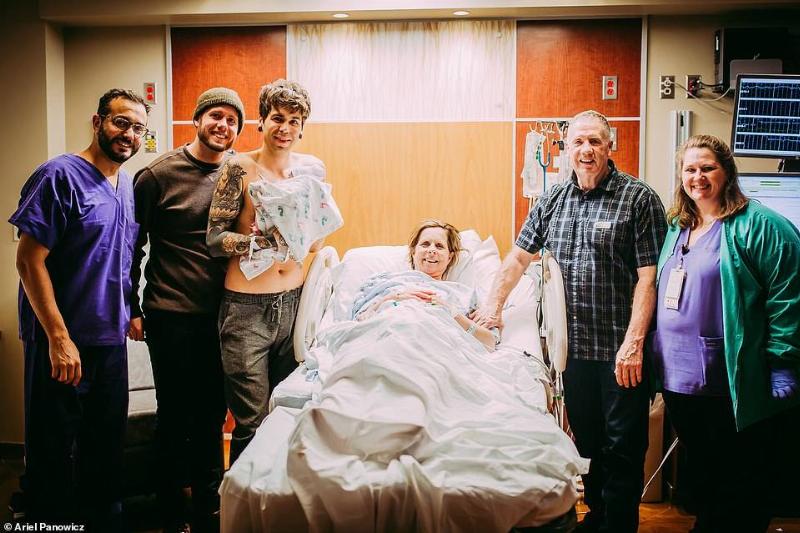
Today, Uma is being raised by two loving parents, surrounded by a family that quite literally came together to make her life possible. For them, the experience reinforced a belief they already held.
“It takes a village to raise a family,” Matthew said. “While we may have taken an unconventional approach, it made everything more exciting, and more meaningful.”
Cecile Eledge’s story challenges traditional ideas of parenthood and sacrifice. It asks uncomfortable questions, invites debate, and ultimately highlights something timeless: the extraordinary lengths a parent may go to for their child’s happiness.
For this family, love wasn’t just unconditional, it was life-giving.
Featured Image from Facebook: Ariel Panowicz Creative