
Surveillance Logs Show “Flash of Orange” as Agencies Offer Different Interpretations
Newly released Justice Department records are shedding new light on surveillance footage from the night Jeffrey Epstein died in federal custody, revealing previously undocumented observations of movement near the tier where he was held.
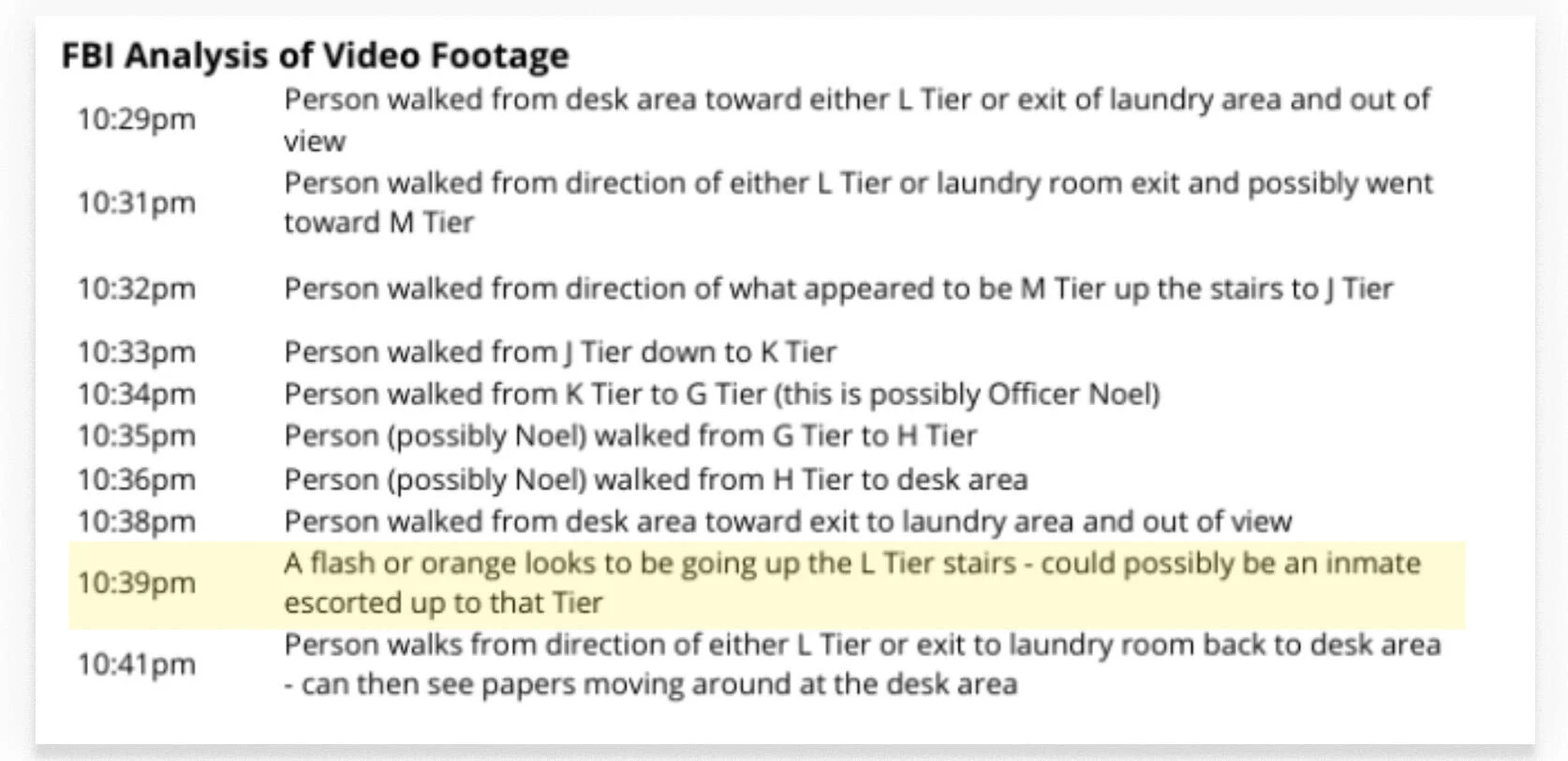
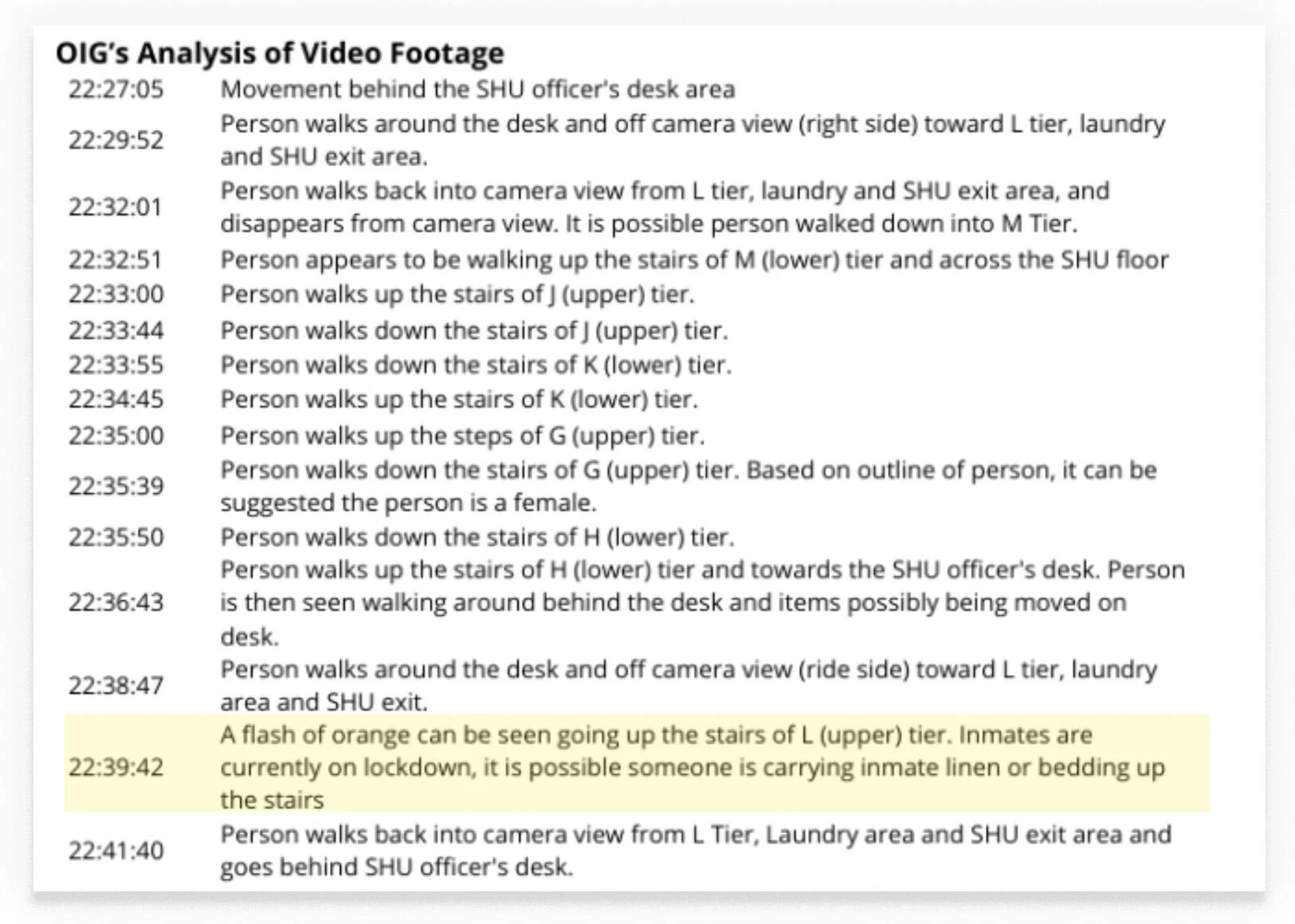
The documents, part of a broader federal disclosure of Epstein-related materials, include internal observation logs and memoranda describing a “flash of orange” seen on camera at approximately 10:39 p.m. on Aug. 9, 2019, hours before Epstein was found unresponsive in his Manhattan jail cell.
The footage does not show anyone entering Epstein’s cell. However, the records indicate that investigators reviewing the video identified movement on the staircase leading toward the L Tier, where Epstein was housed.
The identity of the figure remains unclear.
What the Surveillance Log Shows
According to the internal observation log, reviewers noted that a “flash of orange” appeared to move up the L Tier stairway at around 10:39 p.m.
The log states:
“A flash of orange looks to be going up the L Tier stairs, could possibly be an inmate escorted up to that Tier.”
The staircase was reportedly captured by the only functioning camera covering that area at the time. However, the camera’s angle partially obscured the tier entrance, meaning the footage does not definitively show whether anyone entered the housing area.
The records do not conclude that someone accessed Epstein’s cell or interacted with him.
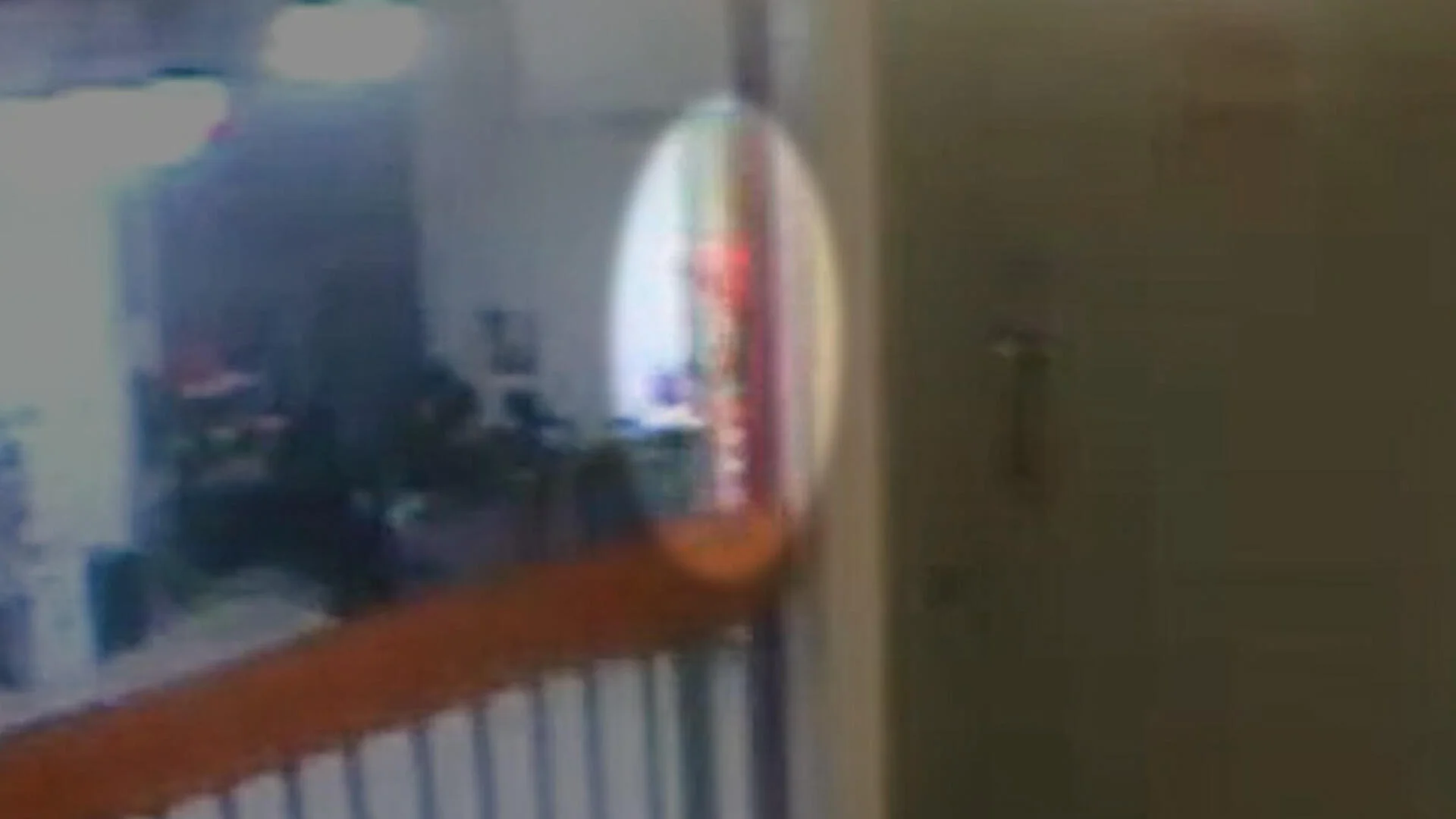
Image screenshot from Youtube: CBS News
Differing Interpretations by Federal Agencies
The newly disclosed records show that federal agencies reviewing the footage did not interpret it the same way.
An FBI memorandum described the orange figure as “possibly … an inmate.”
By contrast, the Department of Justice’s Office of Inspector General (OIG) later characterized the figure as an unidentified corrections officer, suggesting the orange color may have been linen or bedding being carried upstairs.
In its final report, the inspector general wrote that at approximately 10:39 p.m., “an unidentified CO appeared to walk up the L Tier stairway” and reappeared shortly after.
Neither interpretation concluded that unauthorized access to Epstein’s cell occurred.
The inspector general’s 2023 report ultimately reaffirmed that Epstein died by suicide, citing systemic failures at the Metropolitan Correctional Center (MCC), including missed inmate checks and staff misconduct.
Previous Official Statements
For years, federal officials have maintained that no one entered Epstein’s housing tier during the overnight hours before he was found dead.
Former Attorney General William Barr stated in 2019 that investigators found no evidence of outside involvement. The New York City Office of the Chief Medical Examiner ruled Epstein’s death a suicide by hanging.
The newly released documents do not overturn that conclusion. However, they reveal that surveillance footage included activity that was noted internally but not detailed in earlier public summaries.
The footage was previously described as limited and partially obscured. Investigators have acknowledged that camera malfunctions and blind spots complicated reconstruction of events inside the Special Housing Unit.
Conditions Inside the Jail That Night
The document release also includes transcripts and internal records detailing staffing conditions at MCC on the night of Epstein’s death.
Two correctional officers assigned to the unit, Tova Noel and Michael Thomas, failed to conduct required 30-minute inmate checks during portions of the overnight shift.
Both officers were later charged with falsifying records related to those checks. The charges were eventually dismissed after they entered into deferred prosecution agreements and completed supervisory and community service requirements.
The inspector general’s report concluded that staff fatigue, policy violations, and operational breakdowns contributed to failures in supervision.
The new document release provides additional detail but does not change the official cause-of-death determination.
What the New Records Actually Change
The updated records do not provide evidence that someone entered Epstein’s cell. They do not establish third-party involvement. And they do not reverse the suicide ruling.
What they do show is that internal reviewers documented activity near the L Tier staircase that was subject to differing interpretations between agencies.
For American readers, the development underscores ongoing concerns about transparency surrounding one of the most scrutinized federal custody deaths in recent history.
Epstein’s death in 2019 prompted widespread public skepticism, congressional inquiries, and internal investigations into Bureau of Prisons practices. While official reviews have consistently ruled the death a suicide, the continued release of new documentation has kept public interest high.
The Justice Department has not indicated that the newly released records alter prior findings.
Where Things Stand Now
No new criminal charges have been announced in connection with Epstein’s death.
The Office of Inspector General’s conclusions remain in effect. The New York medical examiner’s determination of suicide stands.
The surveillance footage and logs released in the latest disclosure provide additional context but leave some ambiguity about the activity captured on camera.
For now, the official conclusion remains unchanged, but the newly surfaced documentation adds another layer to a case that continues to generate questions years later.
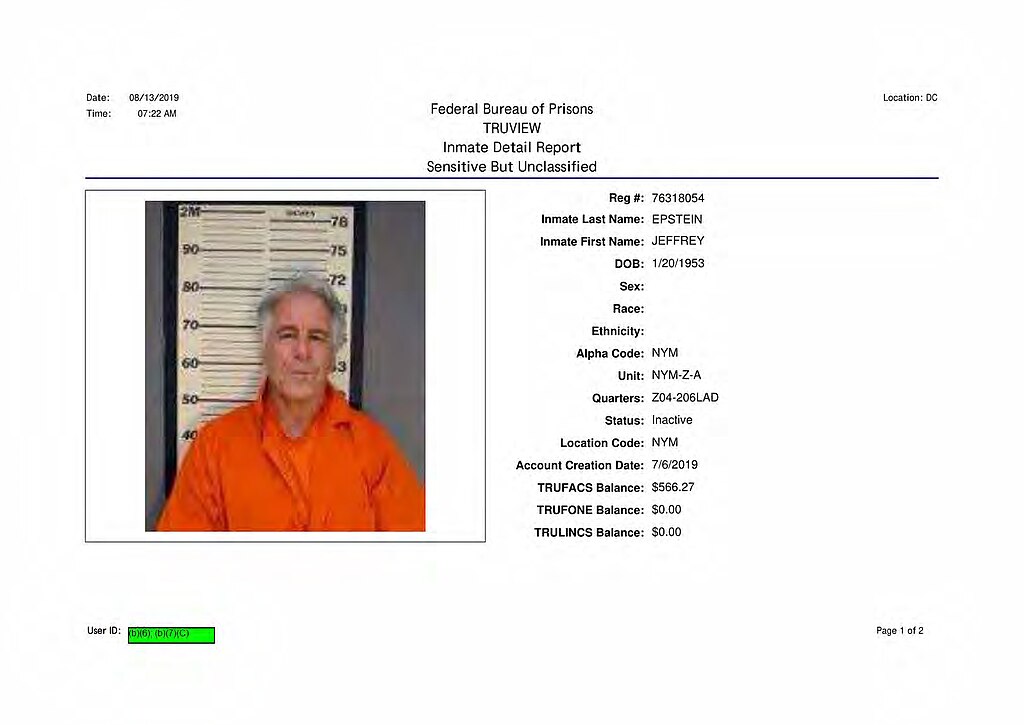
Featured Image from: Federal Bureau of Prisons, Public domain, via Wikimedia Commons